Kitterer Daniel, Segerer Stephan, Steurer Wolfgang, Dippon Juergen, Geissler Angela, Ulmer Christoph, Braun Niko, Alscher Mark Dominik, Latus Joerg
Department of Internal Medicine, Division of Nephrology, Robert-Bosch-Hospital, Stuttgart, Germany.
Division of Nephrology, University Hospital, Zurich, Switzerland.
Int J Nephrol Renovasc Dis. 2015 Aug 13;8:83-90. doi: 10.2147/IJNRD.S84910. eCollection 2015.
Diagnosis of encapsulating peritoneal sclerosis (EPS) is based on clinical symptoms, radiologic findings, and macroscopic or histological criteria. Two diagnostic scores for radiologic findings in computed tomography (CT) scans of patients with EPS have been established in the past (by Tarzi et al and Vlijm et al). The macroscopic appearance of EPS has previously been separated into three types. The use of CT scan as a tool to predict different macroscopic phenotypes, leading to specific surgical techniques and different medical treatment, has not yet been investigated.
We retrospectively analyzed 30 patients with late-stage EPS who underwent major surgery with peritonectomy and enterolysis. The preoperative CT scans were scored according to the two aforementioned established diagnostic CT scores. The macroscopic phenotype, surgical procedure, and laboratory values at the time of surgery were evaluated. CT findings in the different macroscopic phenotypes were analyzed.
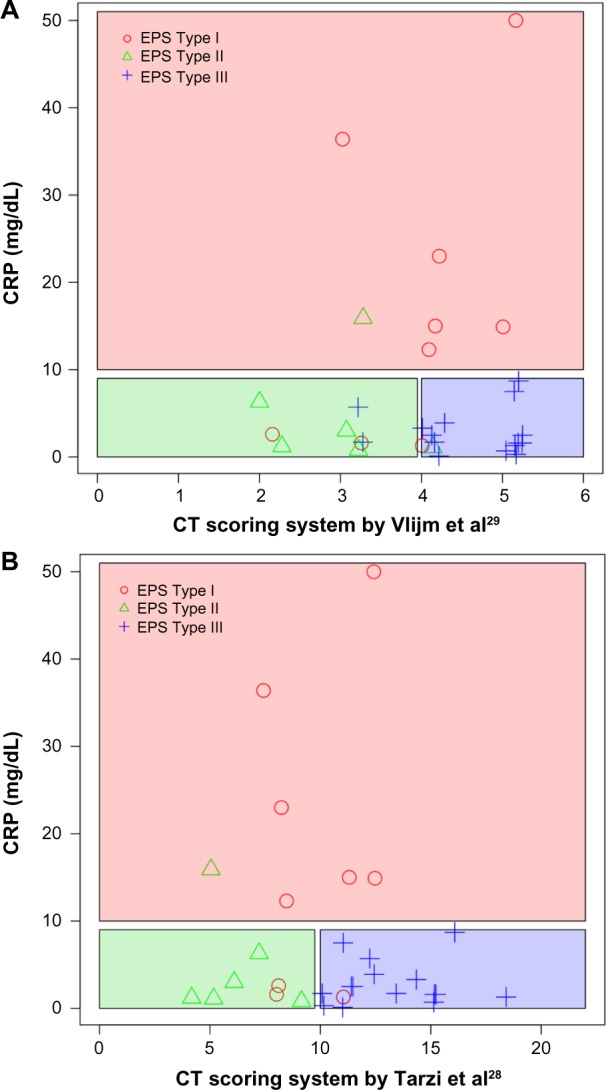
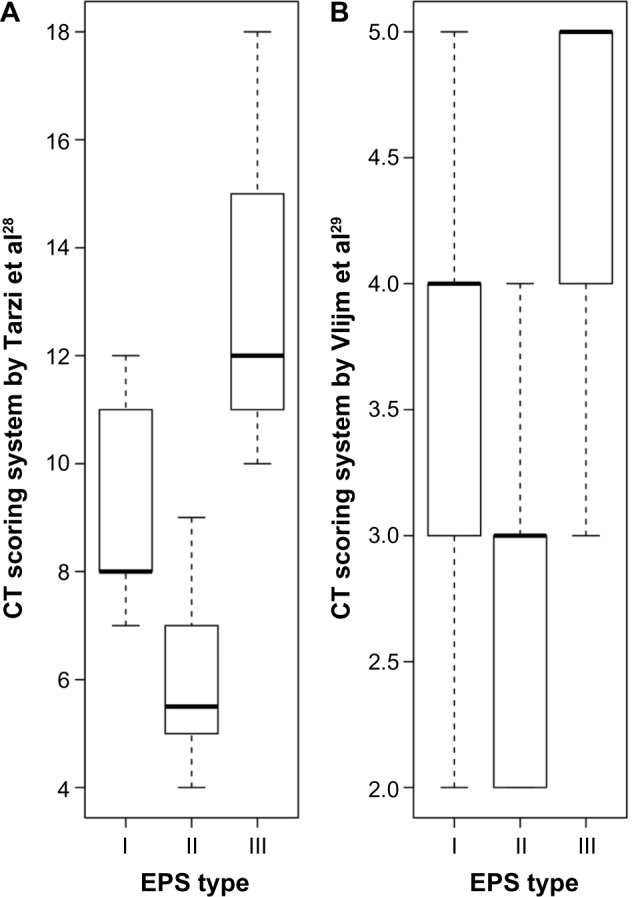
All patients had highly predictive CT scores for EPS. The macroscopic Type III had significantly higher CT scores compared with the other macroscopic phenotypes. Patients with macroscopic Type I had significantly higher C-reactive protein values compared to EPS Type III. Operation time was significantly longer, and repeated surgery and intraoperative complications were more frequent in EPS Type I compared with EPS Type III (P<0.05). Using the CT score and CRP level, the sensitivities for prediction of EPS I and III were 78% and 87% with corresponding specificities of 67% and 93%.
Abdominal CT scans might help to identify patients with a higher risk of complications and provide important information for the surgical intervention prior to surgery.
包裹性腹膜硬化症(EPS)的诊断基于临床症状、影像学表现以及宏观或组织学标准。过去已经建立了两种针对EPS患者计算机断层扫描(CT)影像学表现的诊断评分系统(由Tarzi等人和Vlijm等人建立)。EPS的宏观表现先前已被分为三种类型。尚未研究将CT扫描作为预测不同宏观表型的工具,从而指导特定手术技术和不同药物治疗的应用。
我们回顾性分析了30例接受腹膜切除术和肠粘连松解术的晚期EPS患者。术前CT扫描根据上述两种已建立的诊断CT评分进行评分。评估手术时的宏观表型、手术过程和实验室值。分析不同宏观表型的CT表现。
所有患者的EPS的CT评分均具有高度预测性。与其他宏观表型相比,宏观III型的CT评分显著更高。与EPS III型相比,宏观I型患者的C反应蛋白值显著更高。与EPS III型相比,EPS I型的手术时间显著更长,再次手术和术中并发症更频繁(P<0.05)。使用CT评分和CRP水平,预测EPS I型和III型的敏感性分别为78%和87%,相应的特异性分别为67%和93%。
腹部CT扫描可能有助于识别并发症风险较高的患者,并为手术前的手术干预提供重要信息。