Wear Maggie P, Kryndushkin Dmitry, O'Meally Robert, Sonnenberg Jason L, Cole Robert N, Shewmaker Frank P
Department of Pharmacology, Uniformed Services University of the Heath Sciences, Bethesda, Maryland, 20814, United States of America.
Johns Hopkins Mass Spectrometry and Proteomic Facility, Johns Hopkins University, Baltimore, Maryland, 21218, United States of America.
PLoS One. 2015 Aug 28;10(8):e0136362. doi: 10.1371/journal.pone.0136362. eCollection 2015.
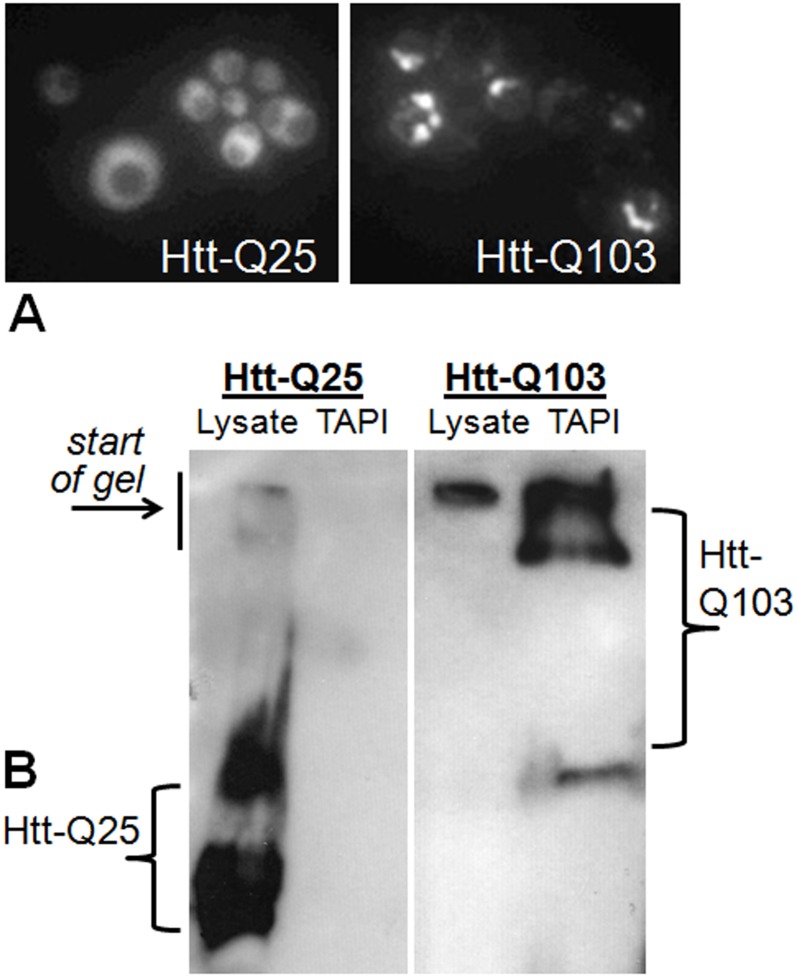
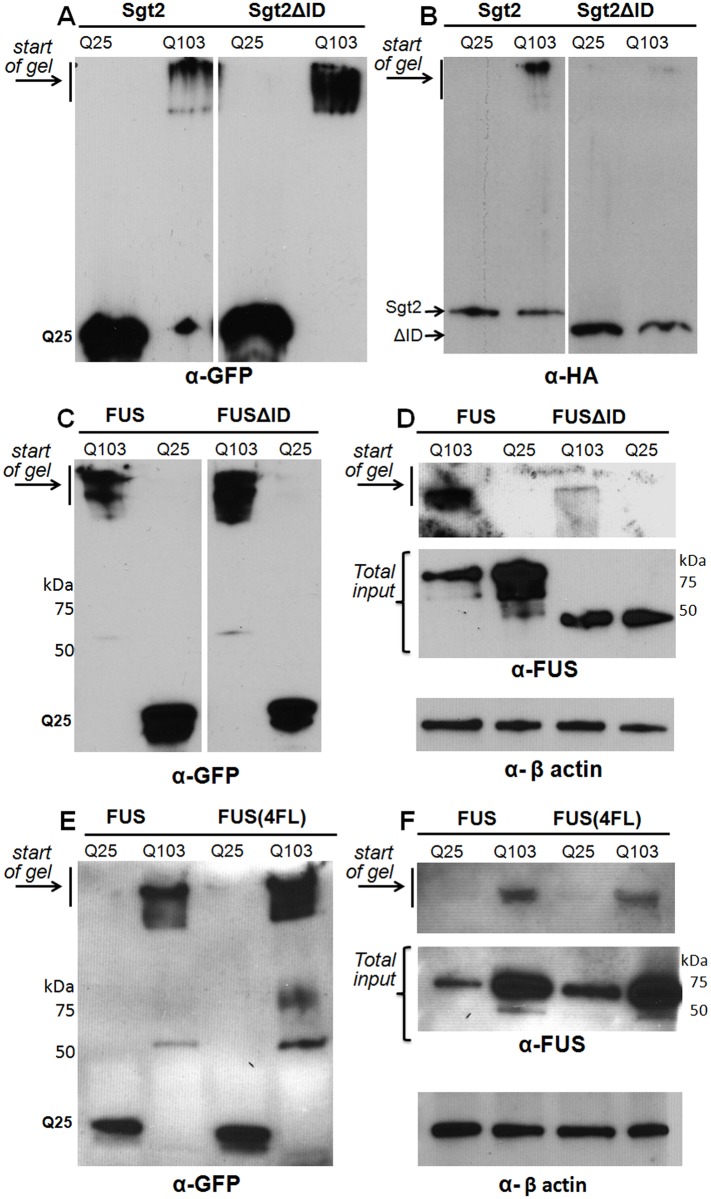
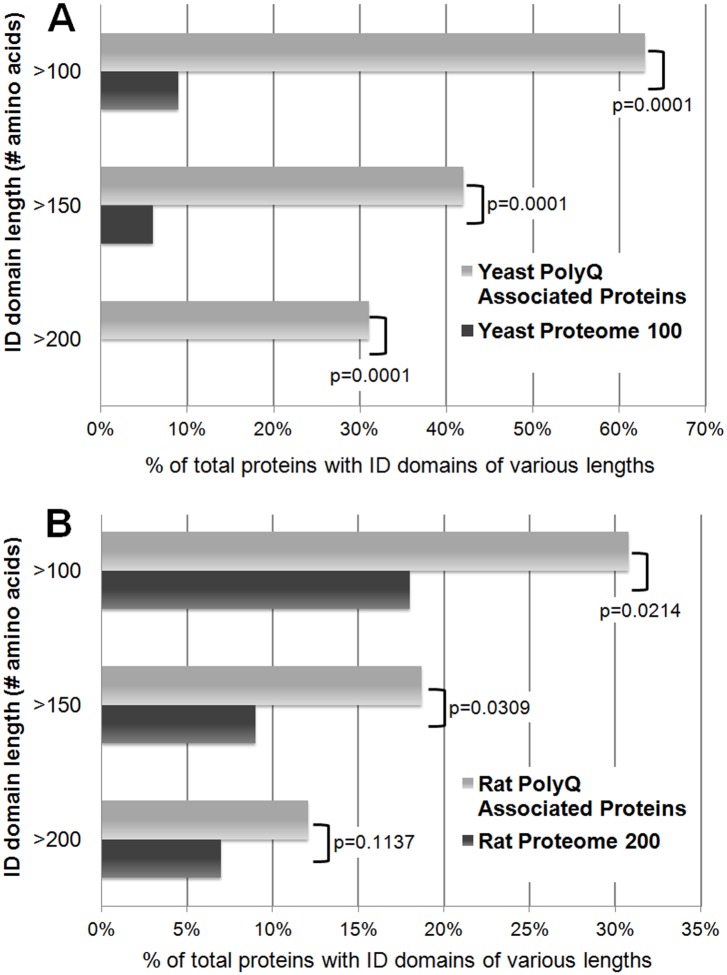
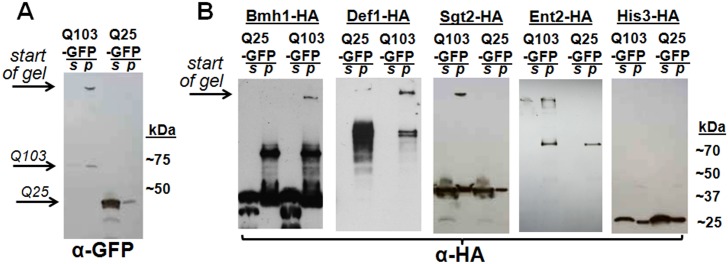
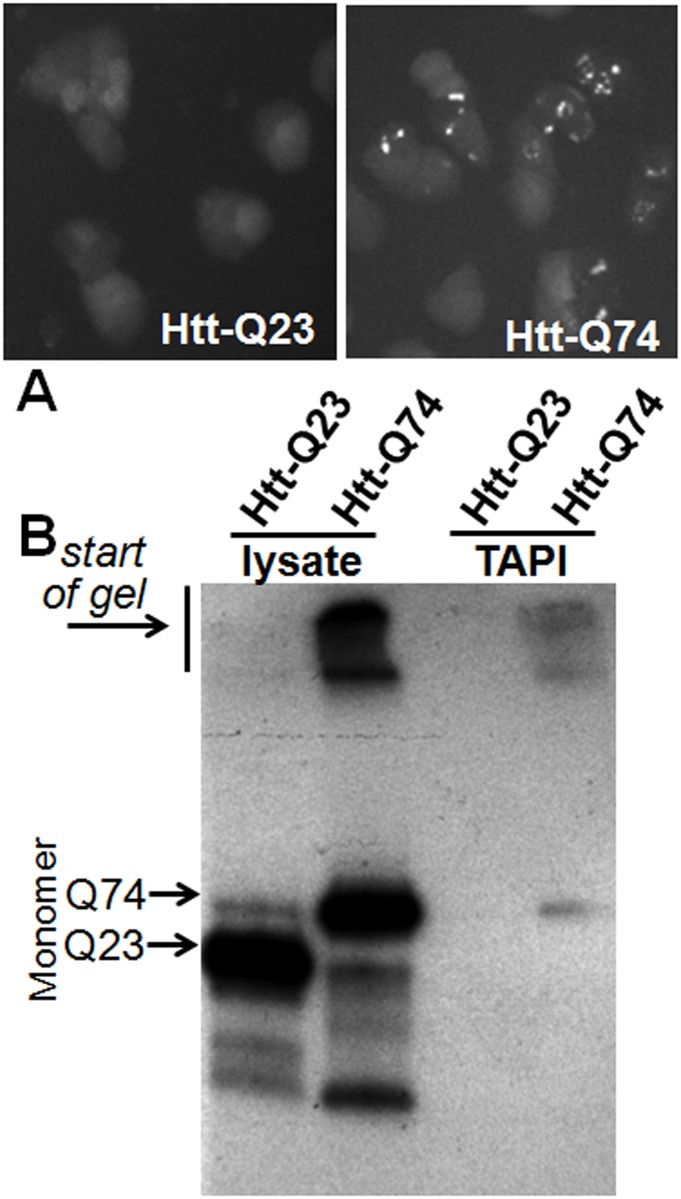
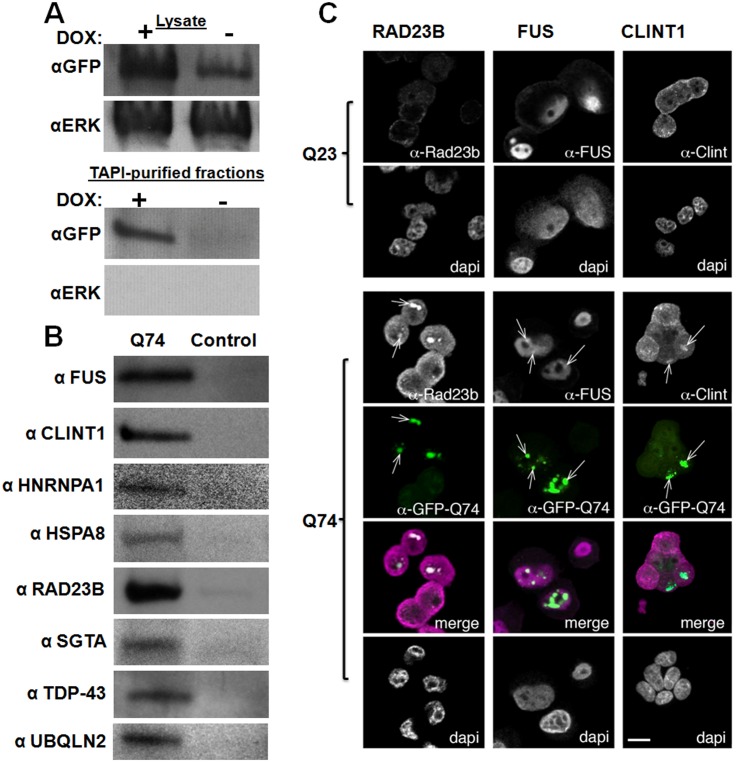
Intracellular protein aggregation is the hallmark of several neurodegenerative diseases. Aggregates formed by polyglutamine (polyQ)-expanded proteins, such as Huntingtin, adopt amyloid-like structures that are resistant to denaturation. We used a novel purification strategy to isolate aggregates formed by human Huntingtin N-terminal fragments with expanded polyQ tracts from both yeast and mammalian (PC-12) cells. Using mass spectrometry we identified the protein species that are trapped within these polyQ aggregates. We found that proteins with very long intrinsically-disordered (ID) domains (≥ 100 amino acids) and RNA-binding proteins were disproportionately recruited into aggregates. The removal of the ID domains from selected proteins was sufficient to eliminate their recruitment into polyQ aggregates. We also observed that several neurodegenerative disease-linked proteins were reproducibly trapped within the polyQ aggregates purified from mammalian cells. Many of these proteins have large ID domains and are found in neuronal inclusions in their respective diseases. Our study indicates that neurodegenerative disease-associated proteins are particularly vulnerable to recruitment into polyQ aggregates via their ID domains. Also, the high frequency of ID domains in RNA-binding proteins may explain why RNA-binding proteins are frequently found in pathological inclusions in various neurodegenerative diseases.
细胞内蛋白质聚集是几种神经退行性疾病的标志。由多聚谷氨酰胺(polyQ)扩展蛋白形成的聚集体,如亨廷顿蛋白,会形成对变性具有抗性的淀粉样结构。我们采用了一种新颖的纯化策略,从酵母和哺乳动物(PC-12)细胞中分离出由具有扩展多聚谷氨酰胺片段的人类亨廷顿蛋白N端片段形成的聚集体。通过质谱分析,我们鉴定出被困在这些多聚谷氨酰胺聚集体中的蛋白质种类。我们发现,具有非常长的内在无序(ID)结构域(≥100个氨基酸)的蛋白质和RNA结合蛋白被不成比例地招募到聚集体中。从选定蛋白质中去除ID结构域足以消除它们被招募到多聚谷氨酰胺聚集体中。我们还观察到,几种与神经退行性疾病相关的蛋白质可重复性地被困在从哺乳动物细胞中纯化出的多聚谷氨酰胺聚集体中。这些蛋白质中的许多都有大的ID结构域,并且在各自疾病的神经元包涵体中被发现。我们的研究表明,神经退行性疾病相关蛋白质特别容易通过其ID结构域被招募到多聚谷氨酰胺聚集体中。此外,RNA结合蛋白中ID结构域的高频率出现可能解释了为什么RNA结合蛋白经常在各种神经退行性疾病的病理性包涵体中被发现。