Jung Younhea, Park Hae-Young L, Lee Na Young, Yoo Young-Sik, Park Chan Kee
Department of Ophthalmology and Visual Science, College of Medicine, Seoul St. Mary's Hospital, The Catholic University of Korea, Seoul, Korea.
Department of Ophthalmology and Visual Science, College of Medicine, Incheon St. Mary's Hospital, The Catholic University of Korea, Incheon, Korea.
PLoS One. 2015 Aug 28;10(8):e0136869. doi: 10.1371/journal.pone.0136869. eCollection 2015.
To compare the course and outcome of first- and fellow-operated eyes in patients who underwent bilateral trabeculectomies and to investigate the factors associated with the difference.
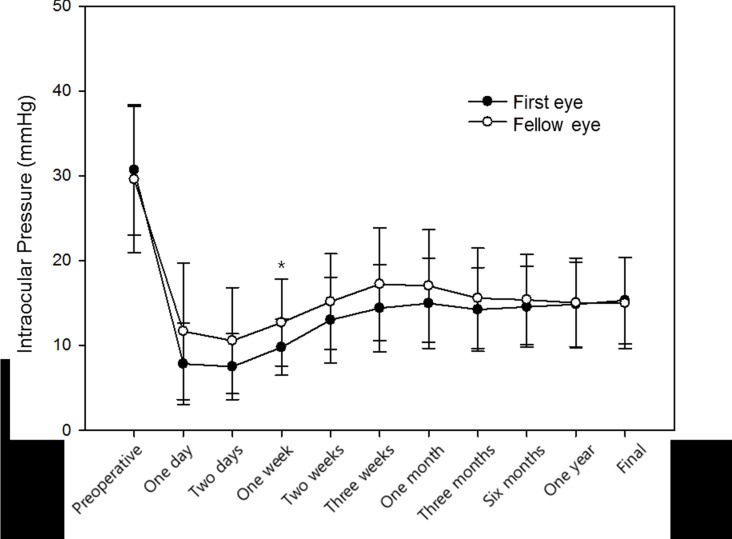
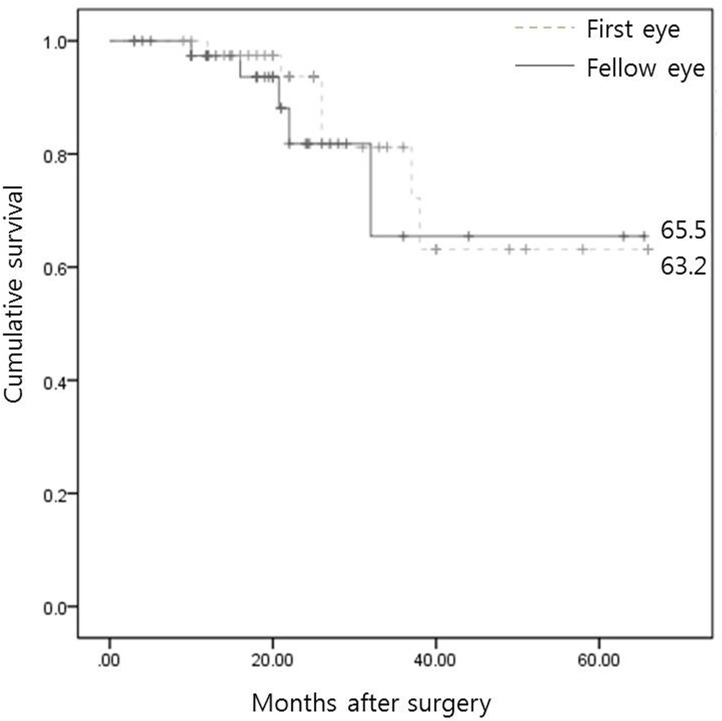
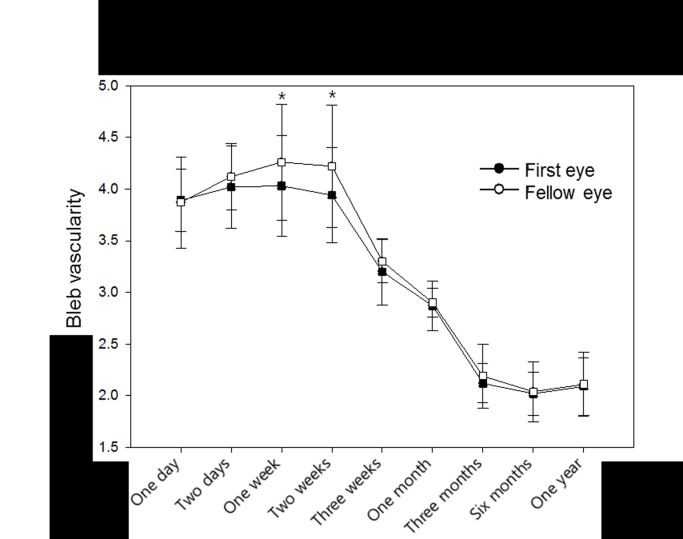
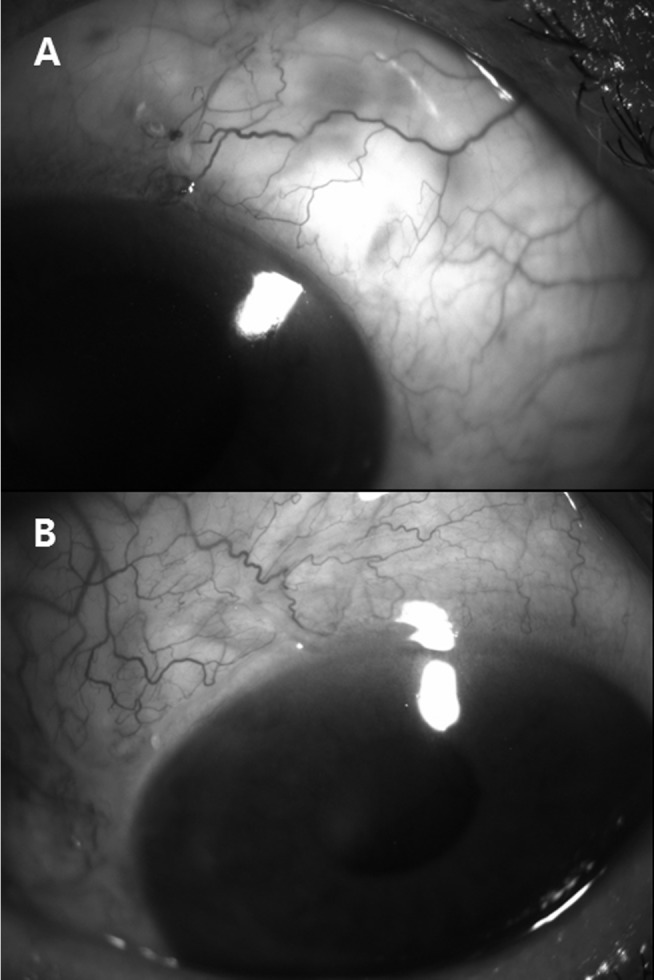
Preoperative characteristics, including the interval between surgeries, were compared between the first- and fellow-operated eyes in 42 patients who underwent bilateral trabeculectomies. Postoperative intraocular pressure and bleb vascularity, using postoperative anterior segment photos, were compared at various time points between the first- and fellow-operated eyes. Surgical success was evaluated at 1 year after surgery and at the final follow-up. Factors affecting the difference between the first and fellow eyes were analyzed.
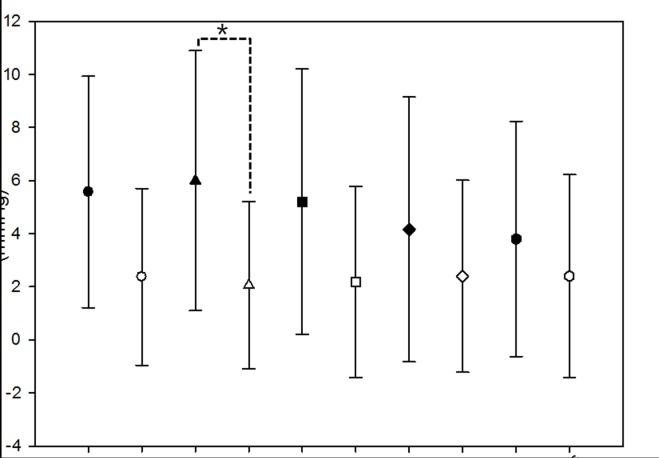
There was no significant difference in success or failure rates at 1 year postoperatively and at the final follow-up between the first- and fellow-operated eyes. Early postoperative IOP and the degree of bleb vascularity were higher in the fellow-operated eyes (P = 0.001 and 0.003, respectively at week 1 postoperative). The difference in IOP between the first- and fellow-operated eyes was greater in patients whose interval between surgeries was shorter than 3 weeks (P = 0.026).
In patients undergoing bilateral trabeculectomies, early postoperative IOP was higher in the fellow-operated eyes than the first-operated eyes; the difference was greater when the interval between surgeries was shorter. The first-operated eye may influence the early postoperative inflammatory response in the fellow-operated eye. Our findings have clinical implications for planning treatment of patients who may need bilateral surgery.
比较接受双侧小梁切除术患者的首眼和对侧眼的病程及预后,并研究与差异相关的因素。
比较42例接受双侧小梁切除术患者的首眼和对侧眼的术前特征,包括手术间隔时间。利用术后眼前节照片,比较首眼和对侧眼在不同时间点的术后眼压和滤过泡血管化情况。在术后1年和末次随访时评估手术成功率。分析影响首眼和对侧眼差异的因素。
首眼和对侧眼在术后1年及末次随访时的成功率或失败率无显著差异。对侧眼术后早期眼压和滤过泡血管化程度更高(术后第1周时P值分别为0.001和0.003)。手术间隔时间短于3周的患者,首眼和对侧眼之间的眼压差异更大(P = 0.026)。
在接受双侧小梁切除术的患者中,对侧眼术后早期眼压高于首眼;手术间隔时间越短,差异越大。首眼可能会影响对侧眼术后早期的炎症反应。我们的研究结果对可能需要双侧手术的患者的治疗规划具有临床意义。