Qin Yu, Chen Wangbing, Xiao Yao, Yu Wendan, Cai Xin, Dai Meng, Xu Tingting, Huang Wenlin, Guo Wei, Deng Wuguo, Wu Taihua
The First Affiliated Hospital and Institute of Cancer Stem Cell, Dalian Medical University, Dalian, China.
Sun Yat-Sen University Cancer Center, State Key Laboratory of Oncology in South China, Collaborative Innovation Center of Cancer Medicine, Guangzhou, China.
Oncotarget. 2015 Sep 29;6(29):27130-45. doi: 10.18632/oncotarget.4825.
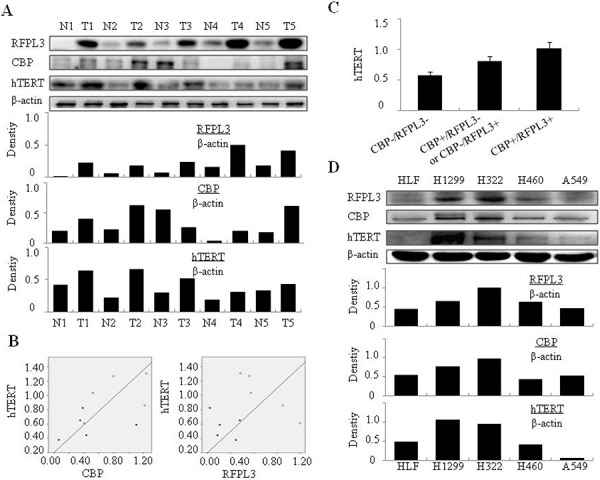
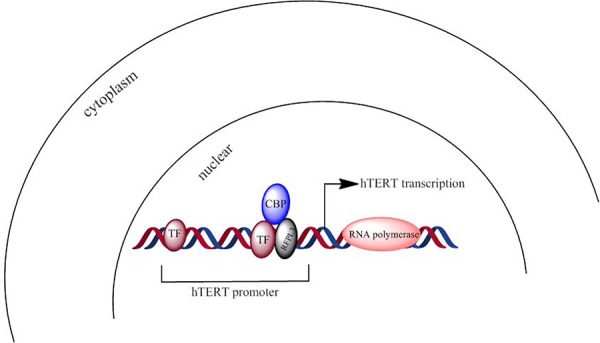
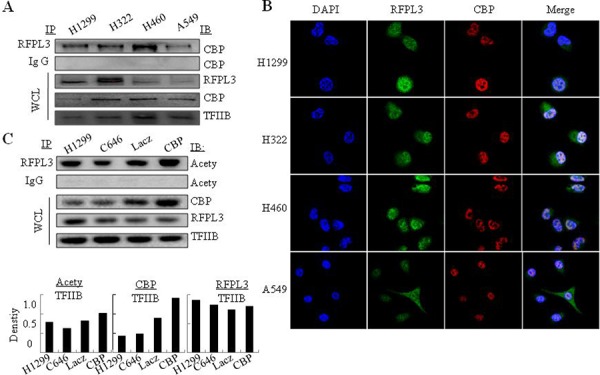
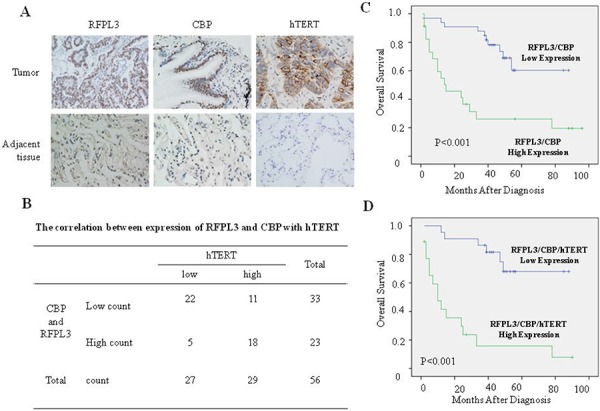
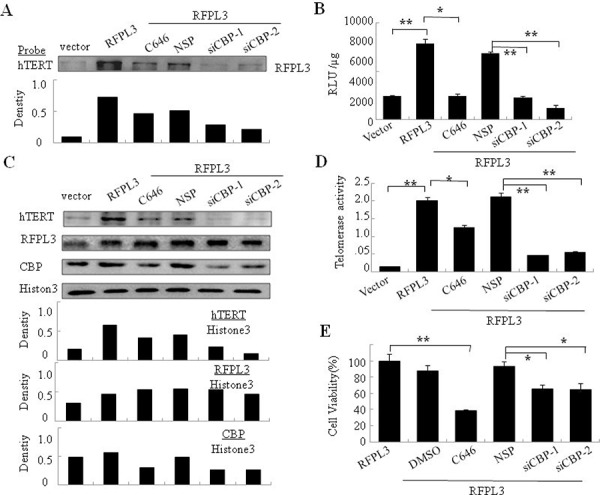
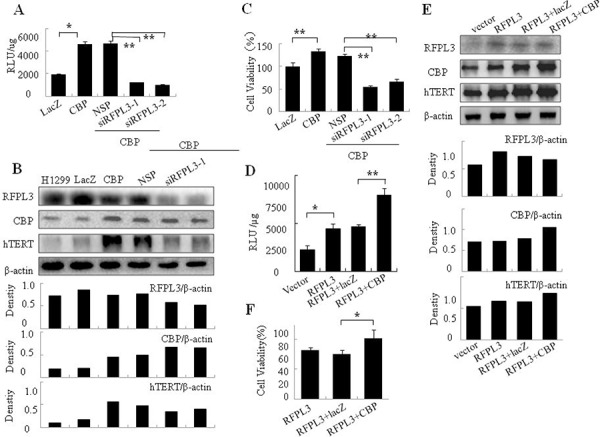
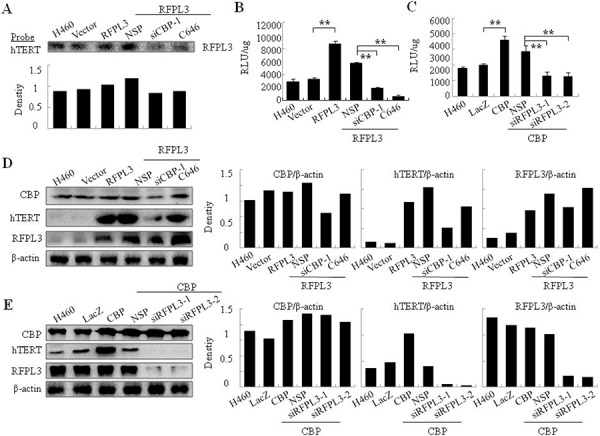
hTERT is the key component of telomerase and its overactivation contributes to maintaining telomere length and cell immortalization. Previously, we identified RFPL3 as a new transcription activator of hTERT in lung cancers. However, the exact mechanism of RFPL3 in mediating hTERT activation and its associated signal regulatory network remain unclear. In this study, we found that RFPL3 colocalized and interacted directly with CBP in the nucleus of lung cancer cells. Immunohistochemical analysis of tissue microarrays of lung cancers revealed the simultaneous overexpression of both RFPL3 and CBP predicted relatively poor prognosis. Furthermore, we confirmed their synergistic stimulation on hTERT expression and tumor cell growth. The binding of RFPL3 to hTERT promoter was reduced markedly when CBP was knocked down by its specific siRNA or suppressed by its inhibitor in lung cancer cells with stable overexpression of RFPL3. When one of the two proteins RFPL3 and CBP was upregulated or downregulated, whereas the another remains unchanged, hTERT expression and telomerase activity were activated or repressed accordingly. In the meantime, the growth of lung cancer cells was also promoted or attenuated accordingly. Furthermore, we also found that RFPL3 coordinated with CBP to upregulate hTERT through the CBP-induced acetylation of RFPL3 protein and their co-anchoring at hTERT promoter region. Collectively, our results reveal a new mechanism of hTERT regulation in lung cancer cells and suggest the RFPL3/CBP/hTERT signaling pathway may be a new targets for lung cancer treatment.
hTERT是端粒酶的关键组成部分,其过度激活有助于维持端粒长度和细胞永生化。此前,我们在肺癌中鉴定出RFPL3是hTERT的一种新的转录激活因子。然而,RFPL3介导hTERT激活的确切机制及其相关信号调节网络仍不清楚。在本研究中,我们发现RFPL3在肺癌细胞核中与CBP共定位并直接相互作用。对肺癌组织芯片的免疫组织化学分析显示,RFPL3和CBP同时过表达预示着相对较差的预后。此外,我们证实了它们对hTERT表达和肿瘤细胞生长的协同刺激作用。在稳定过表达RFPL3的肺癌细胞中,当CBP被其特异性siRNA敲低或被其抑制剂抑制时,RFPL3与hTERT启动子的结合显著减少。当RFPL3和CBP这两种蛋白中的一种上调或下调,而另一种保持不变时,hTERT表达和端粒酶活性相应地被激活或抑制。与此同时,肺癌细胞的生长也相应地受到促进或减弱。此外,我们还发现RFPL3与CBP协同作用,通过CBP诱导的RFPL3蛋白乙酰化及其在hTERT启动子区域的共同锚定来上调hTERT。总的来说,我们的结果揭示了肺癌细胞中hTERT调控的新机制,并表明RFPL3/CBP/hTERT信号通路可能是肺癌治疗的新靶点。