Kumar Atul, Tsai Wen-Chen, Tan Tai-Sheng, Kung Pei-Tseng, Chiu Li-Ting, Ku Ming-Chou
IRCAD-Taiwan, Chang Bing Show Chwan Memorial Hospital, Changhua, Taiwan, ROC; Department of Orthopedics, Chang Bing Show Chwan Memorial Hospital, Changhua, Taiwan, ROC.
Department of Health Services Administration, China Medical University, Taichung, Taiwan, ROC.
J Chin Med Assoc. 2015 Sep;78(9):538-44. doi: 10.1016/j.jcma.2015.06.005. Epub 2015 Aug 28.
Total joint replacement (TJR) accounts for a substantial proportion of the total expenditures for health care. Efficient utilization of health resources requires information regarding the trends of TJR. This study investigated the association of TJR with the demographic characteristics in Taiwan from 1998 to 2009. It also estimated the demand for total knee replacement (TKR) and total hip replacement (THR) in the next two decades.
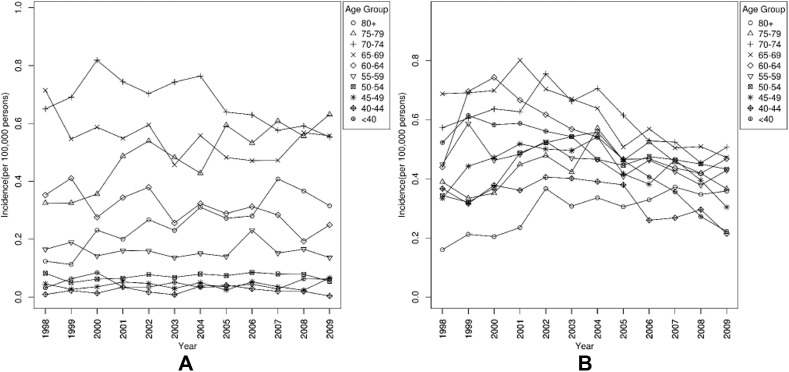
International Classification of Diseases-9 (ICD-9) procedure codes were used to identify the data for primary and revision TKRs and THRs between the years 1998 and 2009 from Taiwan's National Health Insurance Research Database. Age- and sex-specific rates of such procedures were calculated. The trend in TJR rate and its future estimation were studied with regression analyses.
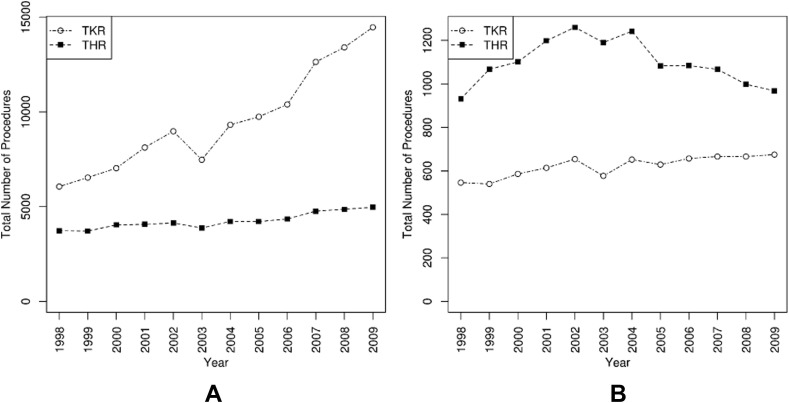
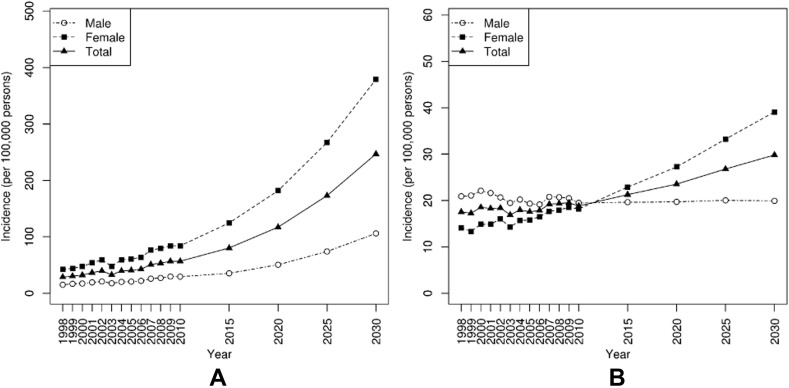
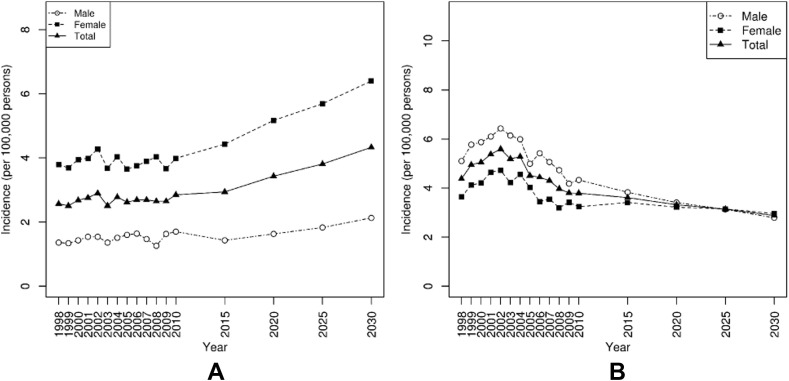
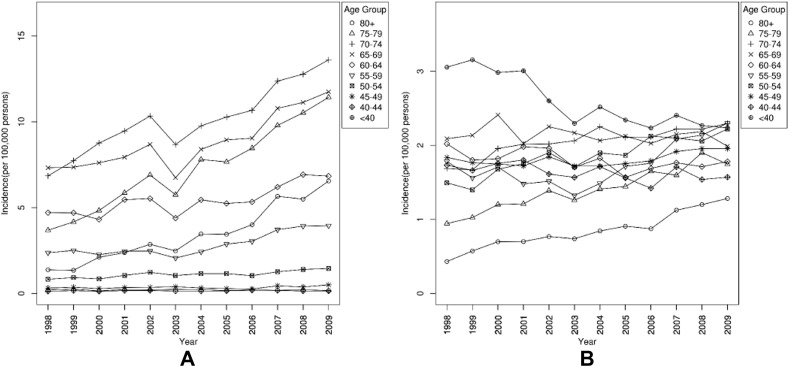
From 1998 to 2009, the number of primary TKRs increased by 99.1% and that of primary THRs increased by 11.3%. The number of revision TKRs increased by 3.1% and that of revision THRs decreased by 13.2%. Compared with their respective rates in 2005, the rates of primary TKR and primary THR were projected to increase by 508.2% and 69.7%, respectively, in 2030. The rate of revision TKR was predicted to increase by 75.3% and that of revision THR to decrease by 36.1%.
This study gives an insight into the current status burden of TJR in Taiwan. TJR rate projection would be useful for future planning of budget and resources for TJR in Taiwan.
全关节置换术(TJR)在医疗保健总支出中占相当大的比例。有效利用卫生资源需要有关TJR趋势的信息。本研究调查了1998年至2009年台湾地区TJR与人口统计学特征之间的关联。同时还估计了未来二十年全膝关节置换术(TKR)和全髋关节置换术(THR)的需求。
使用国际疾病分类第九版(ICD-9)手术编码,从台湾国民健康保险研究数据库中识别1998年至2009年期间初次和翻修TKR及THR的数据。计算了此类手术的年龄和性别特异性发生率。通过回归分析研究了TJR发生率的趋势及其未来估计。
1998年至2009年,初次TKR的数量增加了99.1%,初次THR的数量增加了11.3%。翻修TKR的数量增加了3.1%,翻修THR的数量减少了13.2%。与2005年各自的发生率相比,预计到2030年,初次TKR和初次THR的发生率将分别增加508.2%和69.7%。翻修TKR的发生率预计将增加75.3%,翻修THR的发生率预计将下降36.1%。
本研究深入了解了台湾地区TJR的现状负担。TJR发生率预测将有助于台湾地区未来TJR预算和资源的规划。