Wagner Cynthia E, Pope Nicolas H, Charles Eric J, Huerter Mary E, Sharma Ashish K, Salmon Morgan D, Carter Benjamin T, Stoler Mark H, Lau Christine L, Laubach Victor E, Kron Irving L
Department of Surgery, Division of Thoracic and Cardiovascular Surgery, University of Virginia, Charlottesville, Va.
School of Medicine, University of Virginia, Charlottesville, Va.
J Thorac Cardiovasc Surg. 2016 Feb;151(2):538-45. doi: 10.1016/j.jtcvs.2015.07.075. Epub 2015 Jul 30.
Ex vivo lung perfusion has been successful in the assessment of marginal donor lungs, including donation after cardiac death (DCD) donor lungs. Ex vivo lung perfusion also represents a unique platform for targeted drug delivery. We sought to determine whether ischemia-reperfusion injury would be decreased after transplantation of DCD donor lungs subjected to prolonged cold preservation and treated with an adenosine A2A receptor agonist during ex vivo lung perfusion.
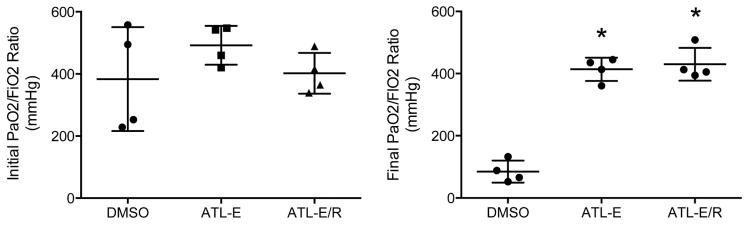
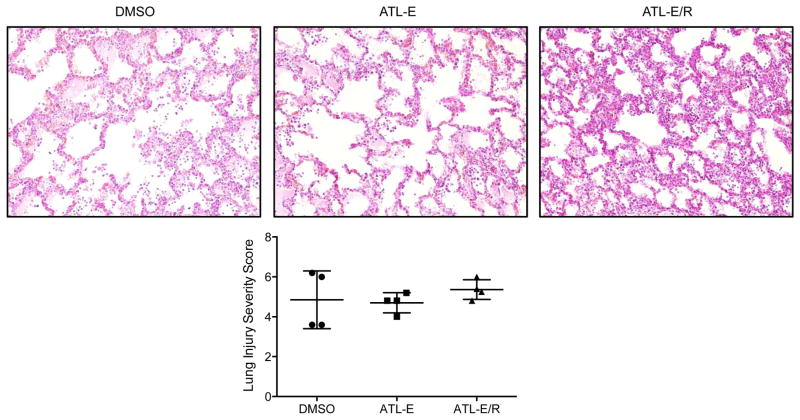
Porcine DCD donor lungs were preserved at 4°C for 12 hours and underwent ex vivo lung perfusion for 4 hours. Left lungs were then transplanted and reperfused for 4 hours. Three groups (n = 4/group) were randomized according to treatment with the adenosine A2A receptor agonist ATL-1223 or the dimethyl sulfoxide vehicle: Infusion of dimethyl sulfoxide during ex vivo lung perfusion and reperfusion (DMSO), infusion of ATL-1223 during ex vivo lung perfusion and dimethyl sulfoxide during reperfusion (ATL-E), and infusion of ATL-1223 during ex vivo lung perfusion and reperfusion (ATL-E/R). Final Pao2/Fio2 ratios (arterial oxygen partial pressure/fraction of inspired oxygen) were determined from samples obtained from the left superior and inferior pulmonary veins.
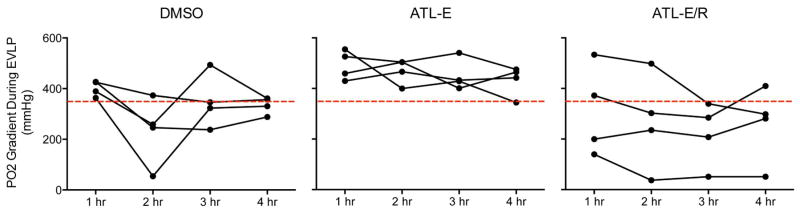
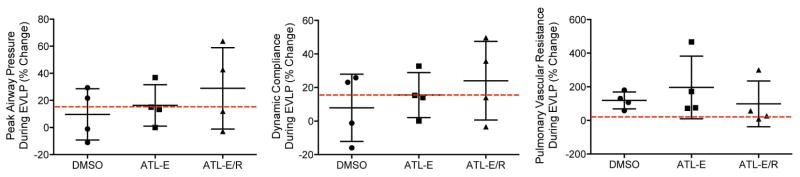
Final Pao2/Fio2 ratios in the ATL-E/R group (430.1 ± 26.4 mm Hg) were similar to final Pao2/Fio2 ratios in the ATL-E group (413.6 ± 18.8 mm Hg), but both treated groups had significantly higher final Pao2/Fio2 ratios compared with the dimethyl sulfoxide group (84.8 ± 17.7 mm Hg). Low oxygenation gradients during ex vivo lung perfusion did not preclude superior oxygenation capacity during reperfusion.
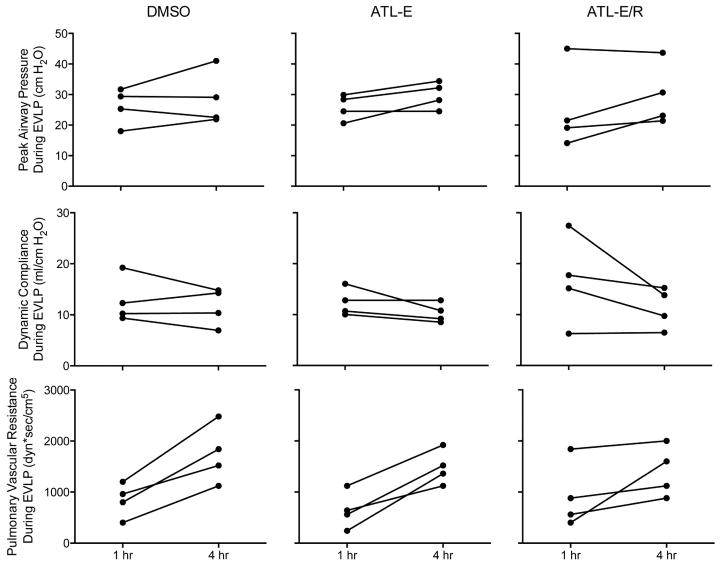
After prolonged cold preservation, treatment of DCD donor lungs with an adenosine A2A receptor agonist during ex vivo lung perfusion enabled Pao2/Fio2 ratios greater than 400 mm Hg after transplantation in a preclinical porcine model. Pulmonary function during ex vivo lung perfusion was not predictive of outcomes after transplantation.
体外肺灌注已成功用于评估边缘供肺,包括心脏死亡后捐赠(DCD)供肺。体外肺灌注也是一个独特的靶向给药平台。我们试图确定,在长时间冷保存后进行体外肺灌注期间用腺苷A2A受体激动剂治疗的DCD供肺移植后,缺血再灌注损伤是否会减轻。
将猪DCD供肺在4℃保存12小时,进行4小时的体外肺灌注。然后移植左肺并再灌注4小时。根据用腺苷A2A受体激动剂ATL-1223或二甲亚砜载体治疗将三组(每组n = 4)随机分组:在体外肺灌注和再灌注期间输注二甲亚砜(DMSO),在体外肺灌注期间输注ATL-1223并在再灌注期间输注二甲亚砜(ATL-E),以及在体外肺灌注和再灌注期间输注ATL-1223(ATL-E/R)。从左上和左下肺静脉采集的样本中测定最终的动脉血氧分压/吸入氧分数(Pao2/Fio2)比值。
ATL-E/R组的最终Pao2/Fio2比值(430.1±26.4 mmHg)与ATL-E组的最终Pao2/Fio2比值(413.6±18.8 mmHg)相似,但与二甲亚砜组(84.8±17.7 mmHg)相比,两个治疗组的最终Pao2/Fio2比值均显著更高。体外肺灌注期间的低氧合梯度并不排除再灌注期间的优越氧合能力。
在长时间冷保存后,在临床前猪模型中,体外肺灌注期间用腺苷A2A受体激动剂治疗DCD供肺可使移植后的Pao2/Fio2比值大于400 mmHg。体外肺灌注期间的肺功能不能预测移植后的结果。