Delestré Laure, Bakey Zeineb, Prado Cécilia, Hoffmann Sigrid, Bihoreau Marie-Thérèse, Lelongt Brigitte, Gauguier Dominique
Sorbonne Universities, University Pierre and Marie Curie, University Paris Descartes, Sorbonne Paris Cité, INSERM, UMR_S1138, Cordeliers Research Centre, Paris, France.
Sorbonne Universities, University Pierre and Marie Curie, UMR_S1155, Paris, France; INSERM, UMR_S1155 Hôpital Tenon, Paris, France.
PLoS One. 2015 Sep 1;10(9):e0136781. doi: 10.1371/journal.pone.0136781. eCollection 2015.
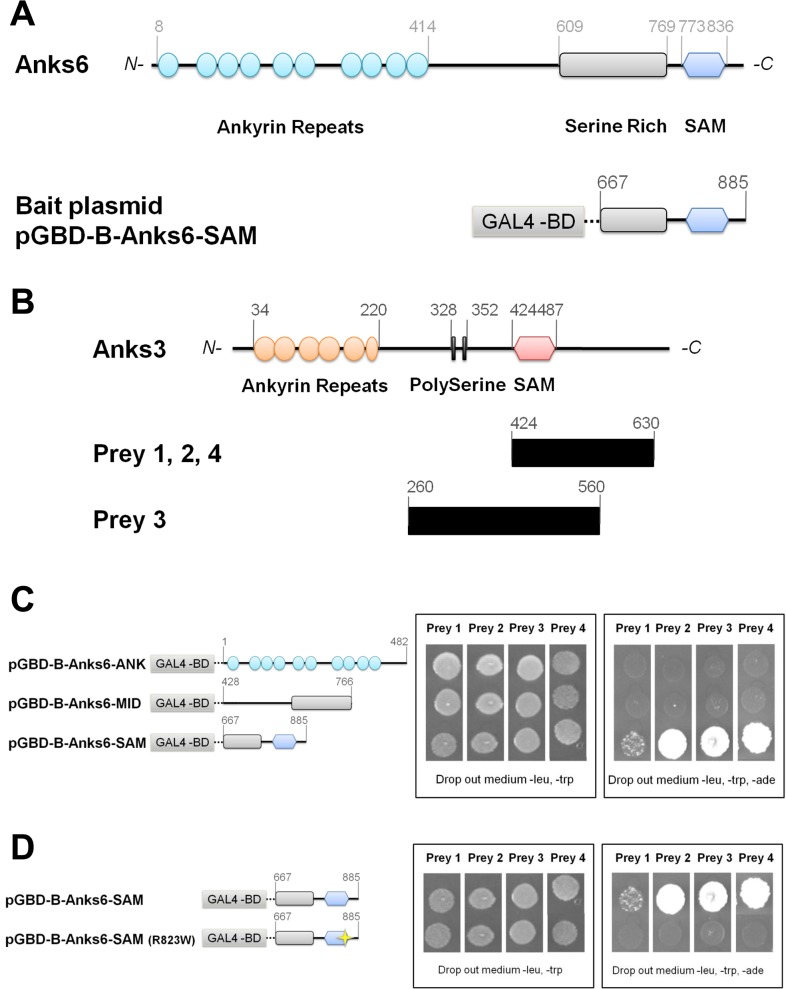
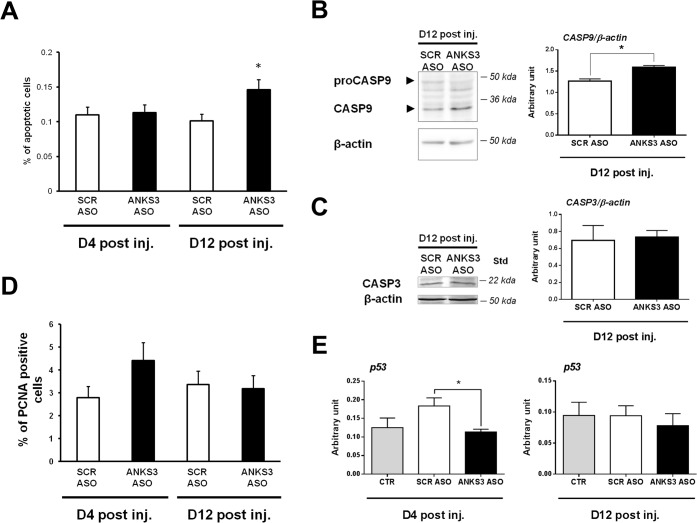
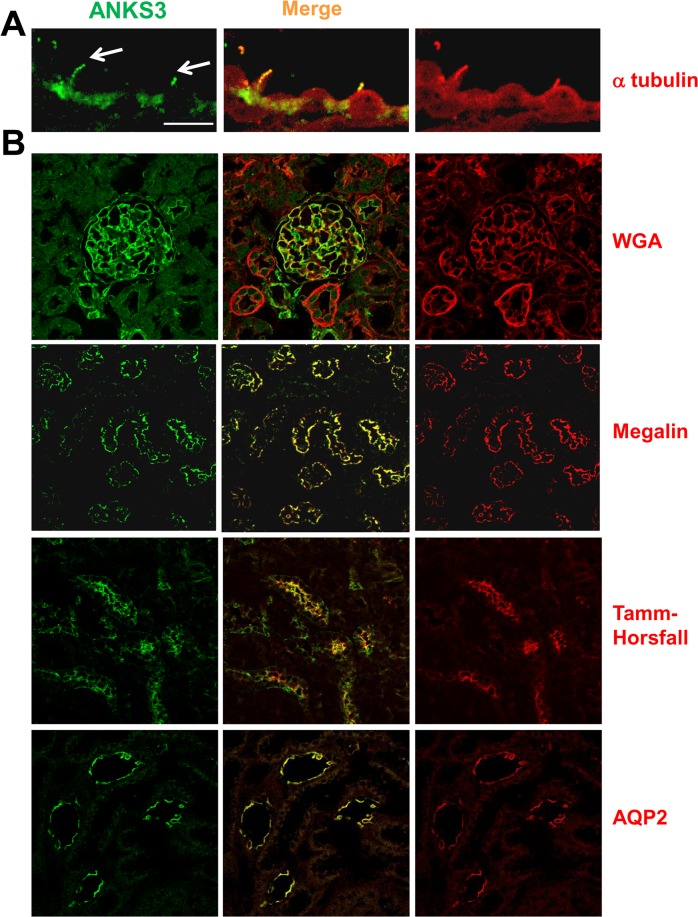
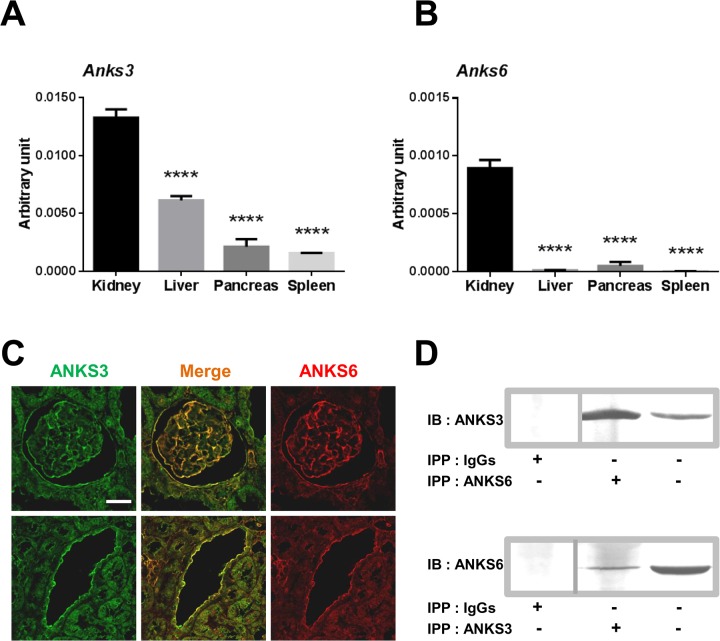
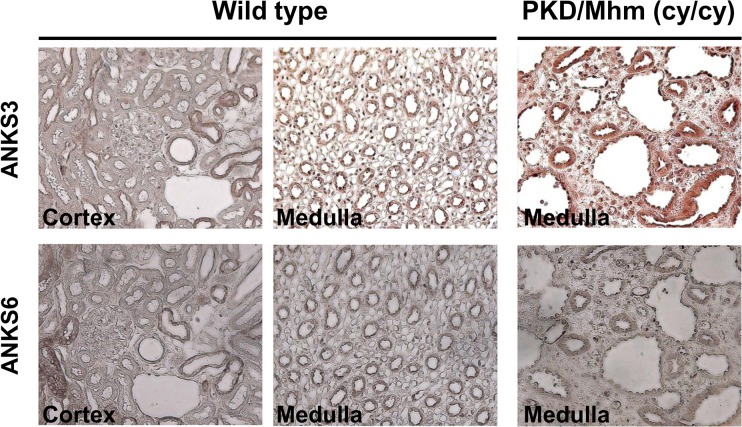
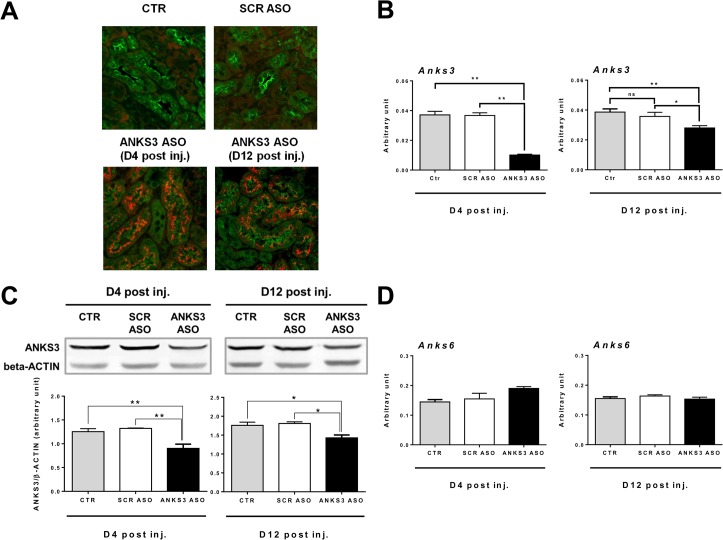
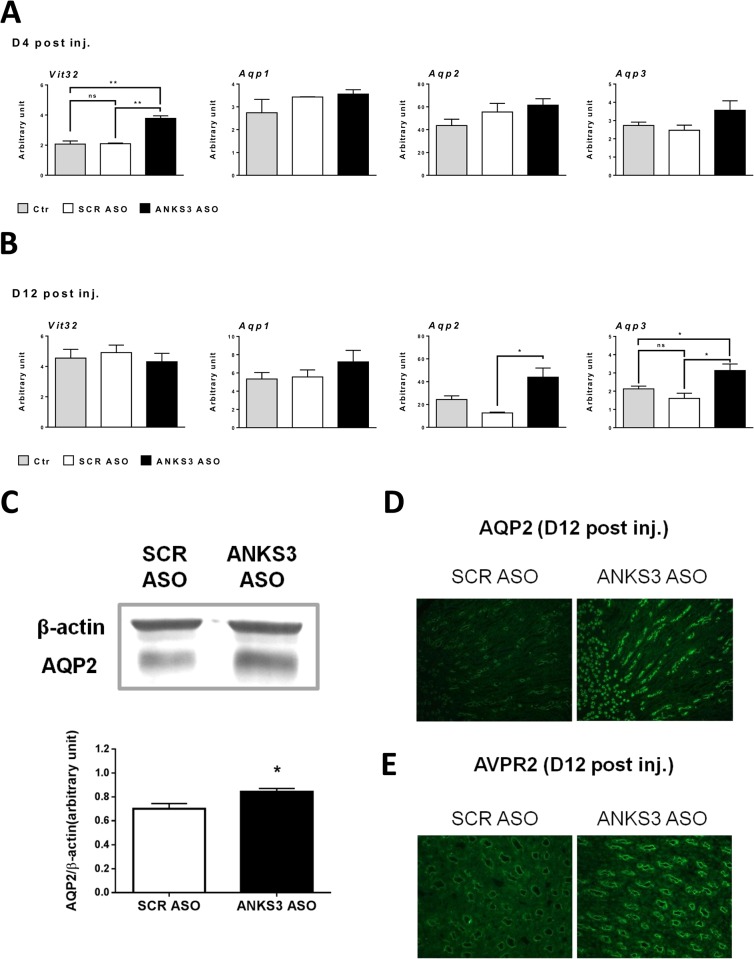
Mutations in Ankyrin repeat and sterile alpha motif domain containing 6 (ANKS6) play a causative role in renal cyst formation in the PKD/Mhm(cy/+) rat model of polycystic kidney disease and in nephronophthisis in humans. A network of protein partners of ANKS6 is emerging and their functional characterization provides important clues to understand the role of ANKS6 in renal biology and in mechanisms involved in the formation of renal cysts. Following experimental confirmation of interaction between ANKS6and ANKS3 using a Yeast two hybrid system, we demonstrated that binding between the two proteins occurs through their sterile alpha motif (SAM) and that the amino acid 823 in rat ANSK6 is key for this interaction. We further showed their interaction by co-immunoprecipitation and showed in vivo in mice that ANKS3 is present in renal cilia. Downregulated expression of Anks3 in vivo in mice by Locked Nucleic Acid (LNA) modified antisense oligonucleotides was associated with increased transcription of vasopressin-induced genes, suggesting changes in renal water permeability, and altered transcription of genes encoding proteins involved in cilium structure, apoptosis and cell proliferation. These data provide experimental evidence of ANKS3-ANKS6 direct interaction through their SAM domain and co-localisation in mouse renal cilia, and shed light on molecular mechanisms indirectly mediated by ANKS6 in the mouse kidney, that may be affected by altered ANKS3-ANKS6 interaction. Our results contribute to improved knowledge of the structure and function of the network of proteins interacting with ANKS6, which may represent therapeutic targets in cystic diseases.
含锚蛋白重复序列和无活性α基序结构域6(ANKS6)的突变在多囊肾病的PKD/Mhm(cy/+)大鼠模型的肾囊肿形成以及人类的肾单位肾痨中起致病作用。ANKS6的蛋白质伙伴网络正在形成,对它们的功能表征为理解ANKS6在肾脏生物学以及肾囊肿形成机制中的作用提供了重要线索。在使用酵母双杂交系统对ANKS6和ANKS3之间的相互作用进行实验确认后,我们证明这两种蛋白质之间的结合是通过它们的无活性α基序(SAM)发生的,并且大鼠ANKSK6中的第823位氨基酸对于这种相互作用至关重要。我们通过免疫共沉淀进一步展示了它们的相互作用,并在小鼠体内表明ANKS3存在于肾纤毛中。通过锁核酸(LNA)修饰的反义寡核苷酸在小鼠体内下调Anks3的表达与血管加压素诱导基因的转录增加有关,这表明肾水通透性发生了变化,并且编码参与纤毛结构、细胞凋亡和细胞增殖的蛋白质的基因转录也发生了改变。这些数据提供了ANKS3-ANKS6通过其SAM结构域直接相互作用以及在小鼠肾纤毛中共定位的实验证据,并揭示了ANKS6在小鼠肾脏中间接介导的分子机制,这些机制可能会受到ANKS3-ANKS6相互作用改变的影响。我们的结果有助于增进对与ANKS6相互作用的蛋白质网络的结构和功能的了解,这可能代表囊性疾病的治疗靶点。