Zhu Hongyi, Cheng Xiangguo, Niu Xin, Zhang Yuelei, Guan Junjie, Liu Xiaolin, Tao Shicong, Wang Yang, Zhang Changqing
1. Department of Orthopaedic Surgery, Shanghai Jiaotong University Affiliated Sixth People's Hospital, Shanghai 200233, China.
1. Department of Orthopaedic Surgery, Shanghai Jiaotong University Affiliated Sixth People's Hospital, Shanghai 200233, China. ; 2. Institute of Microsurgery on Extremities, Shanghai Jiaotong University Affiliated Sixth People's Hospital, Shanghai 200233, China.
Int J Biol Sci. 2015 Aug 8;11(10):1181-9. doi: 10.7150/ijbs.12500. eCollection 2015.
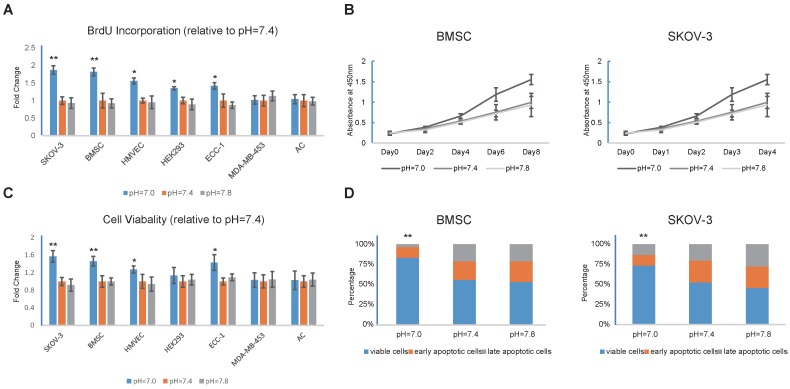
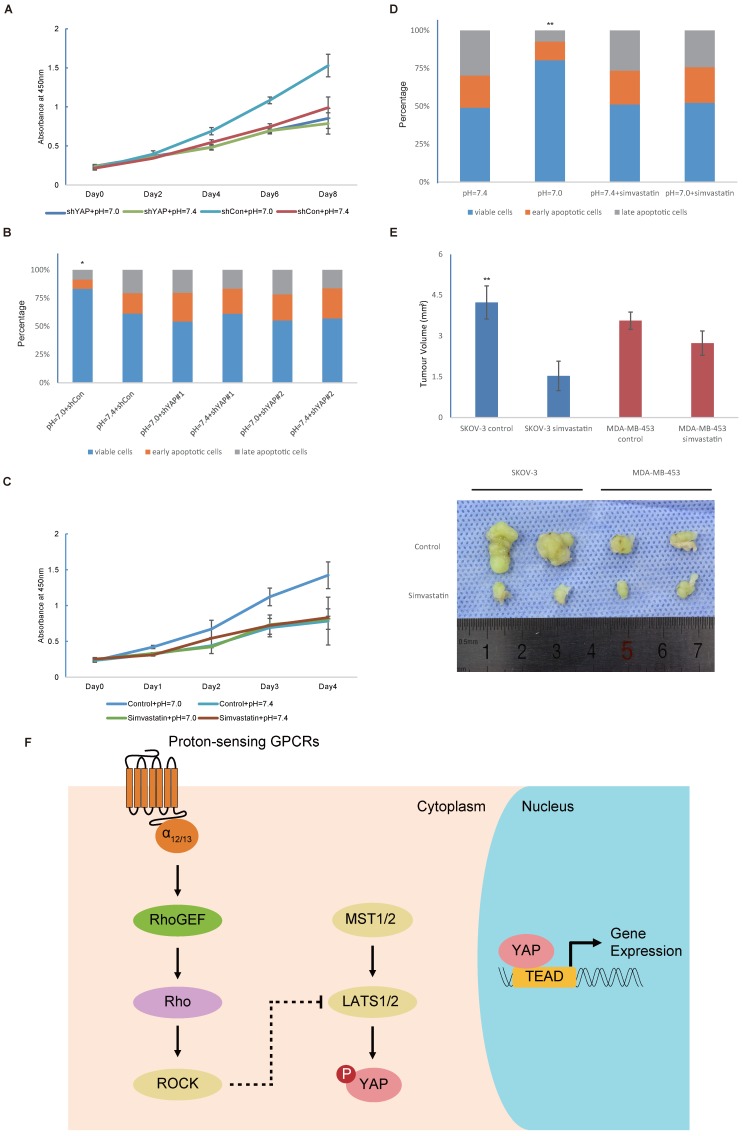
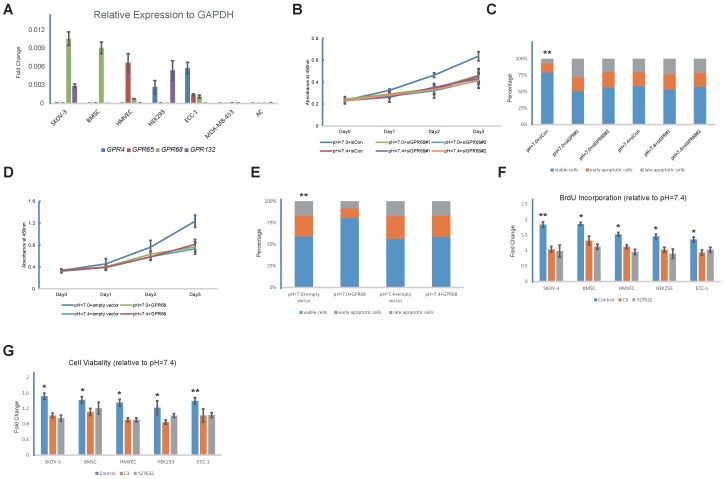
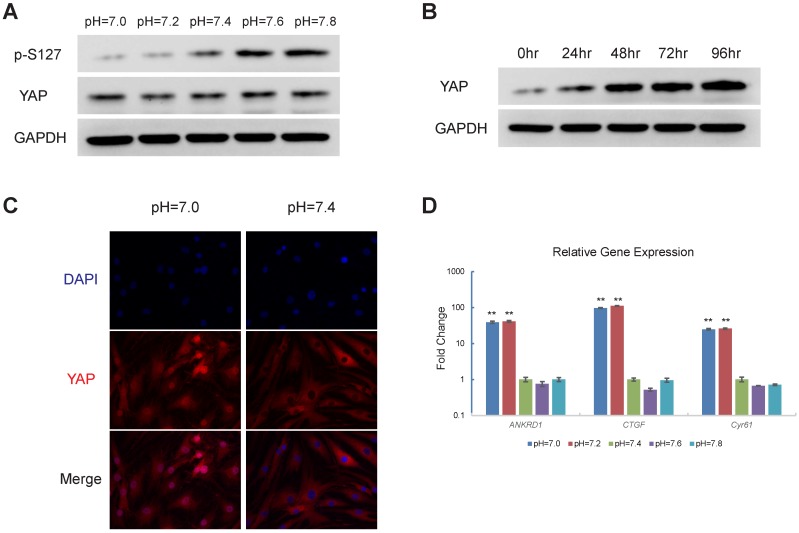
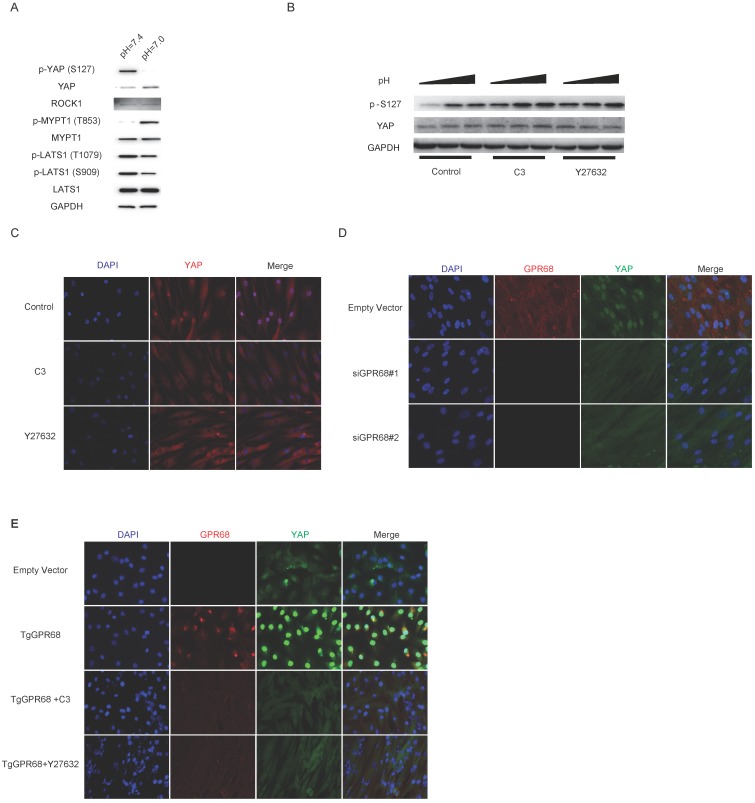
The pHs of extracellular fluids (ECFs) in humans are consistently maintained at 7.35 to 7.45 in physiological conditions. Pathological changes, including infarction, tumourigenesis and inflammation, commonly result in decreases in the ECF pH in the affected tissues. In this study, we report that proliferation is promoted and apoptosis is inhibited by decreases in extracellular pH. Furthermore, we demonstrated that proton-sensing G-protein-coupled receptors (GPCRs) are required for the pH-dependent regulation of proliferation and apoptosis through the G protein α subunit 12/13 (G12/13) and Rho GTPases. Next, we identified Yes-associated protein 1 (YAP) as a downstream effector of Rho signalling. Together, the results from our study demonstrate that extracellular pH can modulate cell proliferation and apoptosis by regulating the proton-sensing GPCR-YAP pathway.
在生理条件下,人体细胞外液(ECF)的pH值始终维持在7.35至7.45之间。包括梗死、肿瘤发生和炎症在内的病理变化通常会导致受影响组织中ECF的pH值降低。在本研究中,我们报告细胞外pH值降低会促进细胞增殖并抑制细胞凋亡。此外,我们证明质子感应G蛋白偶联受体(GPCR)是通过G蛋白α亚基12/13(G12/13)和Rho GTP酶对增殖和凋亡进行pH依赖性调节所必需的。接下来,我们确定Yes相关蛋白1(YAP)是Rho信号的下游效应器。总之,我们的研究结果表明,细胞外pH值可以通过调节质子感应GPCR-YAP途径来调节细胞增殖和凋亡。