Lopez Salvatore, Cocco Emiliano, Black Jonathan, Bellone Stefania, Bonazzoli Elena, Predolini Federica, Ferrari Francesca, Schwab Carlton L, English Diana P, Ratner Elena, Silasi Dan-Arin, Azodi Masoud, Schwartz Peter E, Terranova Corrado, Angioli Roberto, Santin Alessandro D
Division of Gynecologic Oncology, University Campus Bio-Medico of Rome, Rome, Italy. Department of Obstetrics, Gynecology and Reproductive Sciences, Yale University School of Medicine, New Haven, Connecticut.
Department of Obstetrics, Gynecology and Reproductive Sciences, Yale University School of Medicine, New Haven, Connecticut.
Mol Cancer Ther. 2015 Nov;14(11):2519-26. doi: 10.1158/1535-7163.MCT-15-0383. Epub 2015 Sep 2.
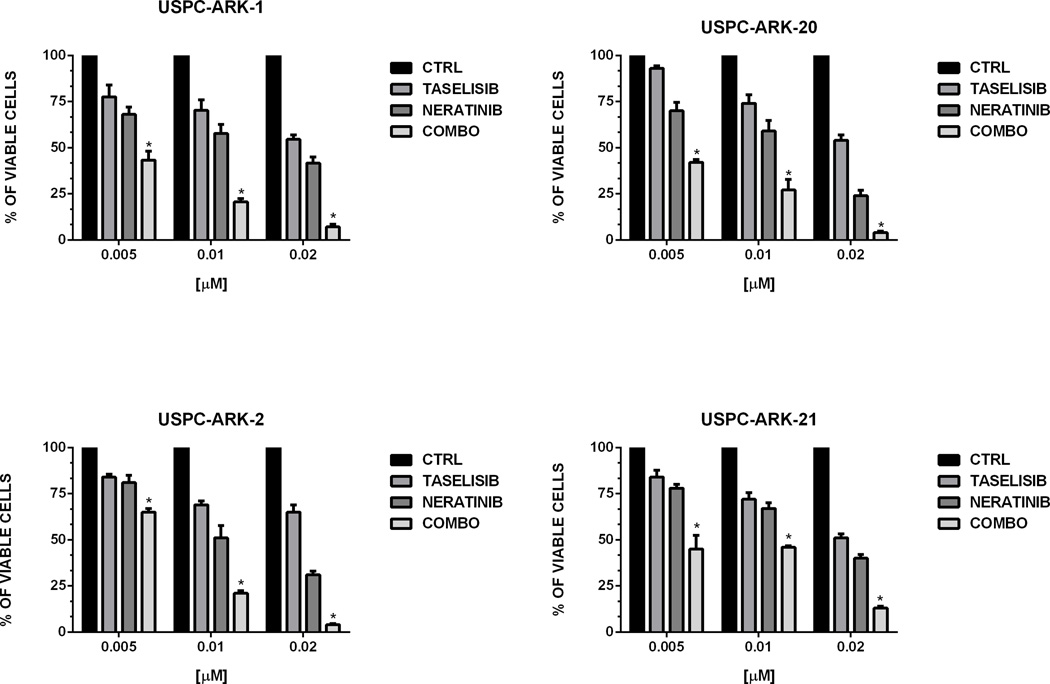
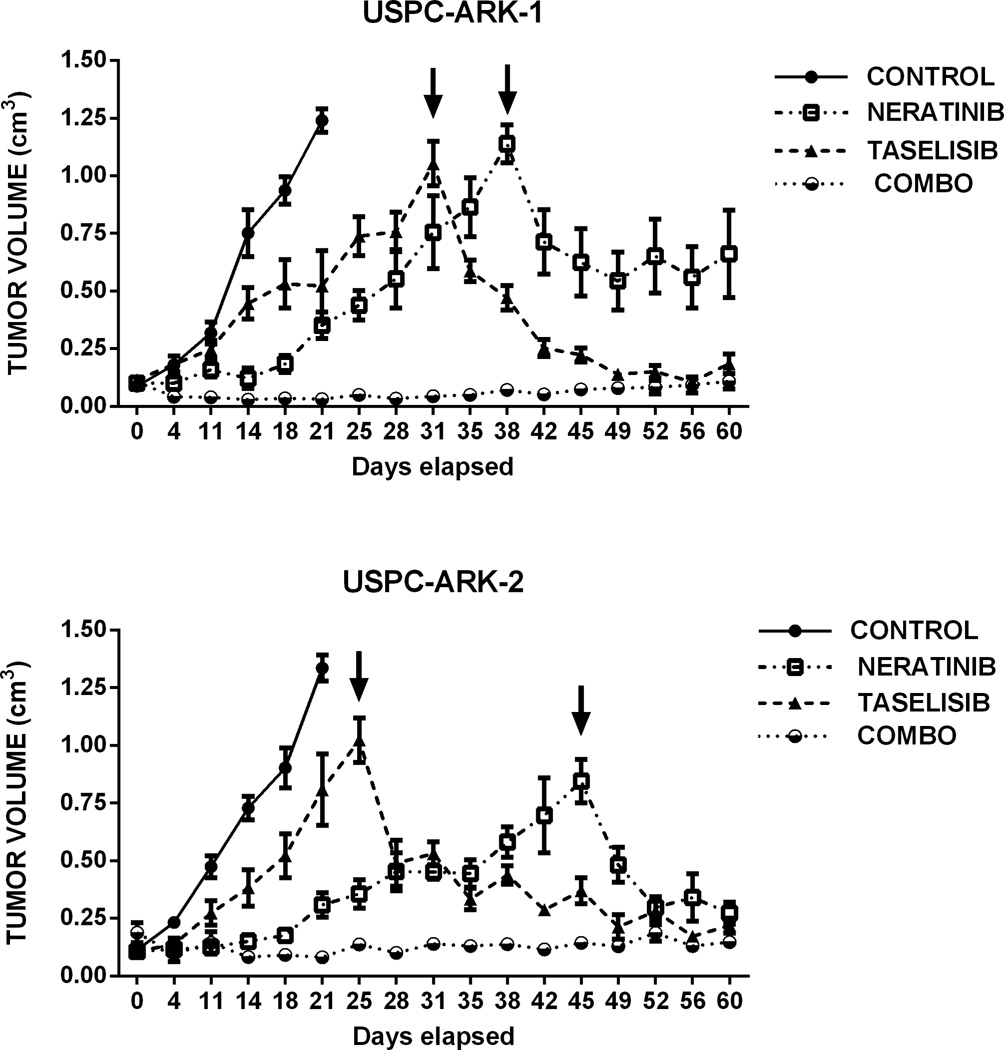
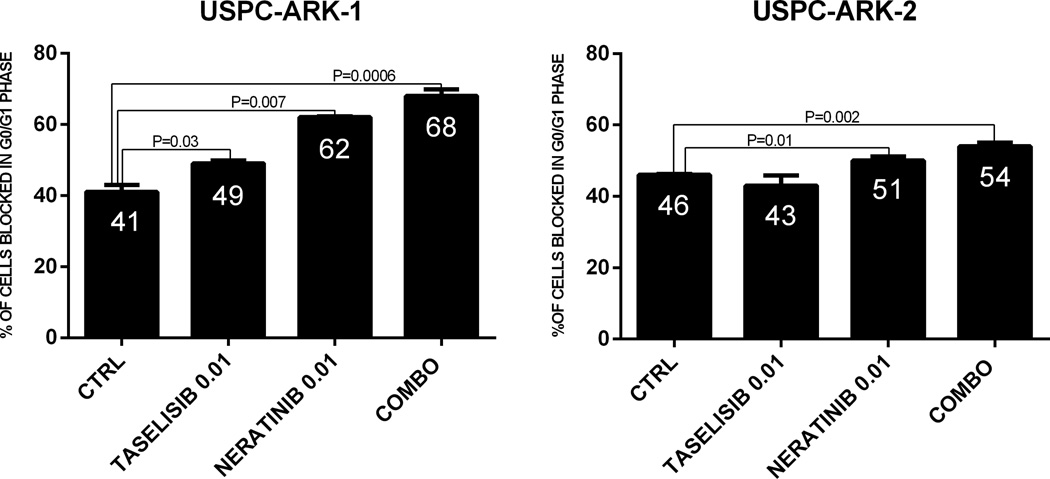
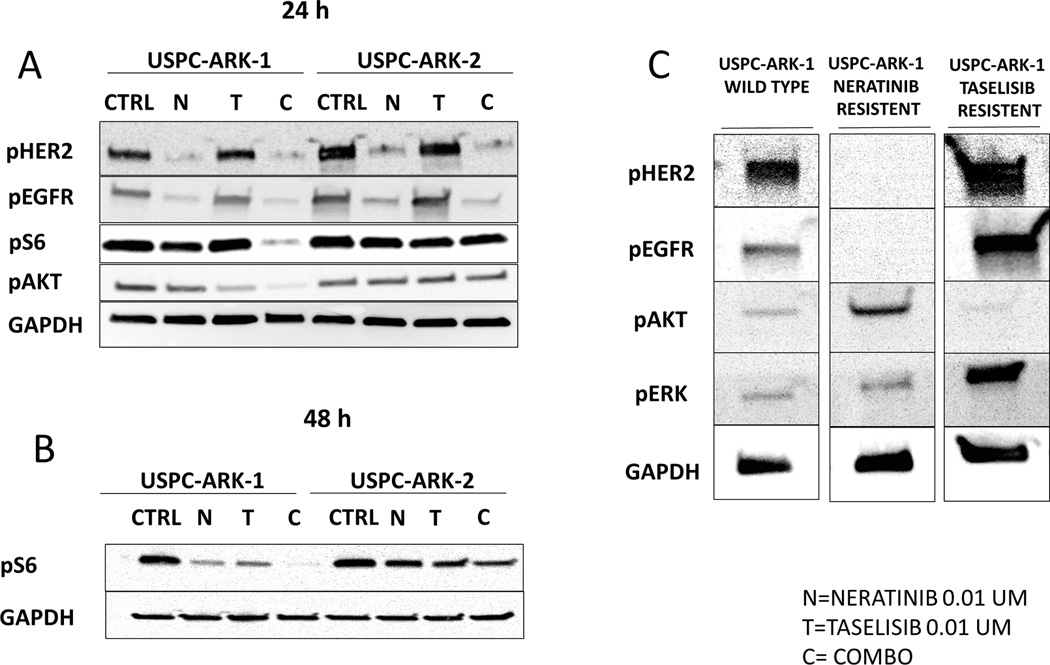
HER2/neu gene amplification and PIK3CA driver mutations are common in uterine serous carcinoma (USC) and may represent ideal therapeutic targets against this aggressive variant of endometrial cancer. We examined the sensitivity to neratinib, taselisib, and the combination of the two compounds in in vitro and in vivo experiments using PIK3CA-mutated and PIK3CA wild-type HER2/neu-amplified USC cell lines. Cell viability and cell-cycle distribution were assessed using flow-cytometry assays. Downstream signaling was assessed by immunoblotting. Preclinical efficacy of single versus dual inhibition was evaluated in vivo using two USC xenografts. We found both single-agent neratinib and taselisib to be active but only transiently effective in controlling the in vivo growth of USC xenografts harboring HER2/neu gene amplification with or without oncogenic PIK3CA mutations. In contrast, the combination of the two inhibitors caused a stronger and long-lasting growth inhibition in both USC xenografts when compared with single-agent therapy. Combined targeting of HER2 and PIK3CA was associated with a significant and dose-dependent increase in the percentage of cells in the G0-G1 phase of the cell cycle and a dose-dependent decline in the phosphorylation of S6. Importantly, dual inhibition therapy initiated after tumor progression in single-agent-treated mice was still remarkably effective at inducing tumor regression in both large PIK3CA and pan-ErbB inhibitor-resistant USC xenografts. Dual HER2/PIK3CA blockade may represent a novel therapeutic option for USC patients harboring tumors with HER2/neu gene amplification and mutated or wild-type PIK3CA resistant to chemotherapy.
HER2/neu基因扩增和PIK3CA驱动突变在子宫浆液性癌(USC)中很常见,可能是针对这种侵袭性子宫内膜癌变体的理想治疗靶点。我们使用PIK3CA突变型和PIK3CA野生型HER2/neu扩增的USC细胞系,在体外和体内实验中检测了对奈拉替尼、塔西利布以及这两种化合物联合使用的敏感性。使用流式细胞术检测细胞活力和细胞周期分布。通过免疫印迹评估下游信号传导。使用两种USC异种移植模型在体内评估单药与双药抑制的临床前疗效。我们发现单药奈拉替尼和塔西利布均有活性,但在控制携带HER2/neu基因扩增且有或无致癌性PIK3CA突变的USC异种移植瘤的体内生长方面仅具有短暂疗效。相比之下,与单药治疗相比,两种抑制剂联合使用在两种USC异种移植瘤中均引起更强且持久的生长抑制。联合靶向HER2和PIK3CA与细胞周期G0-G1期细胞百分比显著且剂量依赖性增加以及S6磷酸化剂量依赖性下降相关。重要的是,在单药治疗小鼠肿瘤进展后开始的双药抑制疗法在诱导大型PIK3CA和泛ErbB抑制剂耐药的USC异种移植瘤消退方面仍然非常有效。双重HER2/PIK3CA阻断可能是携带HER2/neu基因扩增且PIK3CA突变或野生型对化疗耐药的肿瘤的USC患者的一种新的治疗选择。