Narayan Satya, Sharma Ritika
Department of Anatomy and Cell Biology, University of Florida, Gainesville, FL 32610 United States.
Department of Anatomy and Cell Biology, University of Florida, Gainesville, FL 32610 United States.
Life Sci. 2015 Oct 15;139:145-52. doi: 10.1016/j.lfs.2015.08.019. Epub 2015 Sep 1.
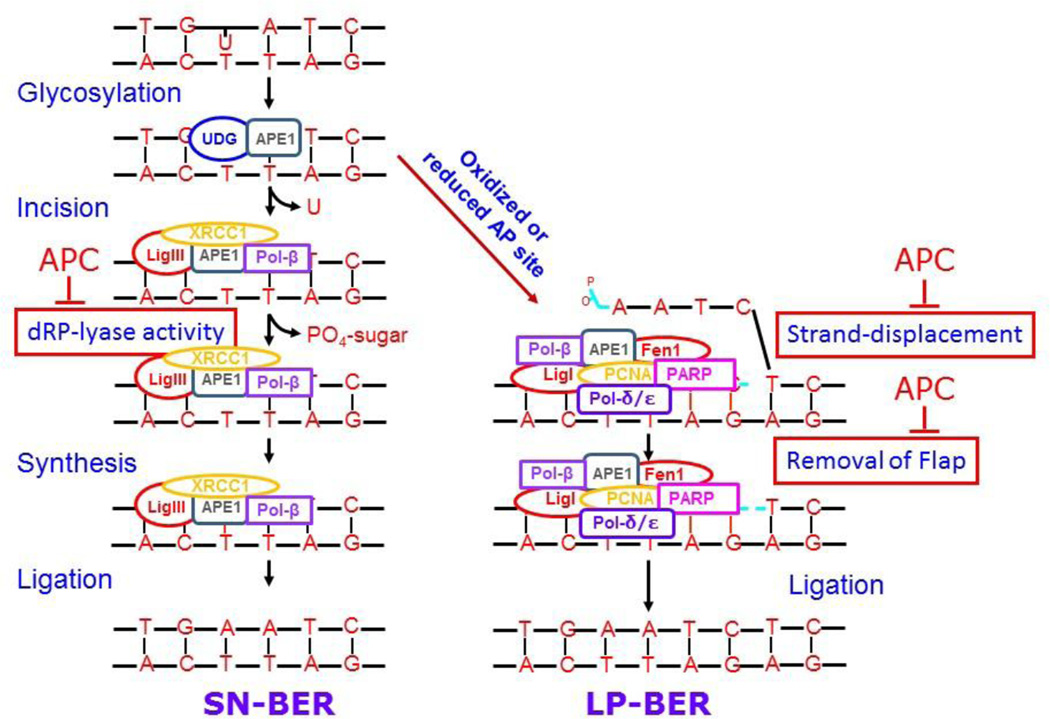
Colorectal cancer (CRC) is the third leading cause of death in both men and women in North America. Despite chemotherapeutic efforts, CRC is associated with a high degree of morbidity and mortality. Thus, to develop effective treatment strategies for CRC, one needs knowledge of the pathogenesis of cancer development and cancer resistance. It is suggested that colonic tumors or cell lines harbor truncated adenomatous polyposis coli (APC) without DNA repair inhibitory (DRI)-domain. It is also thought that the product of the APC gene can modulate base excision repair (BER) pathway through an interaction with DNA polymerase β (Pol-β) and flap endonuclease 1 (Fen-1) to mediate CRC cell apoptosis. The proposed therapy with temozolomide (TMZ) exploits this particular pathway; however, a high percentage of colorectal tumors continue to develop resistance to chemotherapy due to mismatch repair (MMR)-deficiency. In the present communication, we have comprehensively reviewed a critical issue that has not been addressed previously: a novel mechanism by which APC-induced blockage of single nucleotide (SN)- and long-patch (LP)-BER play role in DNA-alkylation damage-induced colorectal carcinogenesis.
结直肠癌(CRC)是北美男性和女性中第三大死因。尽管进行了化疗,但CRC仍与高度的发病率和死亡率相关。因此,要开发有效的CRC治疗策略,需要了解癌症发生和癌症耐药性的发病机制。有人提出,结肠肿瘤或细胞系中存在截短的腺瘤性息肉病 coli(APC),且没有DNA修复抑制(DRI)结构域。也有人认为,APC基因的产物可通过与DNA聚合酶β(Pol-β)和瓣状核酸内切酶1(Fen-1)相互作用来调节碱基切除修复(BER)途径,从而介导CRC细胞凋亡。所提出的替莫唑胺(TMZ)治疗方法利用了这一特定途径;然而,由于错配修复(MMR)缺陷,高比例的结肠肿瘤仍会对化疗产生耐药性。在本通讯中,我们全面回顾了一个以前未被解决的关键问题:APC诱导的单核苷酸(SN)和长片段(LP)-BER阻断在DNA烷基化损伤诱导的结直肠癌发生中发挥作用的新机制。