Papsdorf Katharina, Kaiser Christoph J O, Drazic Adrian, Grötzinger Stefan W, Haeßner Carmen, Eisenreich Wolfgang, Richter Klaus
Department Chemie, Lehrstuhl für Biotechnologie, Technische Universität München, Lichtenbergstraße 4, 85748, Garching, Germany.
Department Chemie, Fachgebiet Elektronenmikroskopie, Technische Universität München, Lichtenbergstraße 4, 85748, Garching, Germany.
BMC Genomics. 2015 Sep 3;16(1):662. doi: 10.1186/s12864-015-1831-7.
Protein aggregation and its pathological effects are the major cause of several neurodegenerative diseases. In Huntington's disease an elongated stretch of polyglutamines within the protein Huntingtin leads to increased aggregation propensity. This induces cellular defects, culminating in neuronal loss, but the connection between aggregation and toxicity remains to be established.
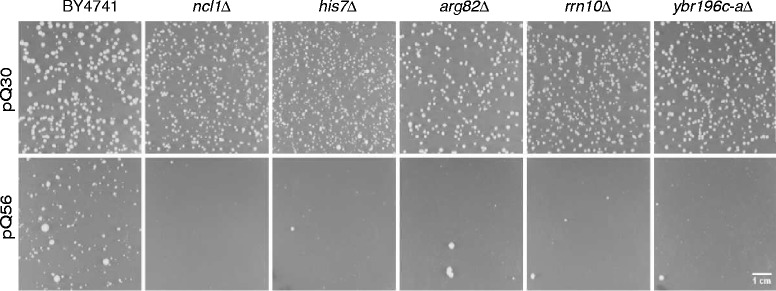
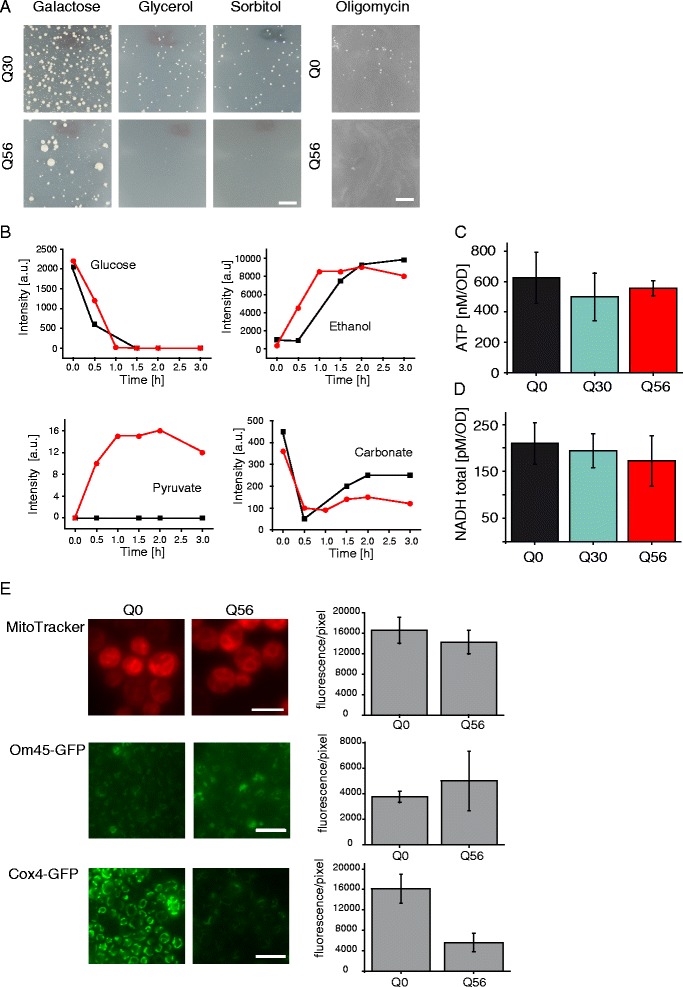
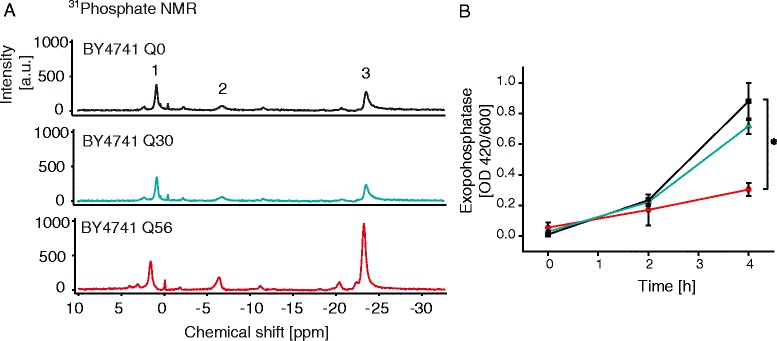
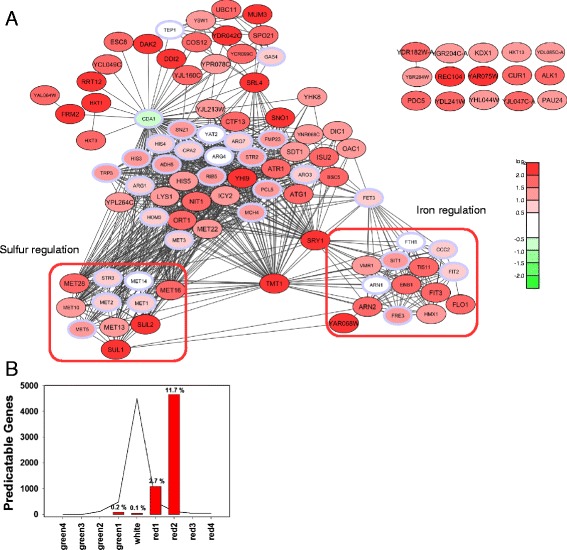
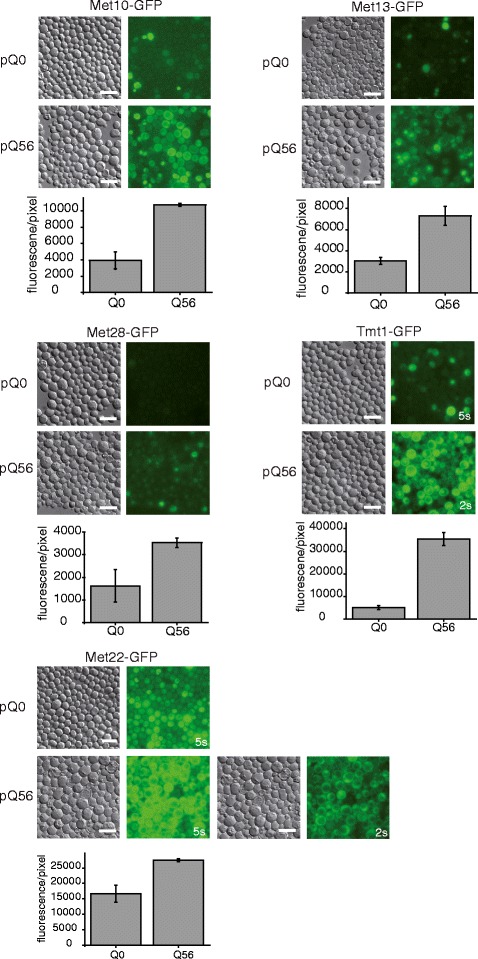
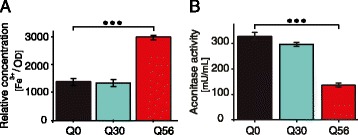
To uncover cellular pathways relevant for intoxication we used genome-wide analyses in a yeast model system and identify fourteen genes that, if deleted, result in higher polyglutamine toxicity. Several of these genes, like UGO1, ATP15 and NFU1 encode mitochondrial proteins, implying that a challenged mitochondrial system may become dysfunctional during polyglutamine intoxication. We further employed microarrays to decipher the transcriptional response upon polyglutamine intoxication, which exposes an upregulation of genes involved in sulfur and iron metabolism and mitochondrial Fe-S cluster formation. Indeed, we find that in vivo iron concentrations are misbalanced and observe a reduction in the activity of the prominent Fe-S cluster containing protein aconitase. Like in other yeast strains with impaired mitochondria, non-fermentative growth is impossible after intoxication with the polyglutamine protein. NMR-based metabolic analyses reveal that mitochondrial metabolism is reduced, leading to accumulation of metabolic intermediates in polyglutamine-intoxicated cells.
These data show that damages to the mitochondrial system occur in polyglutamine intoxicated yeast cells and suggest an intricate connection between polyglutamine-induced toxicity, mitochondrial functionality and iron homeostasis in this model system.
蛋白质聚集及其病理效应是多种神经退行性疾病的主要病因。在亨廷顿舞蹈症中,亨廷顿蛋白内一段延长的多聚谷氨酰胺序列导致聚集倾向增加。这会引发细胞缺陷,最终导致神经元丧失,但聚集与毒性之间的联系仍有待确定。
为了揭示与中毒相关的细胞途径,我们在酵母模型系统中进行了全基因组分析,并鉴定出14个基因,这些基因若被删除,会导致更高的多聚谷氨酰胺毒性。其中几个基因,如UGO1、ATP15和NFU1编码线粒体蛋白,这意味着在多聚谷氨酰胺中毒期间,受到挑战的线粒体系统可能会功能失调。我们进一步利用微阵列来解读多聚谷氨酰胺中毒后的转录反应,结果显示参与硫和铁代谢以及线粒体铁硫簇形成的基因上调。事实上,我们发现体内铁浓度失衡,并观察到含有突出铁硫簇的蛋白质乌头酸酶的活性降低。与其他线粒体受损的酵母菌株一样,用多聚谷氨酰胺蛋白中毒后无法进行非发酵生长。基于核磁共振的代谢分析表明,线粒体代谢减少,导致多聚谷氨酰胺中毒细胞中代谢中间体积累。
这些数据表明,多聚谷氨酰胺中毒的酵母细胞中线粒体系统受损,并表明在该模型系统中多聚谷氨酰胺诱导的毒性、线粒体功能和铁稳态之间存在复杂的联系。