Kennedy Alyssa L, Vallurupalli Mounica, Chen Liying, Crompton Brian, Cowley Glenn, Vazquez Francisca, Weir Barbara A, Tsherniak Aviad, Parasuraman Sudha, Kim Sunkyu, Alexe Gabriela, Stegmaier Kimberly
Department of Pediatric Oncology, Dana-Farber Cancer Institute and Boston Children's Hospital, Boston, Massachusetts, USA.
Boston Combined Residency Program in Pediatrics, Boston, Massachusetts, USA.
Oncotarget. 2015 Oct 6;6(30):30178-93. doi: 10.18632/oncotarget.4903.
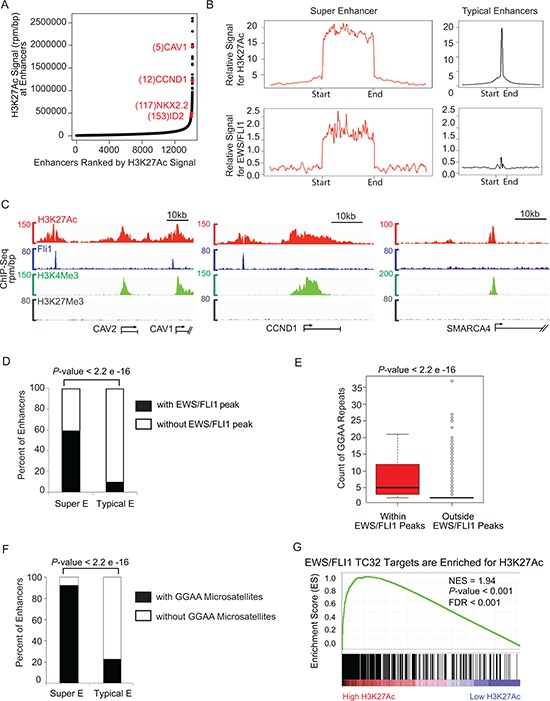
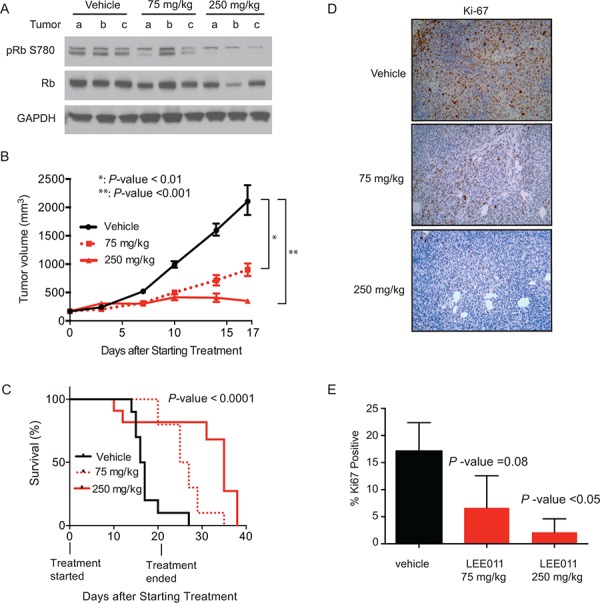
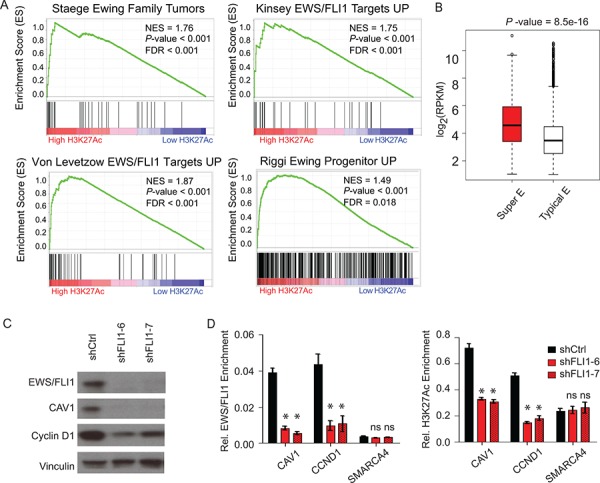
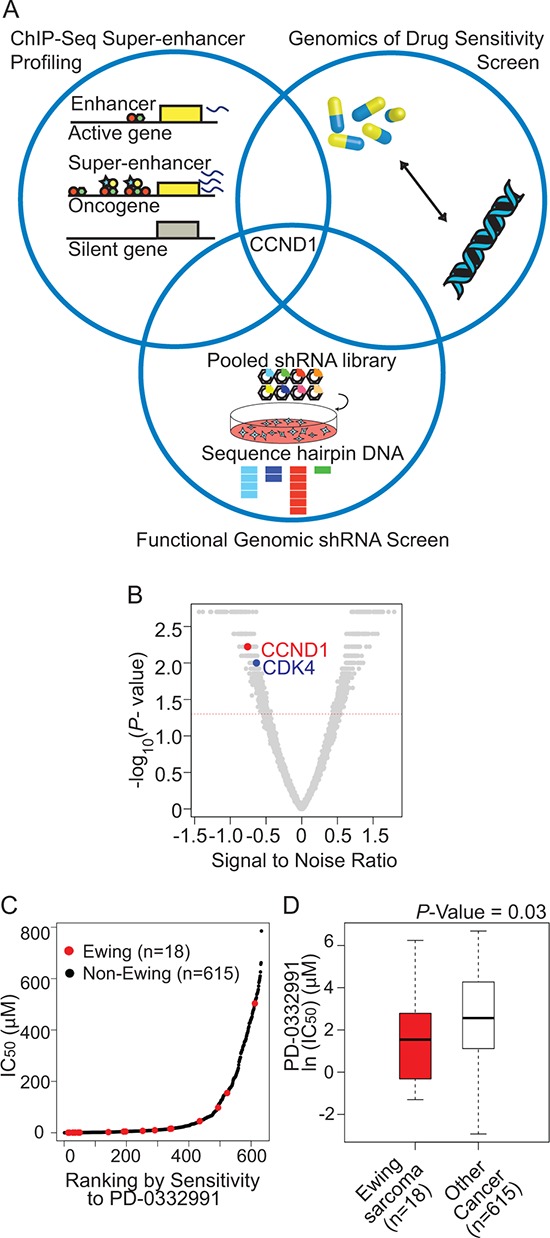
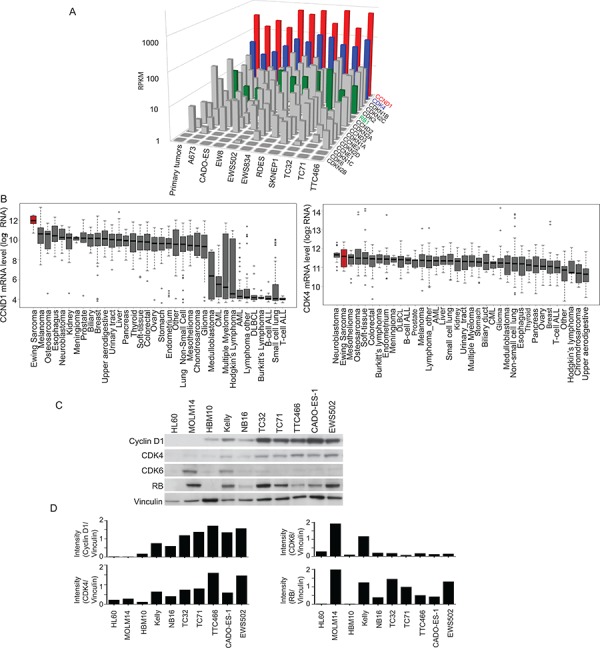
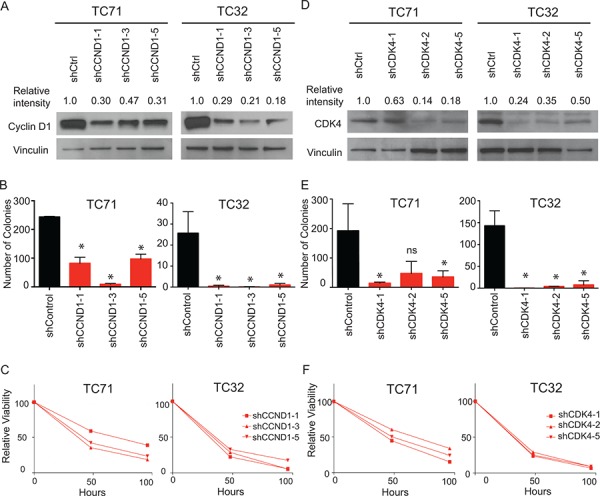
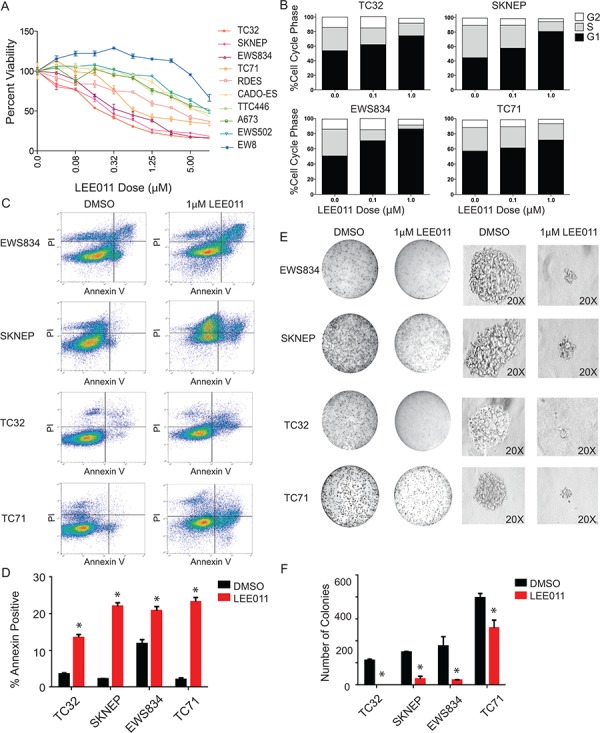
Ewing sarcoma is an aggressive bone and soft tissue tumor in children and adolescents, with treatment remaining a clinical challenge. This disease is mediated by somatic chromosomal translocations of the EWS gene and a gene encoding an ETS transcription factor, most commonly, FLI1. While direct targeting of aberrant transcription factors remains a pharmacological challenge, identification of dependencies incurred by EWS/FLI1 expression would offer a new therapeutic avenue. We used a combination of super-enhancer profiling, near-whole genome shRNA-based and small-molecule screening to identify cyclin D1 and CDK4 as Ewing sarcoma-selective dependencies. We revealed that super-enhancers mark Ewing sarcoma specific expression signatures and EWS/FLI1 target genes in human Ewing sarcoma cell lines. Particularly, a super-enhancer regulates cyclin D1 and promotes its expression in Ewing sarcoma. We demonstrated that Ewing sarcoma cells require CDK4 and cyclin D1 for survival and anchorage-independent growth. Additionally, pharmacologic inhibition of CDK4 with selective CDK4/6 inhibitors led to cytostasis and cell death of Ewing sarcoma cell lines in vitro and growth delay in an in vivo Ewing sarcoma xenograft model. These results demonstrated a dependency in Ewing sarcoma on CDK4 and cyclin D1 and support exploration of CDK4/6 inhibitors as a therapeutic approach for patients with this disease.
尤因肉瘤是儿童和青少年中一种侵袭性的骨和软组织肿瘤,其治疗仍然是一项临床挑战。这种疾病由EWS基因与一个编码ETS转录因子(最常见的是FLI1)的基因发生体细胞染色体易位介导。虽然直接靶向异常转录因子仍然是一个药理学挑战,但确定EWS/FLI1表达所产生的依赖性将提供一条新的治疗途径。我们结合使用超级增强子分析、基于近全基因组shRNA的筛选和小分子筛选,以确定细胞周期蛋白D1和细胞周期蛋白依赖性激酶4(CDK4)为尤因肉瘤选择性依赖性。我们发现超级增强子标记了人类尤因肉瘤细胞系中的尤因肉瘤特异性表达特征和EWS/FLI1靶基因。特别是,一个超级增强子调节细胞周期蛋白D1并促进其在尤因肉瘤中的表达。我们证明尤因肉瘤细胞的存活和非锚定依赖性生长需要CDK4和细胞周期蛋白D1。此外,用选择性CDK4/6抑制剂对CDK4进行药理学抑制导致尤因肉瘤细胞系在体外发生细胞停滞和细胞死亡,并在尤因肉瘤异种移植体内模型中导致生长延迟。这些结果证明了尤因肉瘤对CDK4和细胞周期蛋白D1存在依赖性,并支持探索将CDK4/6抑制剂作为这种疾病患者的一种治疗方法。