Leinhäuser Ines, Richter Andrea, Lee Misu, Höfig Ines, Anastasov Nataša, Fend Falko, Ercolino Tonino, Mannelli Massimo, Gimenez-Roqueplo Anne-Paule, Robledo Mercedes, de Krijger Ronald, Beuschlein Felix, Atkinson Michael J, Pellegata Natalia S
Institute of Pathology, Helmholtz Zentrum München, Neuherberg, Germany.
Institute of Radiation Biology, Helmholtz Zentrum München, Neuherberg, Germany.
Oncotarget. 2015 Nov 17;6(36):39111-26. doi: 10.18632/oncotarget.4912.
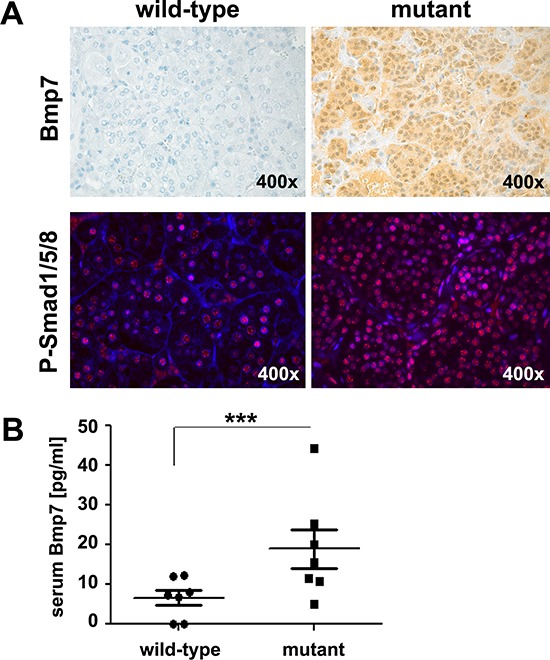
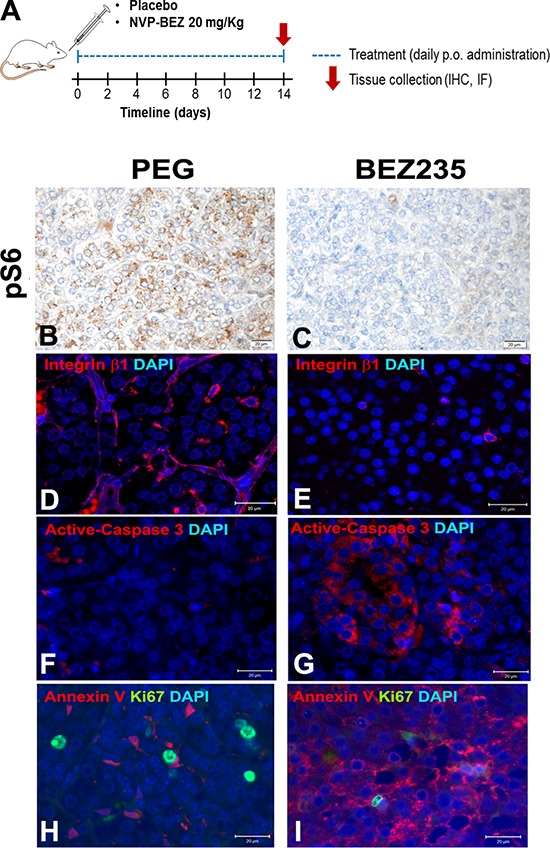
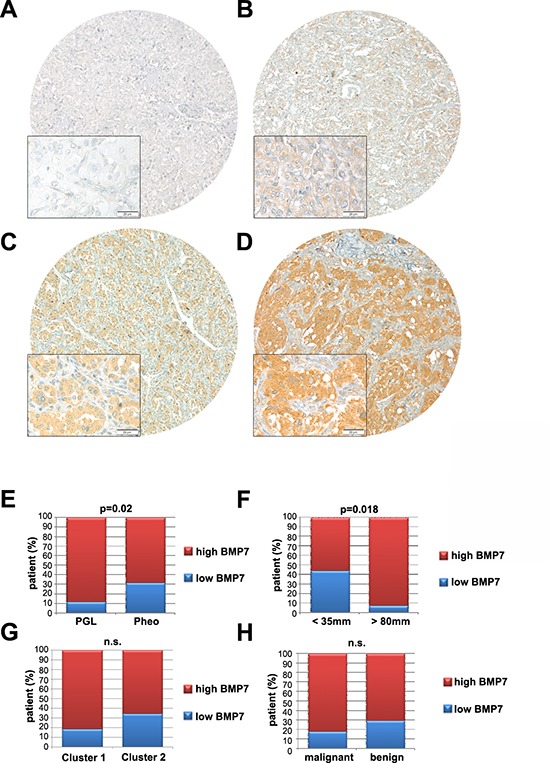
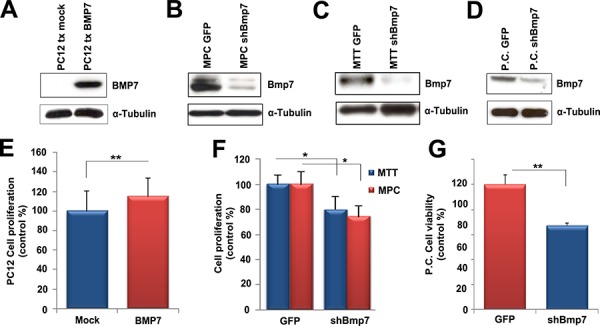
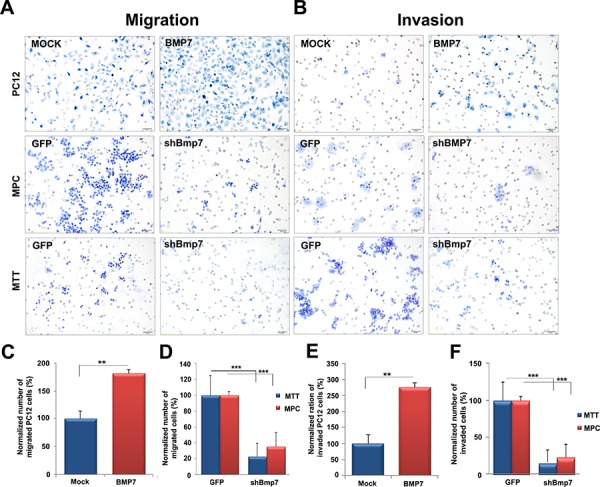
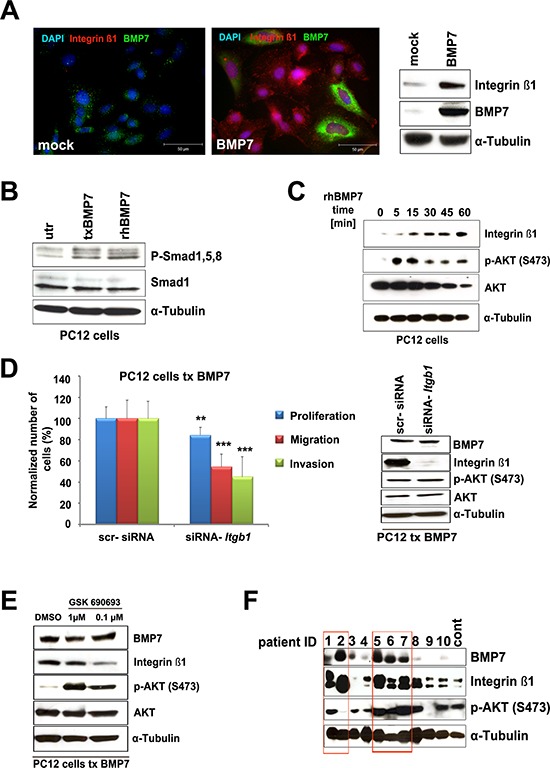
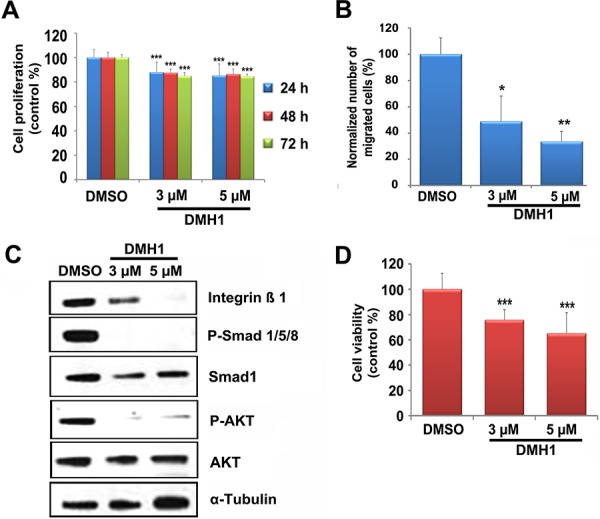
BMP7 is a growth factor playing pro- or anti-oncogenic roles in cancer in a cell type-dependent manner. We previously reported that the BMP7 gene is overexpressed in pheochromocytomas (PCCs) developing in MENX-affected rats and human patients. Here, analyzing a large cohort of PCC patients, we found that 72% of cases showed elevated levels of the BMP7 protein. To elucidate the role of BMP7 in PCC, we modulated its levels in PCC cell lines (overexpression in PC12, knockdown in MPC and MTT cells) and conducted functional assays. Active BMP signaling promoted cell proliferation, migration, and invasion, and sustained survival of MENX rat primary PCC cells. In PCC, BMP7 signals through the PI3K/AKT/mTOR pathway and causes integrin β1 up-regulation. Silencing integrin β1 in PC12 cells suppressed BMP7-mediated oncogenic features. Treatment of MTT cells with DMH1, a novel BMP antagonist, suppressed proliferation and migration. To verify the clinical applicability of our findings, we evaluated a dual PI3K/mTOR inhibitor (NVP-BEZ235) in MENX-affected rats in vivo. PCCs treated with NVP-BEZ235 had decreased proliferation and integrin β1 levels, and higher apoptosis. Altogether, BMP7 activates pro-oncogenic pathways in PCC. Downstream effectors of BMP7-mediated signaling may represent novel targets for treating progressive/inoperable PCC, still orphan of effective therapy.
骨形态发生蛋白7(BMP7)是一种生长因子,在癌症中以细胞类型依赖的方式发挥促癌或抑癌作用。我们之前报道过,BMP7基因在受MENX影响的大鼠和人类患者所发生的嗜铬细胞瘤(PCC)中过表达。在此,通过分析一大群PCC患者,我们发现72%的病例显示BMP7蛋白水平升高。为了阐明BMP7在PCC中的作用,我们在PCC细胞系中调节其水平(在PC12中过表达,在MPC和MTT细胞中敲低)并进行功能测定。活跃的BMP信号促进细胞增殖、迁移和侵袭,并维持MENX大鼠原发性PCC细胞的存活。在PCC中,BMP7通过PI3K/AKT/mTOR途径发出信号并导致整合素β1上调。在PC12细胞中沉默整合素β1可抑制BMP7介导的致癌特征。用新型BMP拮抗剂DMH1处理MTT细胞可抑制其增殖和迁移。为了验证我们研究结果的临床适用性,我们在受MENX影响的大鼠体内评估了一种双PI3K/mTOR抑制剂(NVP - BEZ235)。用NVP - BEZ235处理的PCC增殖减少,整合素β1水平降低,且凋亡增加。总之,BMP7在PCC中激活促癌途径。BMP7介导的信号传导的下游效应器可能代表治疗进行性/不可切除PCC的新靶点,目前PCC仍缺乏有效的治疗方法。