Hui Weili, Zhao Chenqi, Bourgoin Sylvain G
Rheumatology and Immunology Research Center, CHU de Québec Research Center and Faculty of Medicine, Laval University, 2705 Laurier Boulevard, Québec, QC, Canada G1V 4G2.
Mediators Inflamm. 2015;2015:248492. doi: 10.1155/2015/248492. Epub 2015 Aug 3.
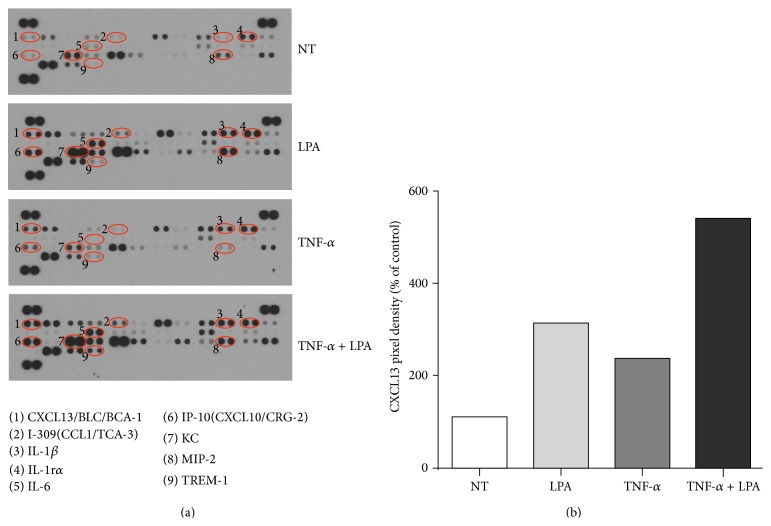
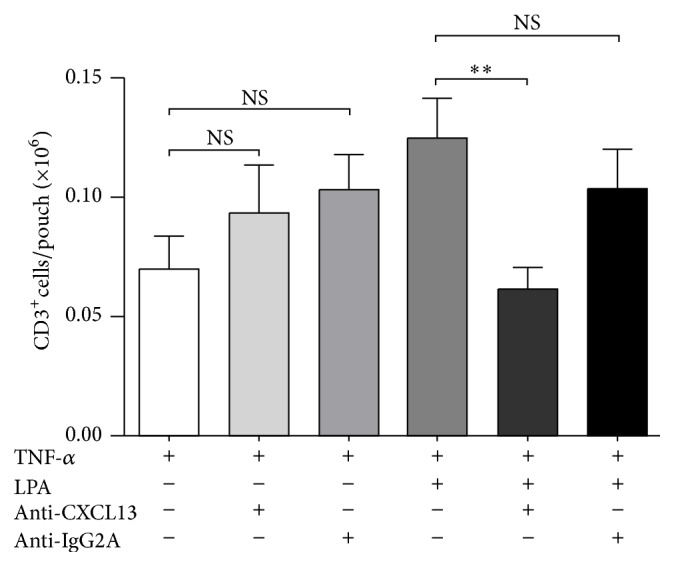
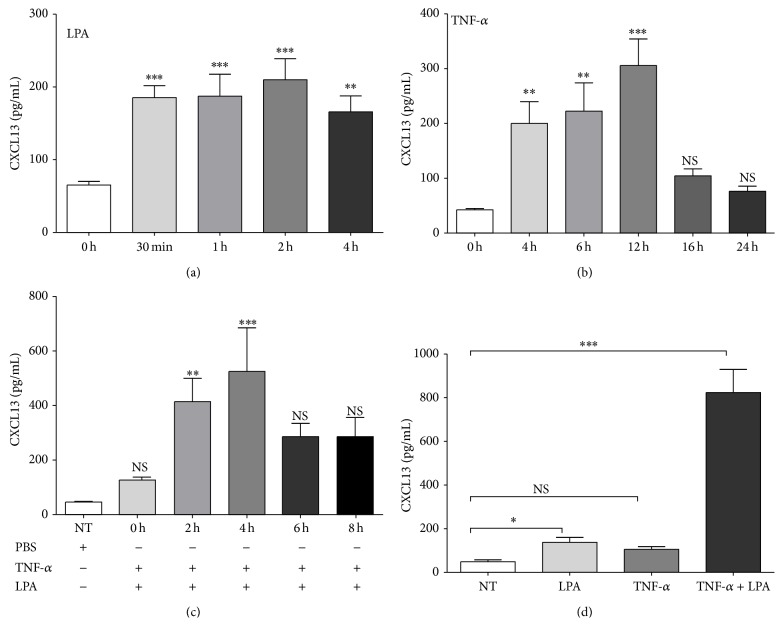
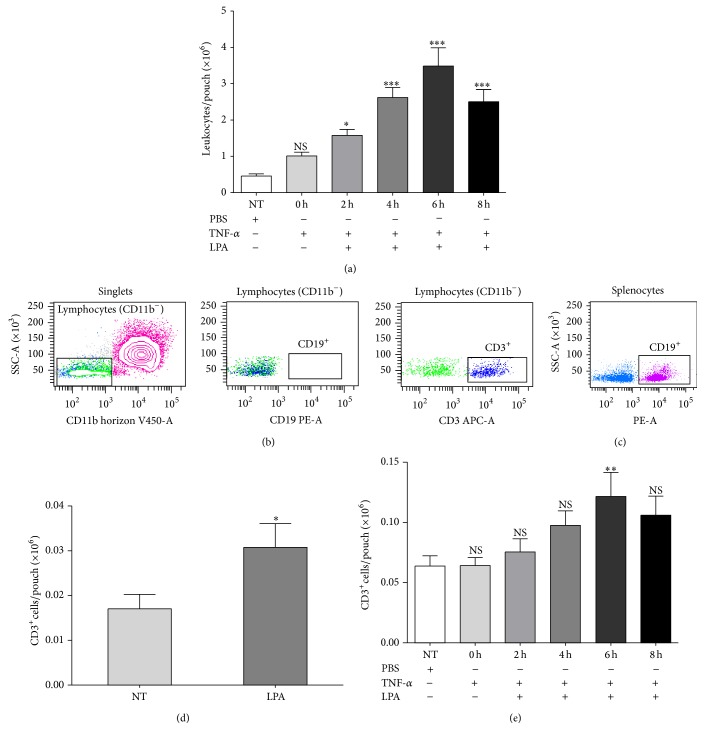
Lysophosphatidic acid (LPA) is a bioactive phospholipid playing an important role in various inflammatory diseases by inducing expression and secretion of many inflammatory cytokines/chemokines. Here we report in a murine air pouch model of inflammation that LPA induced CXCL13 secretion in a time-dependent manner and with exacerbation of the response when LPA was administered after a pretreatment with TNF-α, a key inflammatory cytokine. LPA mediates recruitment of leukocytes, including that of CD3(+) cells into unprimed and TNF-α-primed air pouches. CXCL13 neutralization using a blocking antibody injected into air pouches prior to administration of LPA into TNF-α-primed air pouches decreased CD3(+) cell influx. Our data highlight that LPA-mediated CXCL13 secretion plays a role in T cell recruitment and participates in regulation of the inflammatory response.
溶血磷脂酸(LPA)是一种生物活性磷脂,通过诱导多种炎性细胞因子/趋化因子的表达和分泌,在各种炎性疾病中发挥重要作用。在此,我们在小鼠气囊炎症模型中报告,LPA以时间依赖性方式诱导CXCL13分泌,并且当在关键炎性细胞因子TNF-α预处理后给予LPA时,反应会加剧。LPA介导白细胞的募集,包括CD3(+)细胞募集到未致敏和TNF-α致敏的气囊中。在向TNF-α致敏的气囊中注入LPA之前,使用阻断抗体中和气囊中的CXCL13,可减少CD3(+)细胞流入。我们的数据表明,LPA介导的CXCL13分泌在T细胞募集中起作用,并参与炎症反应的调节。