Pocheć Ewa, Bocian Katarzyna, Ząbczyńska Marta, Korczak-Kowalska Grażyna, Lityńska Anna
Department of Glycoconjugate Biochemistry, Institute of Zoology, Faculty of Biology and Earth Science, Jagiellonian University, Gronostajowa 9, 30-387 Krakow, Poland.
Department of Immunology, Institute of Zoology, Faculty of Biology, University of Warsaw, Miecznikowa 1, 02-096 Warsaw, Poland.
Anal Cell Pathol (Amst). 2015;2015:324980. doi: 10.1155/2015/324980. Epub 2015 Aug 3.
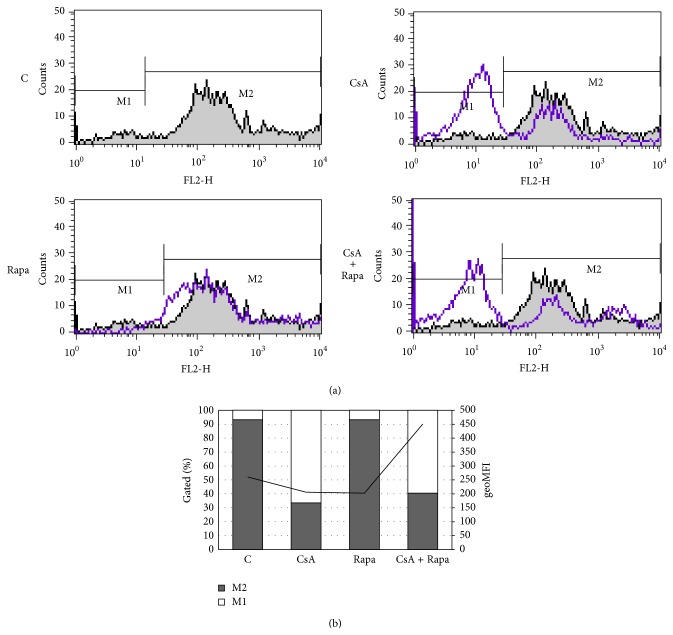
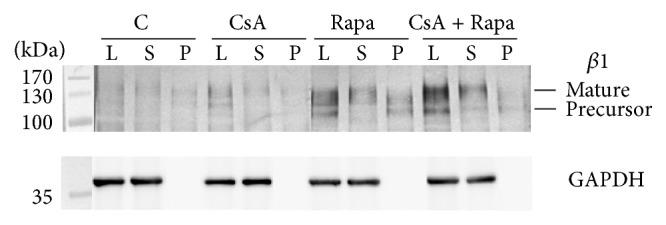
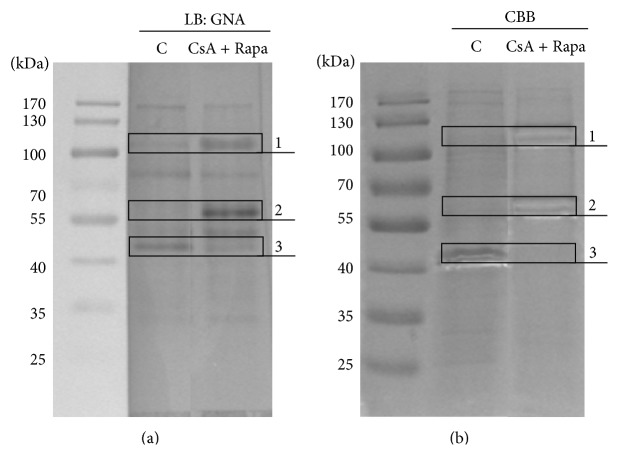
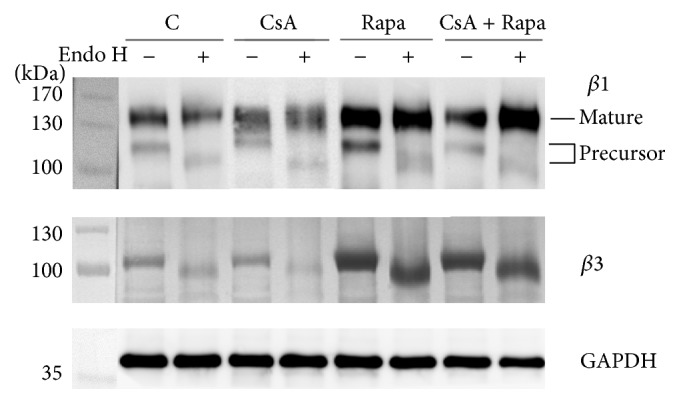
N-glycosylation plays an important role in the majority of physiological and pathological processes occurring in the immune system. Alteration of the type and abundance of glycans is an element of lymphocyte differentiation; it is also common in the development of immune-mediated inflammatory diseases. The N-glycosylation process is very sensitive to different environmental agents, among them the pharmacological environment of immunosuppressive drugs. Some results show that high-mannose oligosaccharides have the ability to suppress different stages of the immune response. We evaluated the effects of cyclosporin A (CsA) and rapamycin (Rapa) on high-mannose/hybrid-type glycosylation in human leukocytes activated in a two-way mixed leukocyte reaction (MLR). CsA significantly reduced the number of leukocytes covered by high-mannose/hybrid N-glycans, and the synergistic action of CsA and Rapa led to an increase of these structures on the remaining leukocytes. This is the first study indicating that β1 and β3 integrins bearing high-mannose/hybrid structures are affected by Rapa and CsA. Rapa taken separately and together with CsA changed the expression of β1 and β3 integrins and, by regulating the protein amount, increased the oligomannose/hybrid-type N-glycosylation on the leukocyte surface. We suggest that the changes in the glycosylation profile of leukocytes may promote the development of tolerance in transplantation.
N-糖基化在免疫系统中发生的大多数生理和病理过程中起着重要作用。聚糖类型和丰度的改变是淋巴细胞分化的一个因素;在免疫介导的炎症性疾病的发展中也很常见。N-糖基化过程对不同的环境因素非常敏感,其中包括免疫抑制药物的药理环境。一些结果表明,高甘露糖寡糖有能力抑制免疫反应的不同阶段。我们评估了环孢素A(CsA)和雷帕霉素(Rapa)对双向混合淋巴细胞反应(MLR)中活化的人白细胞中高甘露糖/杂合型糖基化的影响。CsA显著减少了被高甘露糖/杂合N-聚糖覆盖的白细胞数量,CsA和Rapa的协同作用导致剩余白细胞上这些结构的增加。这是第一项表明带有高甘露糖/杂合结构的β1和β3整合素受Rapa和CsA影响的研究。单独使用Rapa以及与CsA联合使用都会改变β1和β3整合素的表达,并通过调节蛋白量增加白细胞表面的低聚甘露糖/杂合型N-糖基化。我们认为白细胞糖基化谱的变化可能促进移植耐受的发展。