Tondi G, Thevenon M F, Mies B, Standfest G, Petutschnigg A, Wieland S
Salzburg University of Applied Sciences, Campus Kuchl, 136a Marktstraße, 5431 Kuchl, Austria.
Wood Preservation Laboratory, CIRAD Persyst, 73 Rue J.F. Breton, 34398 Montpellier, France.
Wood Sci Technol. 2013;47(3):615-626. doi: 10.1007/s00226-012-0524-5. Epub 2013 Jan 22.
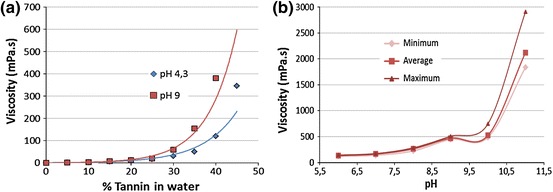
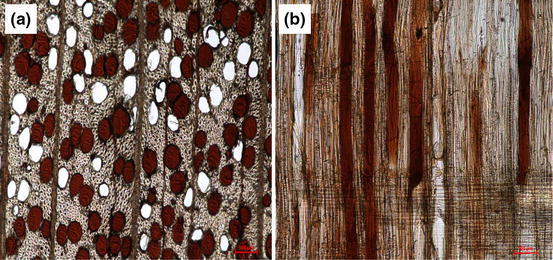
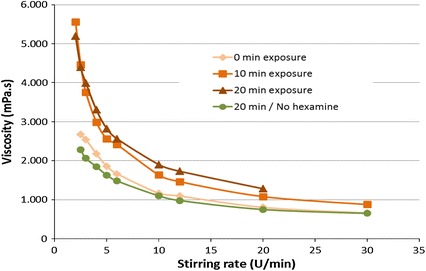
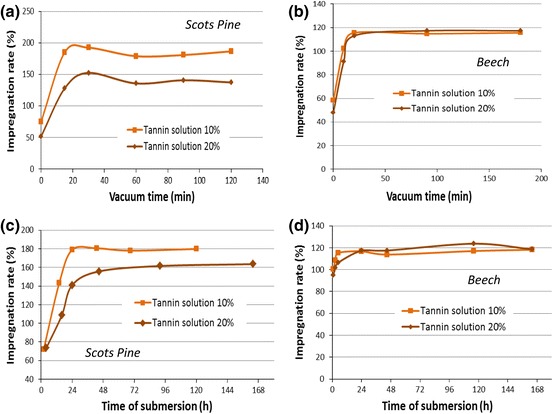
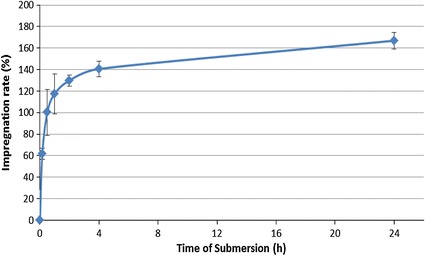
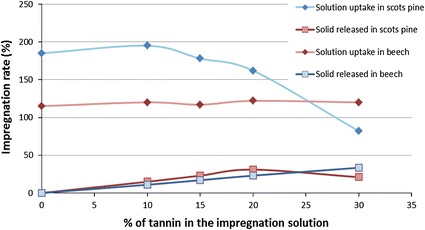
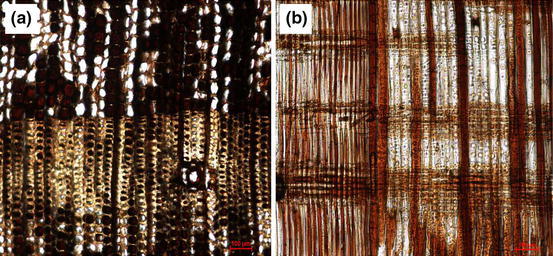
The impregnation process of Scots pine and beech samples with tannin solutions was investigated. The two materials involved in the process (impregnation solution and wood samples) are studied in depth. Viscosity of mimosa tannin solutions and the anatomical aspect of beech and Scots pine were analysed and correlated. The viscosity of tannin solutions presents a non-newtonian behaviour when its pH level increases, and in the case of addition of hexamine as a hardener, the crosslinking of the flavonoids turns out to be of great importance. During the impregnation of Scots pine ( L.) and beech ( L.), the liquid and solid uptakes were monitored while taking into consideration the different conditions of the impregnation process. This method allowed to identify the best conditions needed in order to get a successful preservative uptake for each wooden substrate. The penetration mechanism within the wood of both species was revealed with the aid of a microscopic analysis. Scots pine is impregnated through the tracheids in the longitudinal direction and through parenchyma rays in the radial direction, whereas in beech, the penetration occurs almost completely through longitudinal vessels.
对苏格兰松和山毛榉样品用单宁溶液进行浸渍处理的过程进行了研究。对该过程中涉及的两种材料(浸渍溶液和木材样品)进行了深入研究。分析了含羞草单宁溶液的粘度以及山毛榉和苏格兰松的解剖结构,并进行了相关性分析。当单宁溶液的pH值升高时,其粘度呈现非牛顿流体行为,并且在添加六亚甲基四胺作为硬化剂的情况下,黄酮类化合物的交联显得尤为重要。在对苏格兰松(L.)和山毛榉(L.)进行浸渍时,在考虑浸渍过程不同条件的同时监测液体和固体的吸收情况。该方法能够确定每种木质基材成功吸收防腐剂所需的最佳条件。借助显微镜分析揭示了两种木材在木材内部的渗透机制。苏格兰松通过纵向的管胞和径向的薄壁组织射线进行浸渍,而在山毛榉中,渗透几乎完全通过纵向导管发生。