Gerc Amy J, Diepold Andreas, Trunk Katharina, Porter Michael, Rickman Colin, Armitage Judith P, Stanley-Wall Nicola R, Coulthurst Sarah J
Division of Molecular Microbiology, College of Life Sciences, University of Dundee, Dow Street, Dundee DD1 5EH, UK.
Department of Biochemistry, University of Oxford, South Parks Road, Oxford OX1 3QU, UK.
Cell Rep. 2015 Sep 29;12(12):2131-42. doi: 10.1016/j.celrep.2015.08.053. Epub 2015 Sep 17.
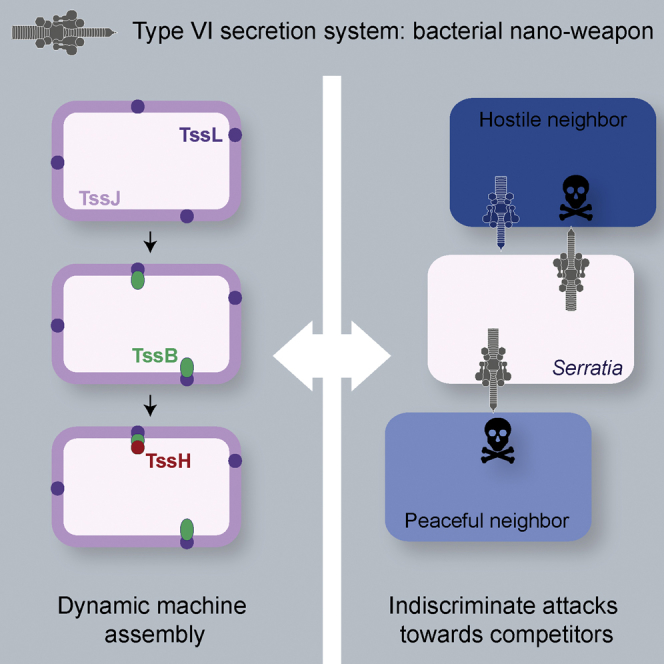
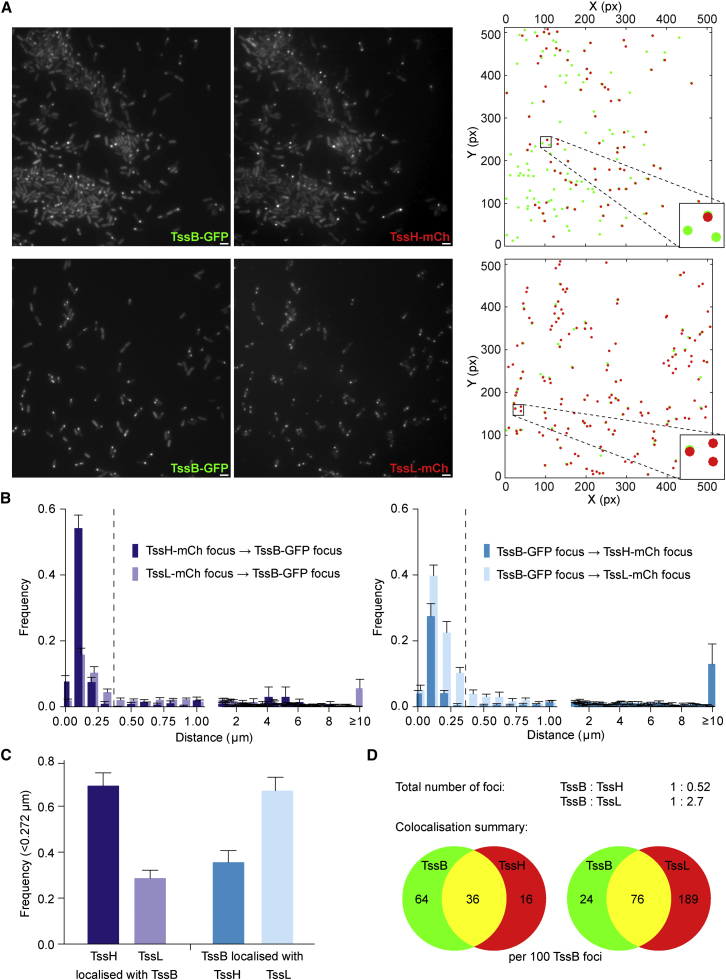
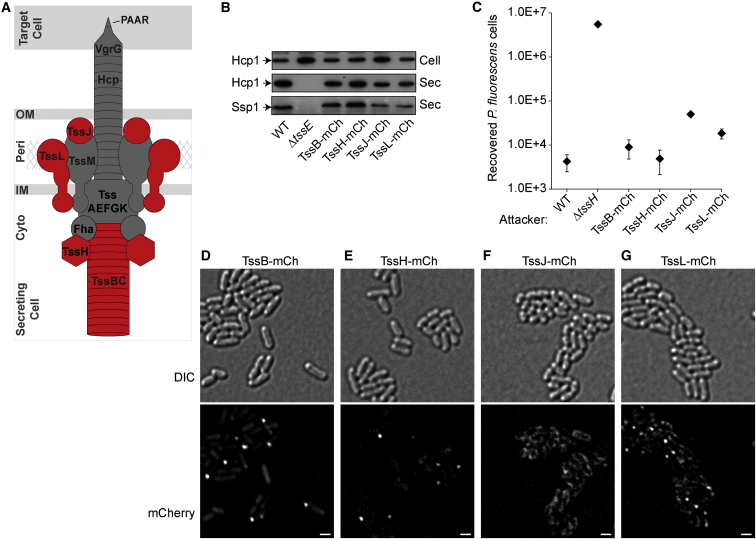
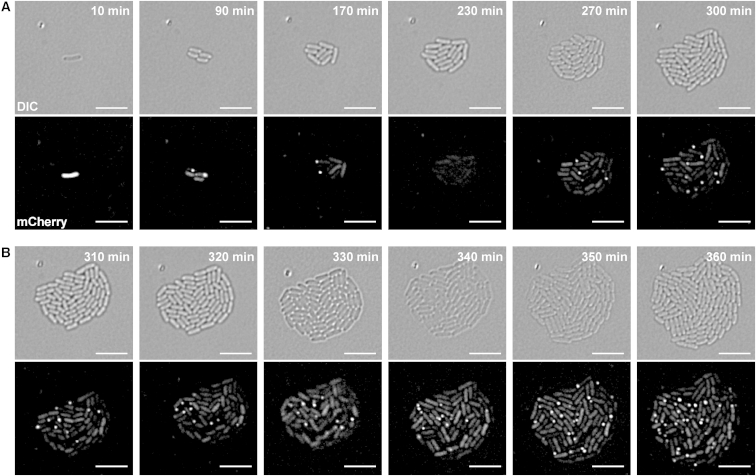
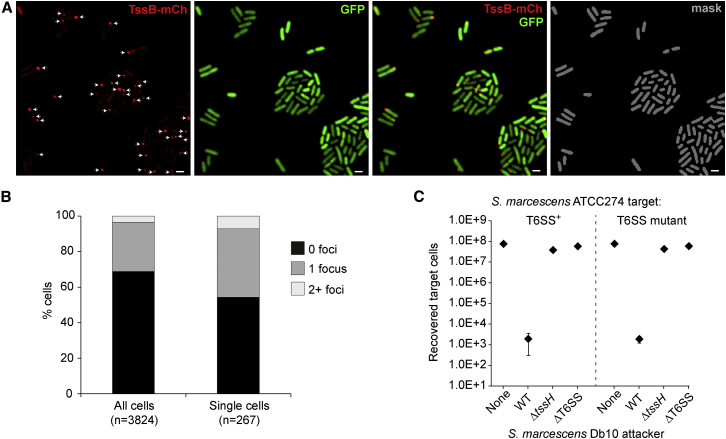
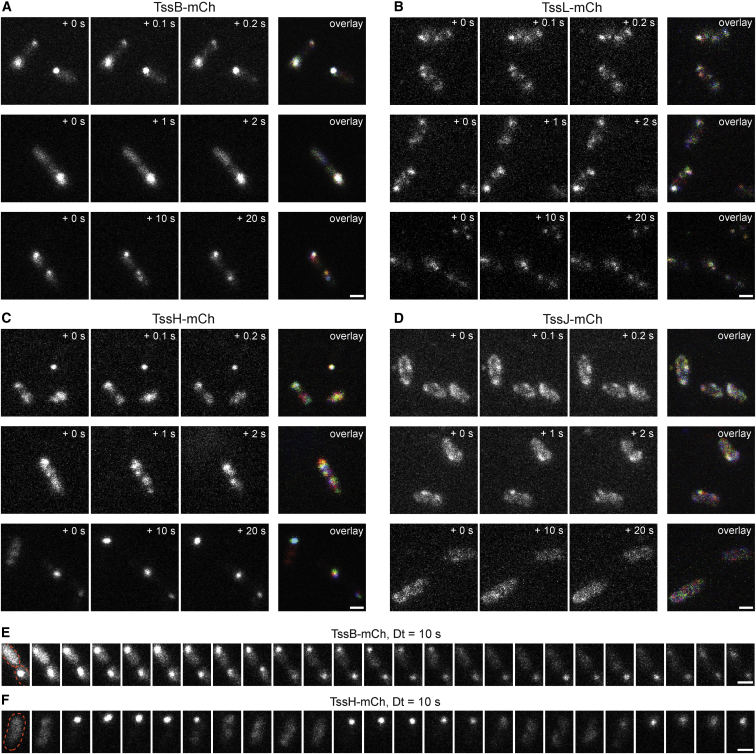
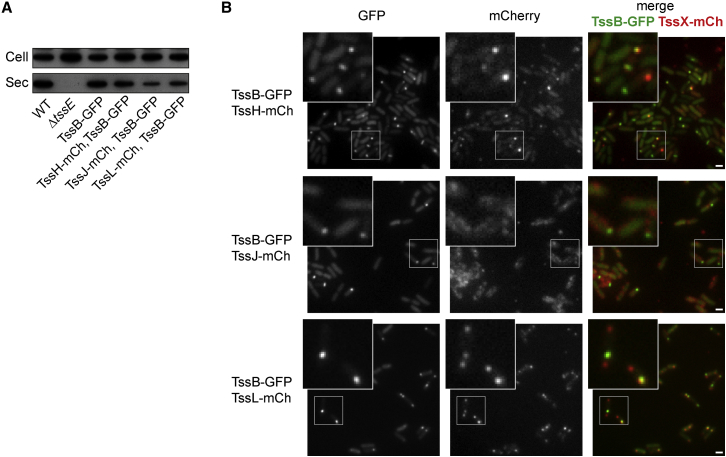
The Type VI secretion system (T6SS) is a bacterial nanomachine that fires toxic proteins into target cells. Deployment of the T6SS represents an efficient and widespread means by which bacteria attack competitors or interact with host organisms and may be triggered by contact from an attacking neighbor cell as a defensive strategy. Here, we use the opportunist pathogen Serratia marcescens and functional fluorescent fusions of key components of the T6SS to observe different subassemblies of the machinery simultaneously and on multiple timescales in vivo. We report that the localization and dynamic behavior of each of the components examined is distinct, revealing a multi-stage and dynamic assembly process for the T6SS machinery. We also show that the T6SS can assemble and fire without needing a cell contact trigger, defining an aggressive strategy that broadens target range and suggesting that activation of the T6SS is tailored to survival in specific niches.
VI型分泌系统(T6SS)是一种细菌纳米机器,可将毒性蛋白注入靶细胞。T6SS的部署是细菌攻击竞争对手或与宿主生物体相互作用的一种有效且广泛的方式,并且可能作为一种防御策略,由攻击邻近细胞的接触引发。在这里,我们使用机会致病菌粘质沙雷氏菌和T6SS关键组分的功能性荧光融合蛋白,在体内同时并在多个时间尺度上观察该机器的不同亚组件。我们报告称,所检测的每个组分的定位和动态行为都是不同的,揭示了T6SS机器的多阶段动态组装过程。我们还表明,T6SS无需细胞接触触发即可组装并发射,这定义了一种扩大靶标范围的攻击策略,并表明T6SS的激活是为了在特定生态位中生存而量身定制的。