Alves Maria M, Fuhler Gwenny M, Queiroz Karla C S, Scholma Jetse, Goorden Susan, Anink Jasper, Spek C Arnold, Hoogeveen-Westerveld Marianne, Bruno Marco J, Nellist Mark, Elgersma Ype, Aronica Eleonora, Peppelenbosch Maikel P
Department of Gastroenterology and Hepatology, Erasmus MC, Erasmus University of Rotterdam, PO Box 2040, NL-3000 CA Rotterdam, The Netherlands.
Center for Experimental and Molecular Medicine Academic Medical Center, University of Amsterdam, Meibergdreef 9, NL-1105 AZ Amsterdam, The Netherlands.
Sci Rep. 2015 Sep 28;5:14534. doi: 10.1038/srep14534.
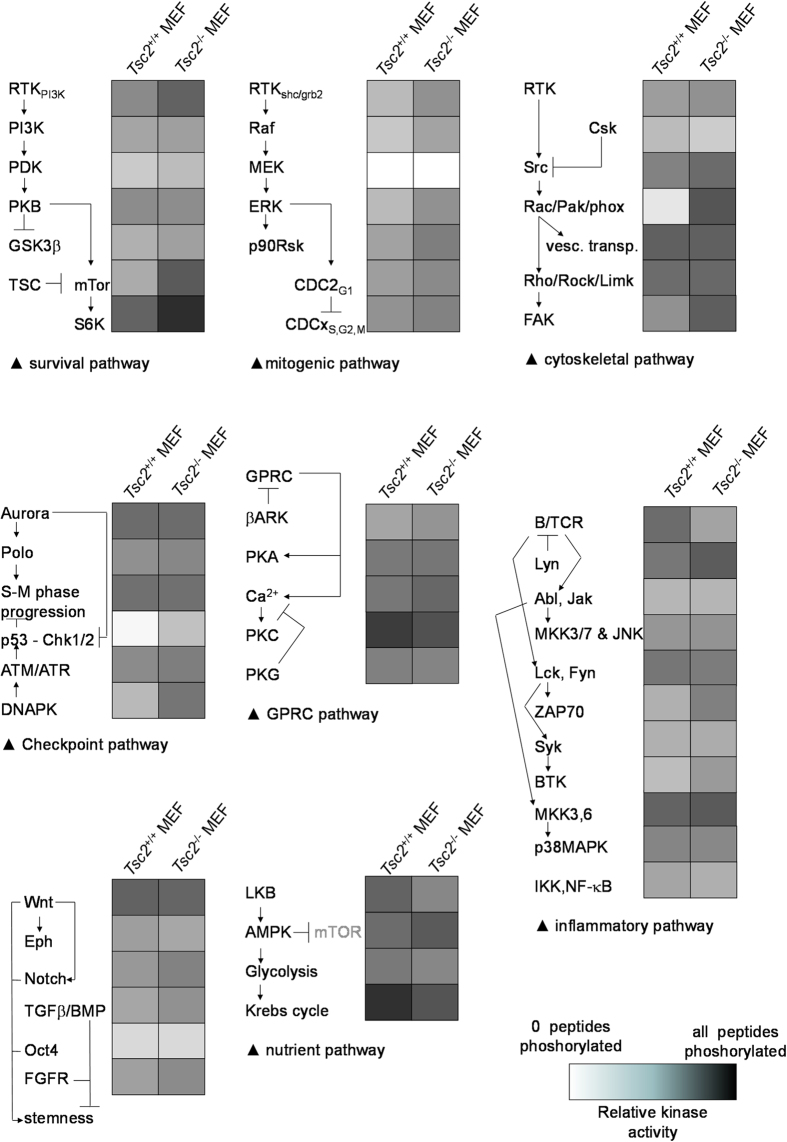
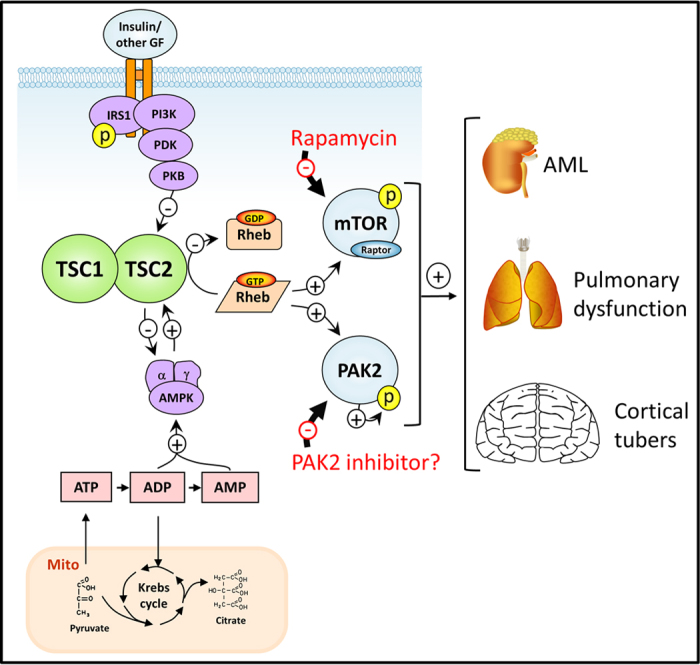
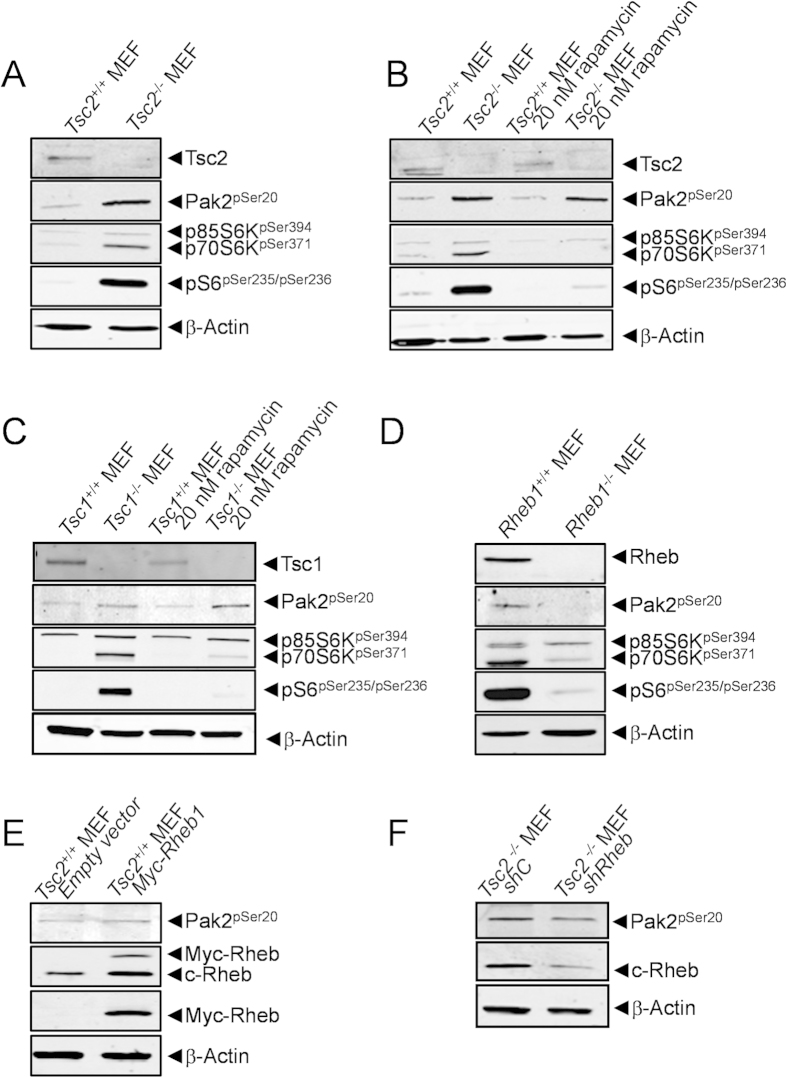
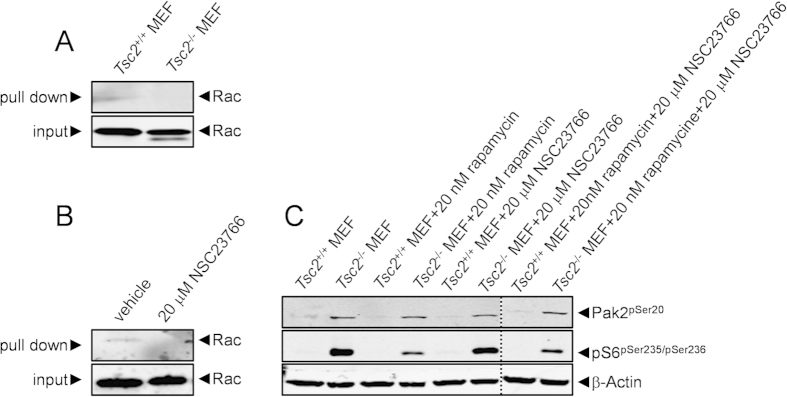
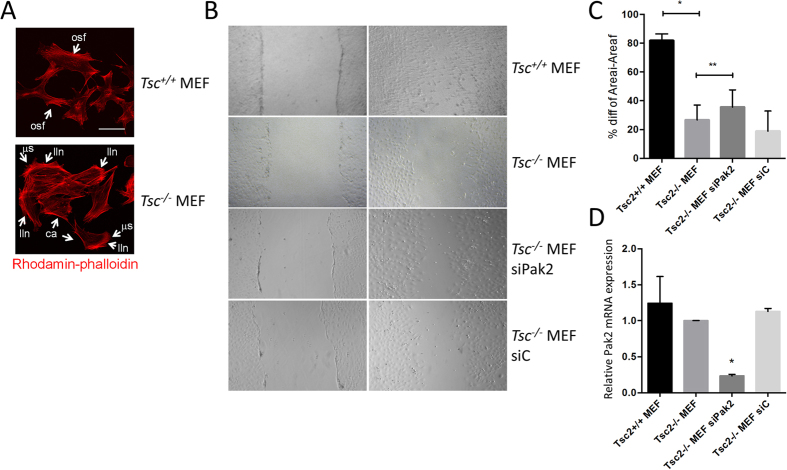
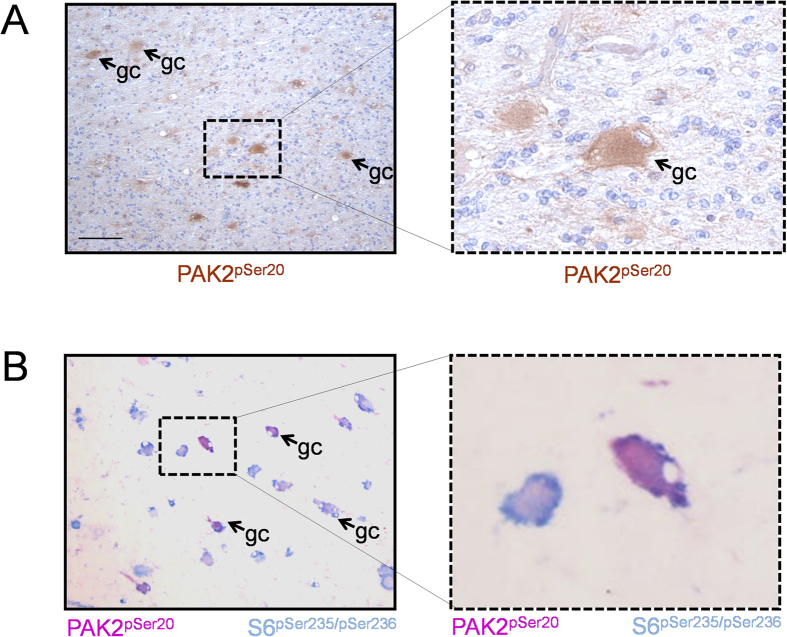
Tuberous sclerosis complex (TSC) is caused by inactivating mutations in either TSC1 or TSC2 and is characterized by uncontrolled mTORC1 activation. Drugs that reduce mTOR activity are only partially successful in the treatment of TSC, suggesting that mTOR-independent pathways play a role in disease development. Here, kinome profiles of wild-type and Tsc2(-/-) mouse embryonic fibroblasts (MEFs) were generated, revealing a prominent role for PAK2 in signal transduction downstream of TSC1/2. Further investigation showed that the effect of the TSC1/2 complex on PAK2 is mediated through RHEB, but is independent of mTOR and p21RAC. We also demonstrated that PAK2 over-activation is likely responsible for the migratory and cell cycle abnormalities observed in Tsc2(-/-) MEFs. Finally, we detected high levels of PAK2 activation in giant cells in the brains of TSC patients. These results show that PAK2 is a direct effector of TSC1-TSC2-RHEB signaling and a new target for rational drug therapy in TSC.
结节性硬化症(TSC)由TSC1或TSC2的失活突变引起,其特征是mTORC1的过度激活不受控制。降低mTOR活性的药物在治疗TSC方面仅取得部分成功,这表明不依赖mTOR的信号通路在疾病发展中起作用。在此,我们生成了野生型和Tsc2(-/-)小鼠胚胎成纤维细胞(MEF)的激酶组图谱,揭示了PAK2在TSC1/2下游信号转导中的重要作用。进一步研究表明,TSC1/2复合物对PAK2的作用是通过RHEB介导的,但不依赖于mTOR和p21RAC。我们还证明,PAK2的过度激活可能是Tsc2(-/-)MEF中观察到的迁移和细胞周期异常的原因。最后,我们在TSC患者大脑的巨细胞中检测到高水平的PAK2激活。这些结果表明,PAK2是TSC1-TSC2-RHEB信号的直接效应器,也是TSC合理药物治疗的新靶点。