Chaires Jonathan B, Dean William L, Le Huy T, Trent John O
James Graham Brown Cancer Center, University of Louisville, Louisville, Kentucky, USA.
James Graham Brown Cancer Center, University of Louisville, Louisville, Kentucky, USA.
Methods Enzymol. 2015;562:287-304. doi: 10.1016/bs.mie.2015.04.011. Epub 2015 Jun 19.
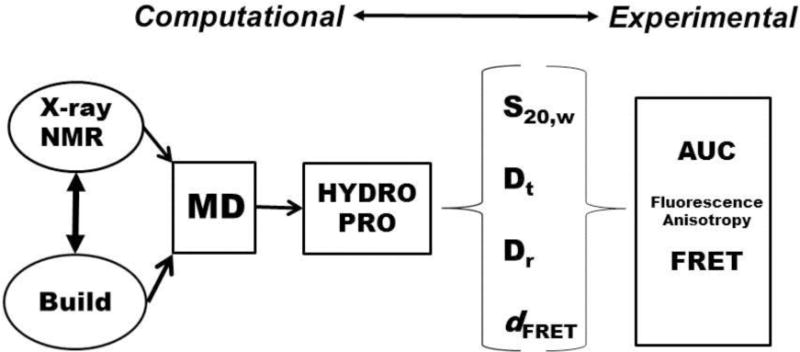
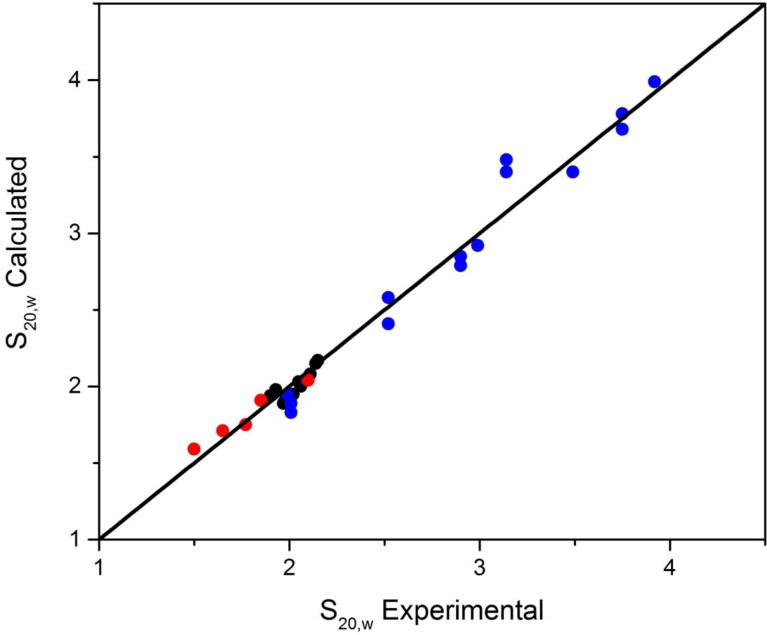
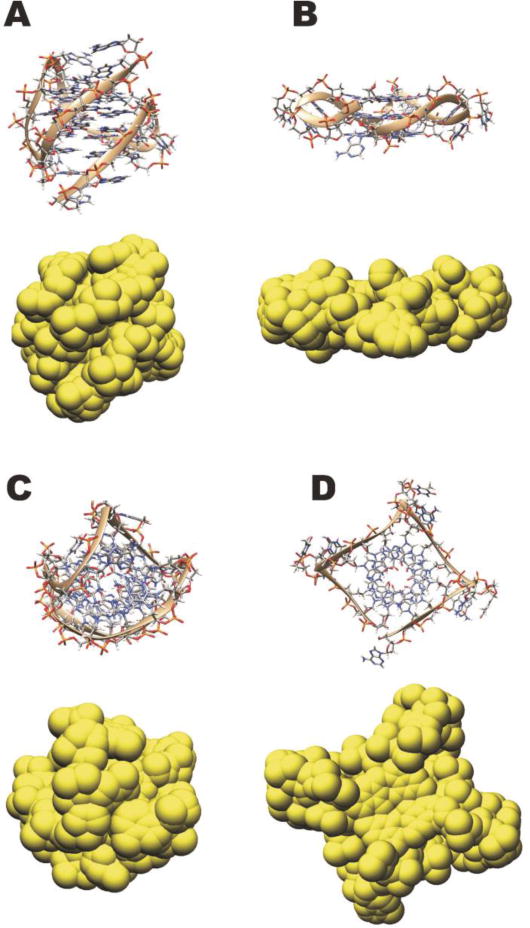
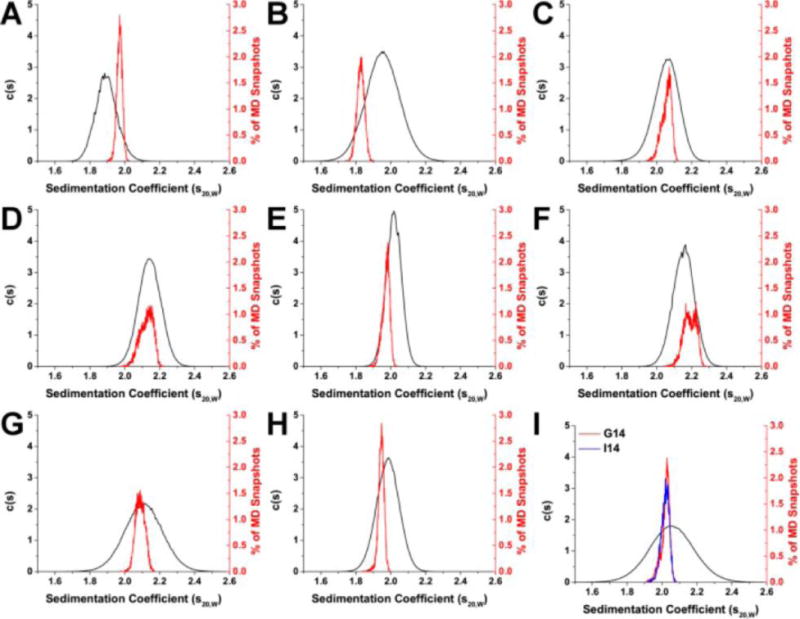
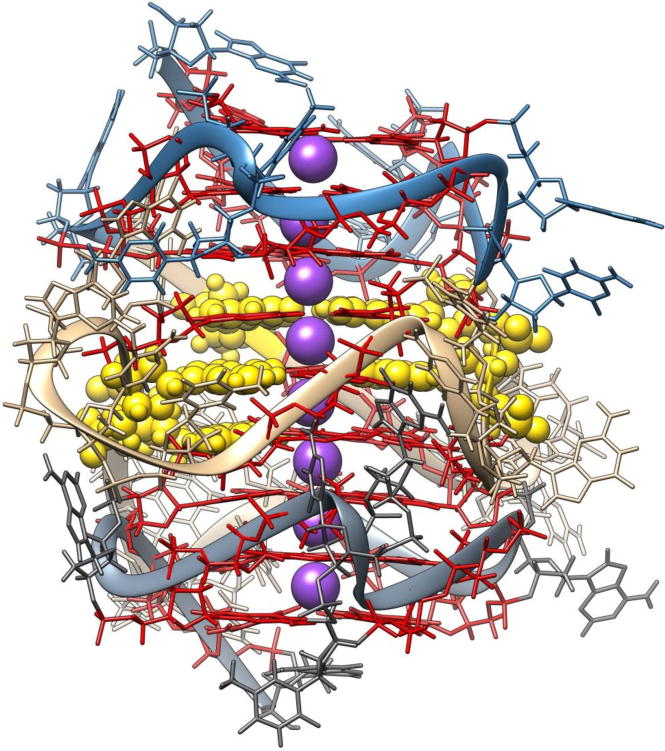
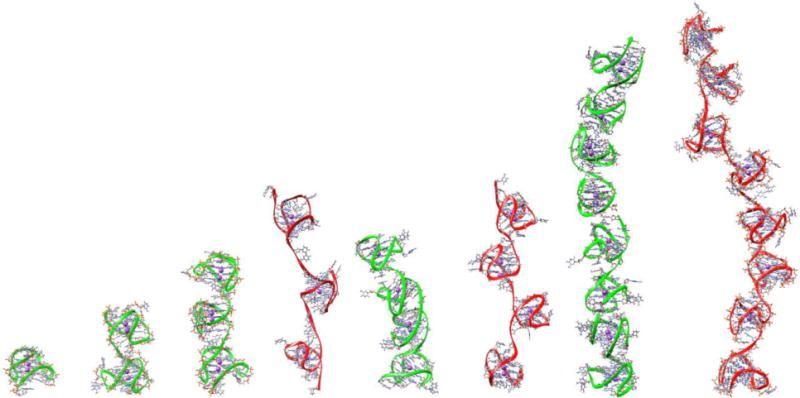
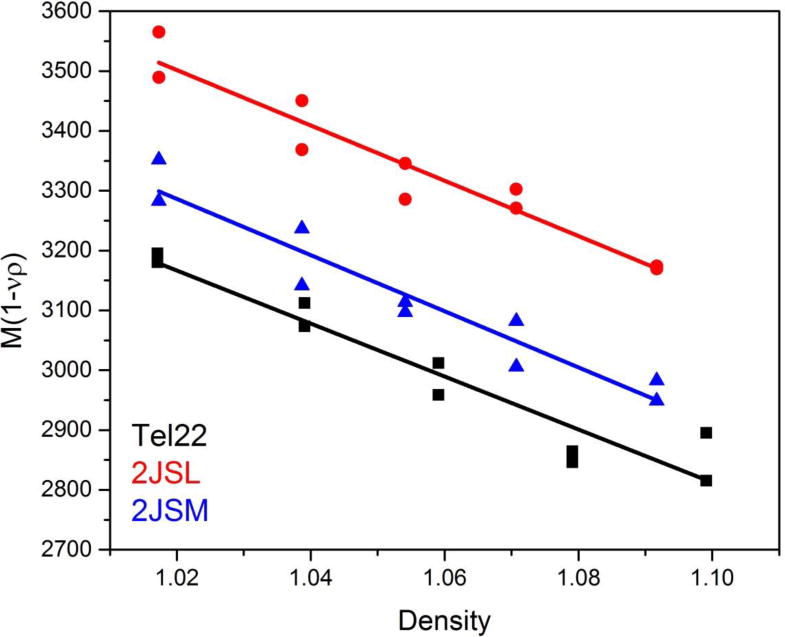
G-quadruplexes are noncannonical four-stranded DNA or RNA structures formed by guanine-rich repeating sequences. Guanine nucleotides can hydrogen bond to form a planar tetrad structure. Such tetrads can stack to form quadruplexes of various molecularities with a variety of types of single-stranded loops joining the tetrads. High-resolution structures may be obtained by X-ray crystallography or NMR spectroscopy for quadruplexes formed by short (≈25 nt) sequences but these methods have yet to succeed in characterizing higher order quadruplex structures formed by longer sequences. An integrated computational and experimental approach was implemented in our laboratory to obtain structural models for higher order quadruplexes that might form in longer telomeric or promoter sequences. In our approach, atomic-level models are built using folding principles gleaned from available high-resolution structures and then optimized by molecular dynamics. The program HYDROPRO is then used to construct bead models of these structures to predict experimentally testable hydrodynamic properties. Models are validated by comparison of these properties with measured experimental values obtained by analytical ultracentrifugation or other biophysical tools. This chapter describes our approach and practical procedures.
G-四链体是由富含鸟嘌呤的重复序列形成的非经典四链DNA或RNA结构。鸟嘌呤核苷酸可以通过氢键形成平面四联结构。这些四联结构可以堆叠形成具有不同分子数的四链体,并且有多种类型的单链环连接这些四联结构。对于由短序列(约25个核苷酸)形成的四链体,可以通过X射线晶体学或核磁共振光谱获得高分辨率结构,但这些方法尚未成功表征由较长序列形成的高阶四链体结构。我们实验室采用了一种综合计算和实验的方法,以获得可能在较长的端粒或启动子序列中形成的高阶四链体的结构模型。在我们的方法中,利用从现有的高分辨率结构中收集的折叠原理构建原子水平的模型,然后通过分子动力学进行优化。然后使用HYDROPRO程序构建这些结构的珠子模型,以预测可通过实验测试的流体动力学性质。通过将这些性质与通过分析超速离心或其他生物物理工具获得的测量实验值进行比较来验证模型。本章描述了我们的方法和实际步骤。