Yao Yao, Zhou Nengji, Prior Javier, Zhao Yang
State Key Laboratory of Surface Physics and Department of Physics, Fudan University, Shanghai 200433, China.
Collaborative Innovation Center of Advanced Microstructures, Fudan University, Shanghai 200433, China.
Sci Rep. 2015 Sep 28;5:14555. doi: 10.1038/srep14555.
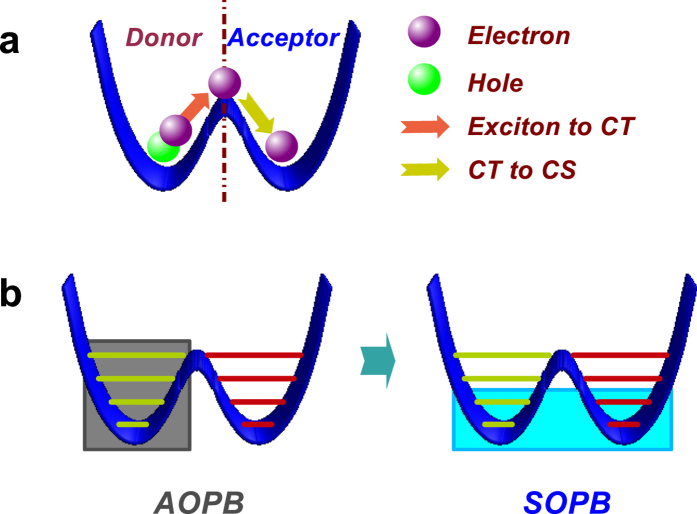
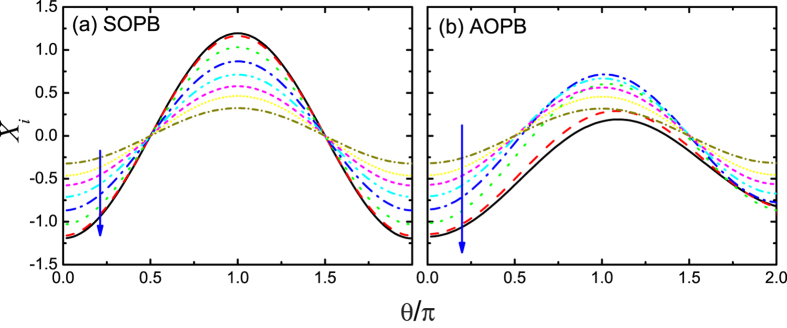
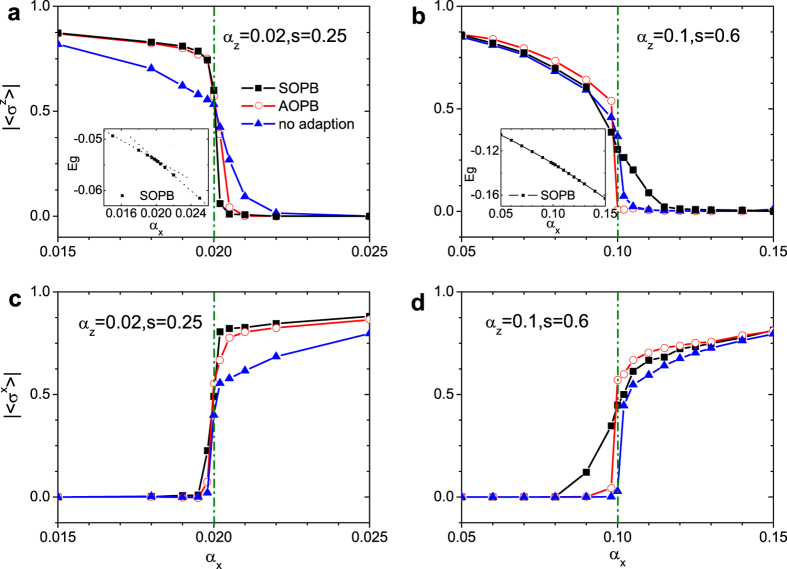
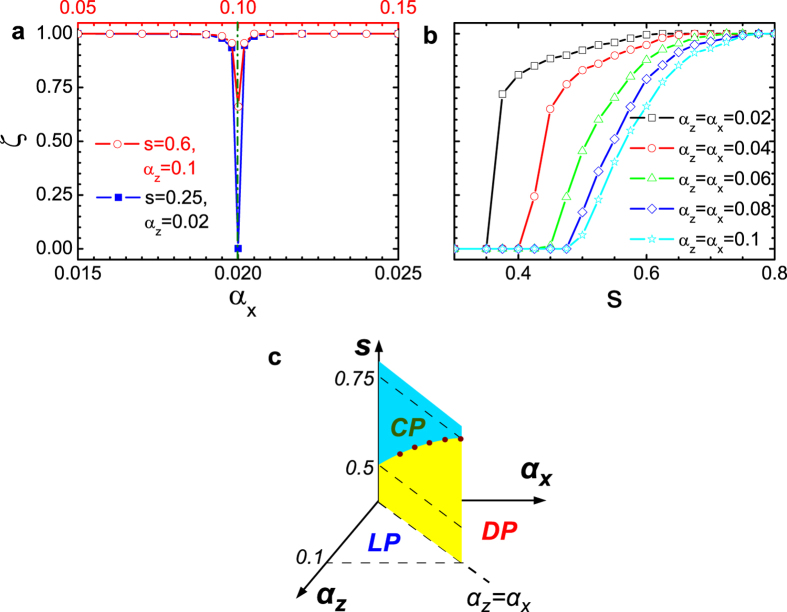
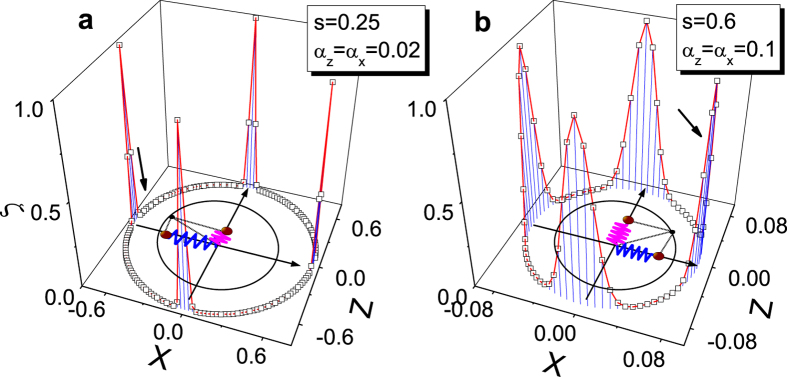
It has long been a puzzle on what drives charge separation in artificial polymeric solar cells as a consensus has yet to emerge among rivaling theories based upon electronic localization and delocalization pictures. Here we propose an alternative using the two-bath spin-boson model with simultaneous diagonal and off-diagonal coupling: the critical phase, which is born out of the competition of the two coupling types, and is neither localized nor delocalized. The decoherence-free feature of the critical phase also helps explain sustained coherence of the charge-transfer state. Exploiting Hamiltonian symmetries in an enhanced algorithm of density-matrix renormalization group, we map out boundaries of the critical phase to a precision previously unattainable, and determine the bath spectral densities inducive to the existence of the charge-transfer state.
长期以来,是什么驱动人工聚合物太阳能电池中的电荷分离一直是个谜,因为基于电子局域化和离域化图景的各种竞争理论尚未达成共识。在此,我们提出一种替代方案,使用具有同时对角和非对角耦合的双浴自旋玻色子模型:临界相,它源于两种耦合类型的竞争,既不是局域化的也不是离域化的。临界相的无退相干特性也有助于解释电荷转移态的持续相干性。通过在密度矩阵重整化群的增强算法中利用哈密顿对称性,我们以前所未有的精度描绘出临界相的边界,并确定有利于电荷转移态存在的浴谱密度。