Poole Catherine B, Ettwiller Laurence, Tanner Nathan A, Evans Thomas C, Wanji Samuel, Carlow Clotilde K S
New England Biolabs, Ipswich, Massachusetts, United States of America.
Research Foundation in Tropical Diseases and Environment, Buea, Cameroon.
PLoS One. 2015 Sep 28;10(9):e0139286. doi: 10.1371/journal.pone.0139286. eCollection 2015.
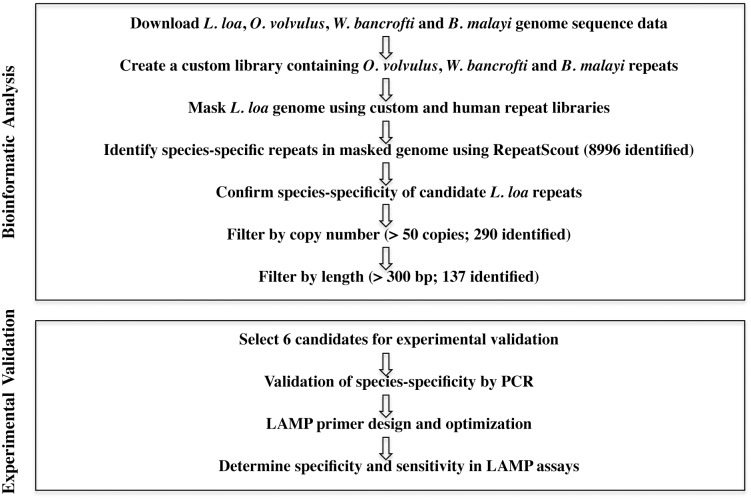
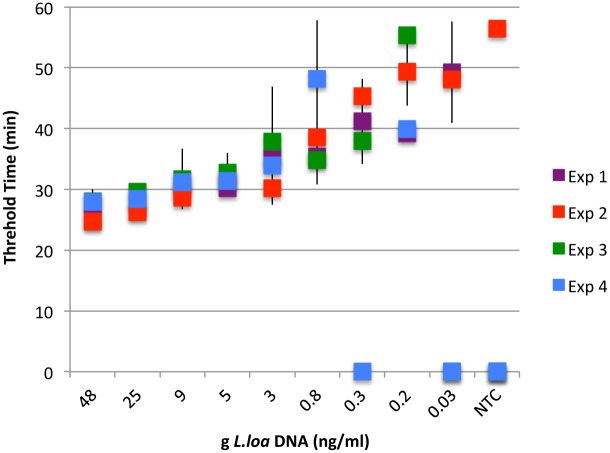
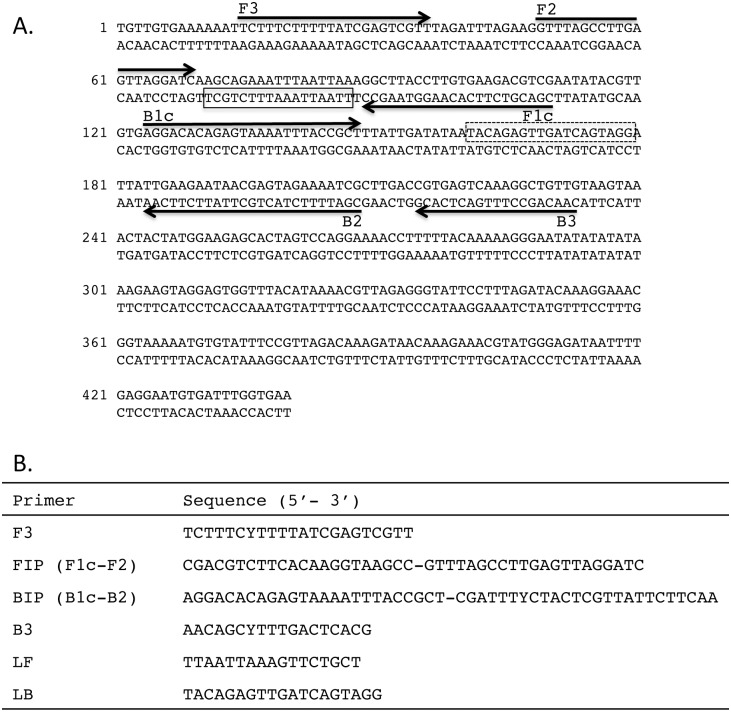
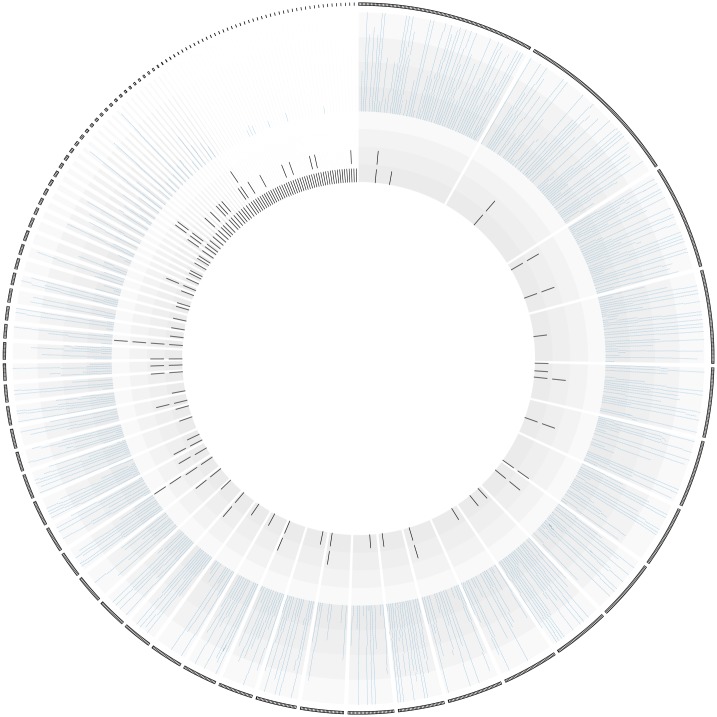
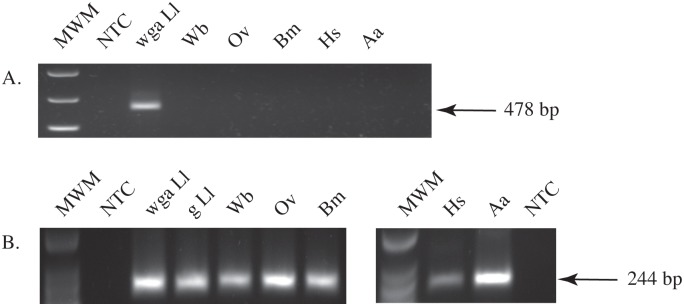
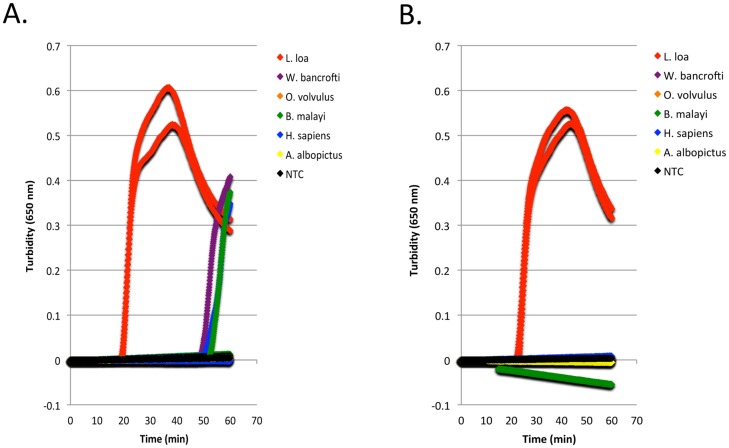
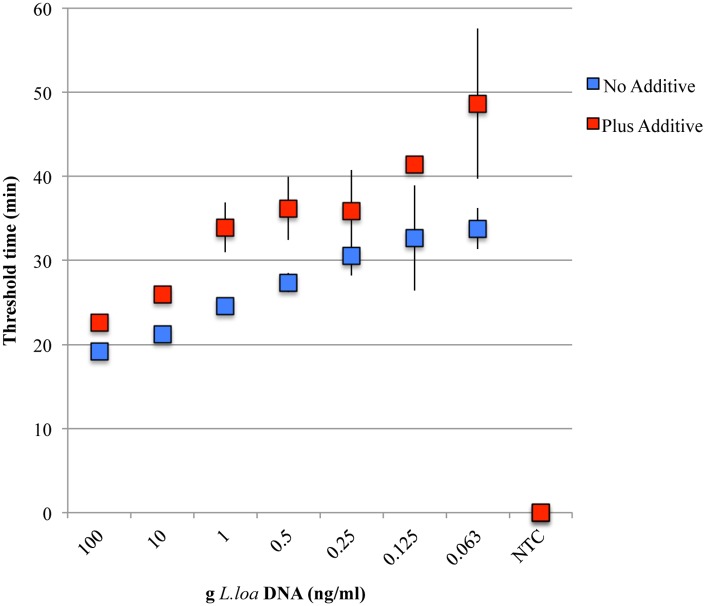
Loa loa infections have emerged as a serious public health problem in patients co-infected with Onchocerca volvulus or Wuchereria bancrofti because of severe adverse neurological reactions after treatment with ivermectin. Accurate diagnostic tests are needed for careful mapping in regions where mass drug administration is underway. Loop-mediated isothermal amplification (LAMP) has become a widely adopted screening method because of its operational simplicity, rapidity and versatility of visual detection readout options. Here, we present a multi-step bioinformatic pipeline to generate diagnostic candidates suitable for LAMP and experimentally validate this approach using one of the identified candidates to develop a species-specific LAMP assay for L. loa. The pipeline identified 140 new L. loa specific DNA repeat families as putative biomarkers of infection. The consensus sequence of one family, repeat family 4 (RF4), was compiled from ~ 350 sequences dispersed throughout the L. loa genome and maps to a L. loa-specific region of the long terminal repeats found at the boundaries of Bel/Pao retrotransposons. PCR and LAMP primer sets targeting RF4 specifically amplified L. loa but not W. bancrofti, O. volvulus, Brugia malayi, human or mosquito DNA. RF4 LAMP detects the DNA equivalent of one microfilaria (100 pg) in 25-30 minutes and as little as 0.060 pg of L. loa DNA (1/1600th of a microfilaria) purified from spiked blood samples in approximately 50 minutes. In summary, we have successfully employed a bioinformatic approach to mine the L. loa genome for species-specific repeat families that can serve as new DNA biomarkers for LAMP. The RF4 LAMP assay shows promise as a field tool for the implementation and management of mass drug administration programs and warrants further testing on clinical samples as the next stage in development towards this goal.
由于使用伊维菌素治疗后会出现严重的不良神经反应,罗阿丝虫感染在同时感染盘尾丝虫或班氏吴策线虫的患者中已成为一个严重的公共卫生问题。在正在进行大规模药物给药的地区,需要准确的诊断测试来进行详细的疫情分布测绘。环介导等温扩增技术(LAMP)因其操作简便、快速以及视觉检测读数选项的多样性,已成为一种广泛采用的筛查方法。在此,我们展示了一个多步骤的生物信息学流程,以生成适用于LAMP的诊断候选物,并使用其中一个已鉴定的候选物进行实验验证,从而开发出一种针对罗阿丝虫的物种特异性LAMP检测方法。该流程鉴定出约140个新的罗阿丝虫特异性DNA重复家族,作为感染的推定生物标志物。其中一个家族,即重复家族4(RF4)的共有序列,是从分散在罗阿丝虫基因组中的约350个序列编译而来,并且定位到在Bel/Pao逆转录转座子边界发现的长末端重复序列的罗阿丝虫特异性区域。针对RF4的PCR和LAMP引物组能特异性扩增罗阿丝虫,而不扩增班氏吴策线虫、盘尾丝虫、马来布鲁线虫、人类或蚊子的DNA。RF4 LAMP检测在25 - 30分钟内可检测到相当于一条微丝蚴的DNA(100 pg),并且在大约50分钟内可检测到从加标血样中纯化出的低至0.060 pg的罗阿丝虫DNA(约为一条微丝蚴的1/1600)。总之,我们成功地采用了一种生物信息学方法,从罗阿丝虫基因组中挖掘出物种特异性重复家族,这些家族可作为LAMP的新DNA生物标志物。RF4 LAMP检测方法有望成为大规模药物给药计划实施和管理的现场工具,作为朝着这一目标发展的下一阶段,有必要对临床样本进行进一步测试。