André Pierre-Alain, Prêle Cecilia M, Vierkotten Sarah, Carnesecchi Stéphanie, Donati Yves, Chambers Rachel C, Pache Jean-Claude, Crestani Bruno, Barazzone-Argiroffo Constance, Königshoff Melanie, Laurent Geoffrey J, Irminger-Finger Irmgard
Molecular Gynecology and Obstetrics Laboratory, Department of Gynecology and Obstetrics, Geneva University Hospitals, Geneva, Switzerland.
Department of Genetic and Laboratory Medicine, Geneva University Hospitals, Geneva, Switzerland.
Respir Res. 2015 Sep 29;16:118. doi: 10.1186/s12931-015-0278-3.
Idiopathic pulmonary fibrosis (IPF) is a rapid progressive fibro-proliferative disorder with poor prognosis similar to lung cancer. The pathogenesis of IPF is uncertain, but loss of epithelial cells and fibroblast proliferation are thought to be central processes. Previous reports have shown that BARD1 expression is upregulated in response to hypoxia and associated with TGF-β signaling, both recognized factors driving lung fibrosis. Differentially spliced BARD1 isoforms, in particular BARD1β, are oncogenic drivers of proliferation in cancers of various origins. We therefore hypothesized that BARD1 and/or its isoforms might play a role in lung fibrosis.
We investigated BARD1 expression as a function of TGF-β in cultured cells, in mice with experimentally induced lung fibrosis, and in lung biopsies from pulmonary fibrosis patients.
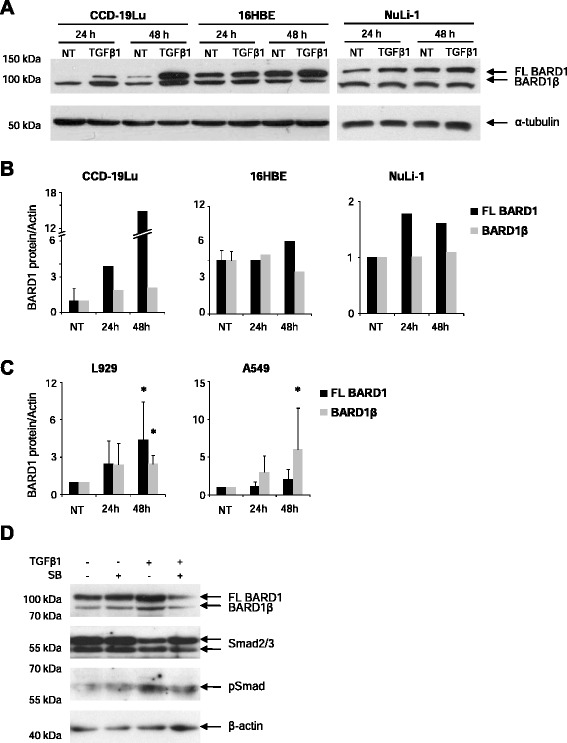
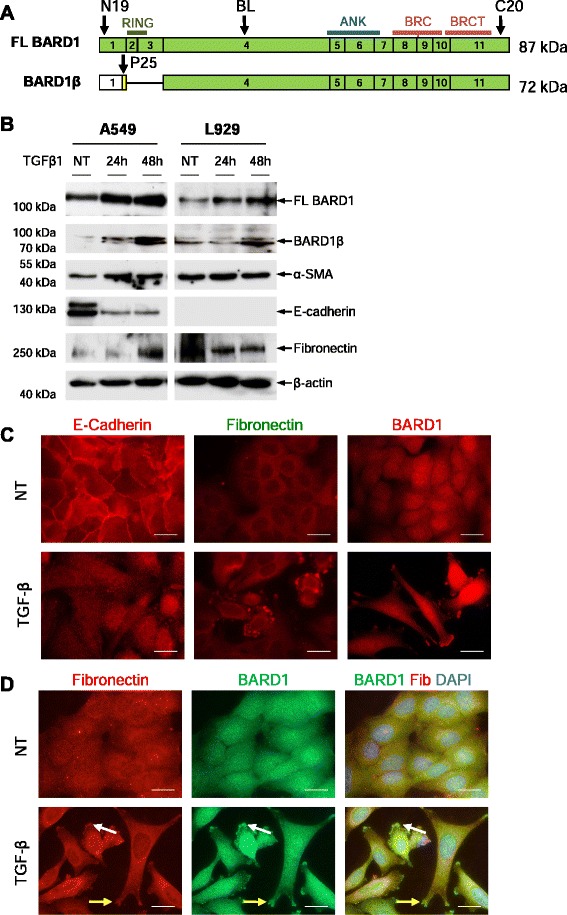
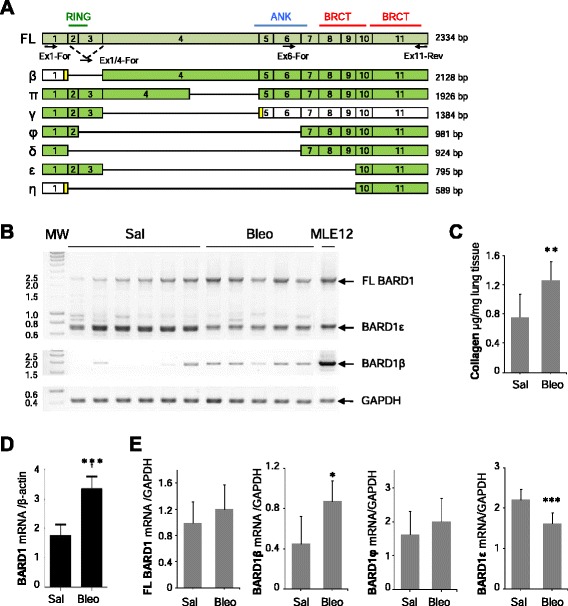
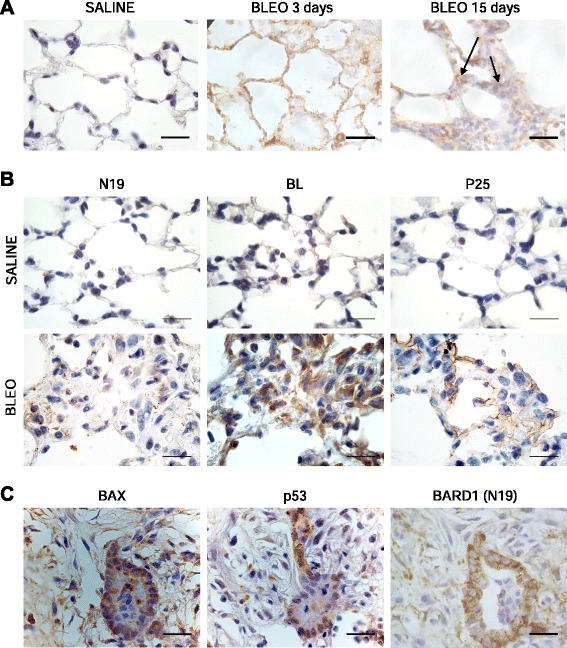
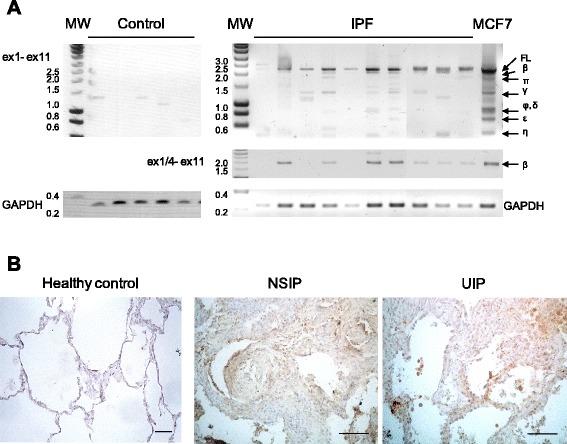
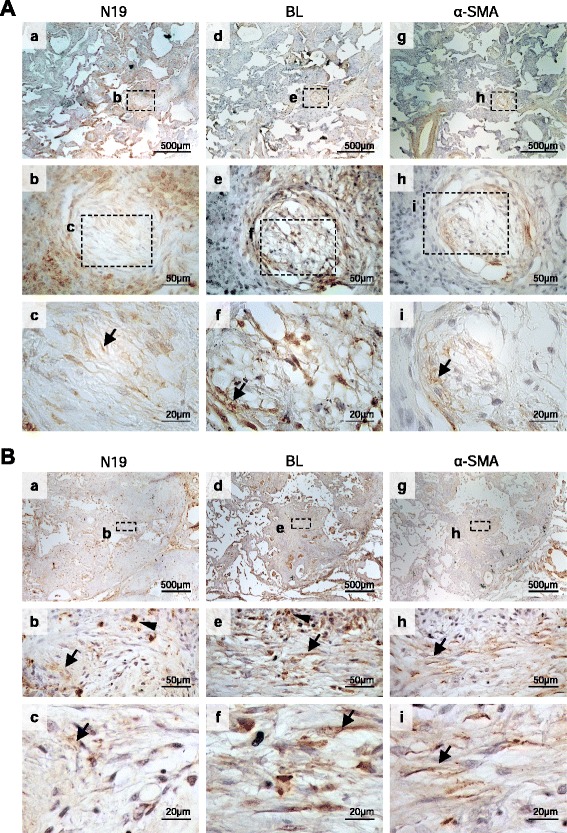
FL BARD1 and BARD1β were upregulated in response to TGF-β in epithelial cells and fibroblasts in vitro and in vivo. Protein and mRNA expression studies showed very low expression in healthy lung tissues, but upregulated expression of full length (FL) BARD1 and BARD1β in fibrotic tissues.
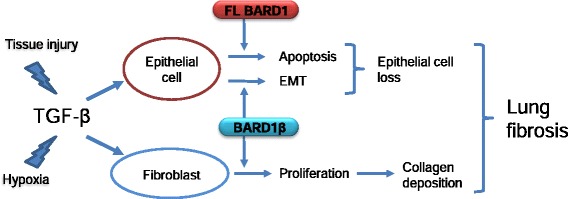
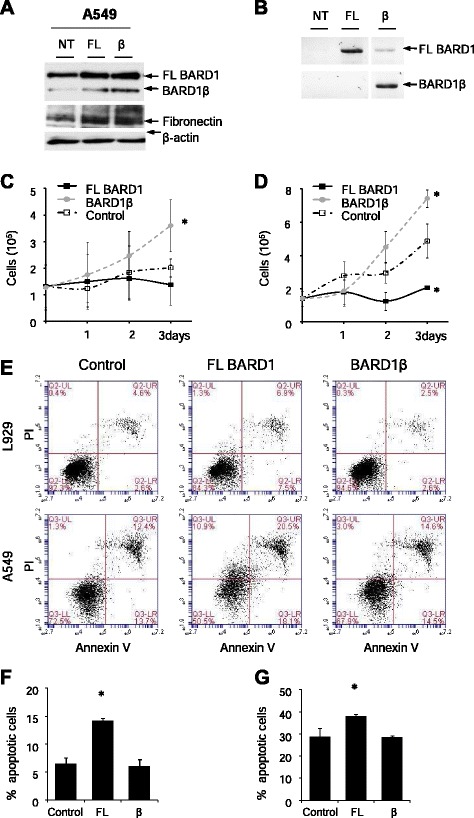
Our data suggest that FL BARD1 and BARD1β might be mediators of pleiotropic effects of TGF-β. In particular BARD1β might be a driver of proliferation and of pulmonary fibrosis pathogenesis and progression and represent a target for treatment.
特发性肺纤维化(IPF)是一种快速进展的纤维增殖性疾病,预后与肺癌相似,较差。IPF的发病机制尚不确定,但上皮细胞的丢失和成纤维细胞增殖被认为是核心过程。先前的报道表明,BARD1表达在缺氧反应中上调,并与TGF-β信号传导相关,这两个都是驱动肺纤维化的公认因素。差异剪接的BARD1异构体,特别是BARD1β,是各种起源癌症中增殖的致癌驱动因素。因此,我们假设BARD1和/或其异构体可能在肺纤维化中起作用。
我们在培养细胞、实验性诱导肺纤维化的小鼠以及肺纤维化患者的肺活检组织中研究了BARD1作为TGF-β的函数的表达。
在体外和体内的上皮细胞和成纤维细胞中,FL BARD1和BARD1β在TGF-β反应中上调。蛋白质和mRNA表达研究显示,在健康肺组织中表达非常低,但在纤维化组织中全长(FL)BARD1和BARD1β的表达上调。
我们的数据表明,FL BARD1和BARD1β可能是TGF-β多效性作用的介质。特别是BARD1β可能是增殖以及肺纤维化发病机制和进展的驱动因素,并代表一个治疗靶点。