Samanta Jayshree, Grund Ethan M, Silva Hernandez M, Lafaille Juan J, Fishell Gord, Salzer James L
New York University Neuroscience Institute, Department of Neuroscience and Physiology, New York University School of Medicine, New York, New York 10016, USA.
The Kimmel Center for Biology and Medicine of the Skirball Institute, New York University School of Medicine, New York, New York 10016, USA.
Nature. 2015 Oct 15;526(7573):448-52. doi: 10.1038/nature14957. Epub 2015 Sep 30.
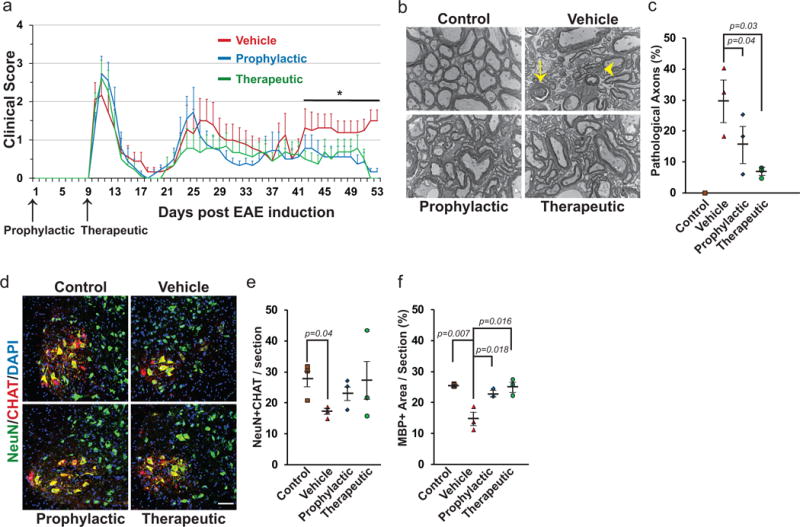
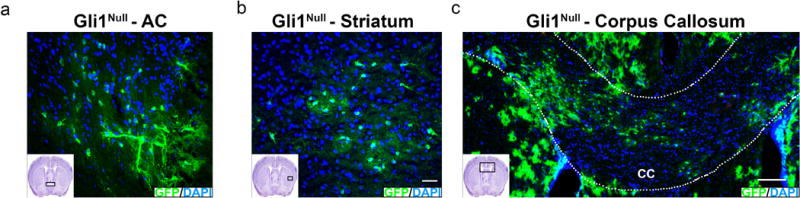
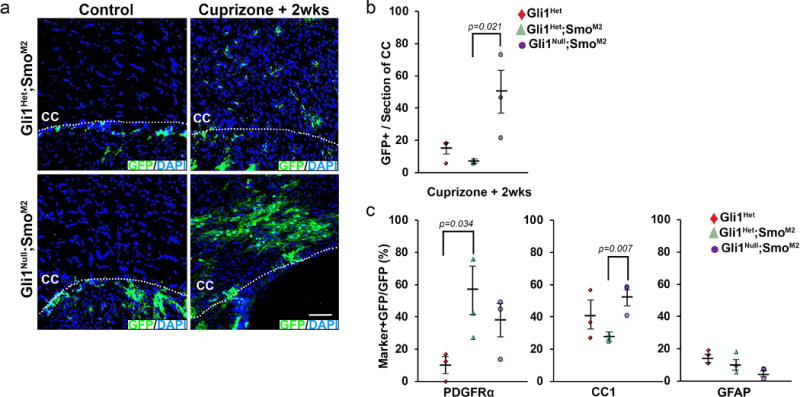
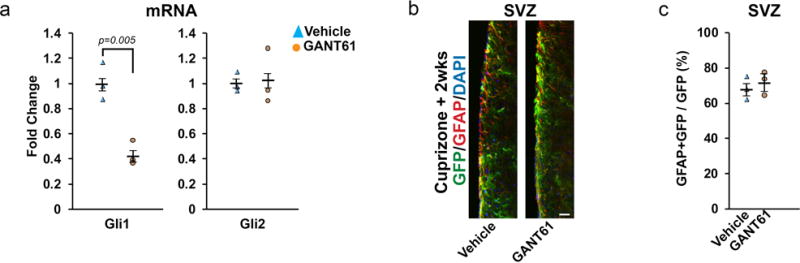
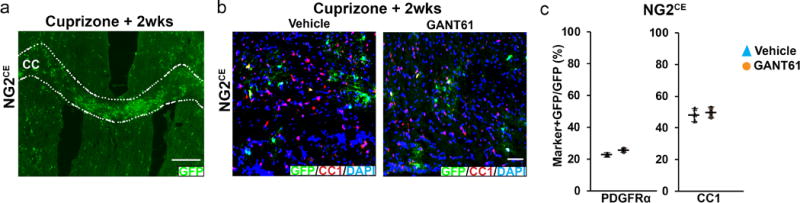
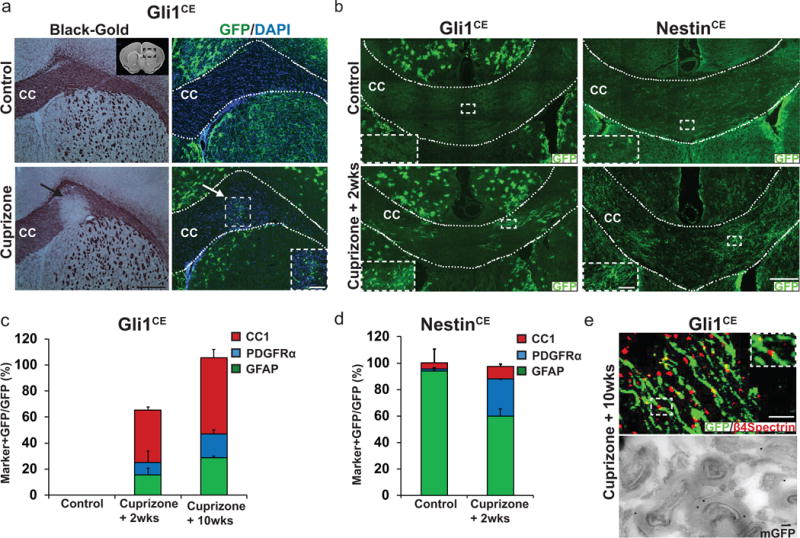
Enhancing repair of myelin is an important but still elusive therapeutic goal in many neurological disorders. In multiple sclerosis, an inflammatory demyelinating disease, endogenous remyelination does occur but is frequently insufficient to restore function. Both parenchymal oligodendrocyte progenitor cells and endogenous adult neural stem cells resident within the subventricular zone are known sources of remyelinating cells. Here we characterize the contribution to remyelination of a subset of adult neural stem cells, identified by their expression of Gli1, a transcriptional effector of the sonic hedgehog pathway. We show that these cells are recruited from the subventricular zone to populate demyelinated lesions in the forebrain but never enter healthy, white matter tracts. Unexpectedly, recruitment of this pool of neural stem cells, and their differentiation into oligodendrocytes, is significantly enhanced by genetic or pharmacological inhibition of Gli1. Importantly, complete inhibition of canonical hedgehog signalling was ineffective, indicating that the role of Gli1 both in augmenting hedgehog signalling and in retarding myelination is specialized. Indeed, inhibition of Gli1 improves the functional outcome in a relapsing/remitting model of experimental autoimmune encephalomyelitis and is neuroprotective. Thus, endogenous neural stem cells can be mobilized for the repair of demyelinated lesions by inhibiting Gli1, identifying a new therapeutic avenue for the treatment of demyelinating disorders.
在许多神经系统疾病中,增强髓鞘修复是一个重要但仍难以实现的治疗目标。在多发性硬化症(一种炎症性脱髓鞘疾病)中,内源性髓鞘再生确实会发生,但往往不足以恢复功能。实质少突胶质细胞祖细胞和位于脑室下区的内源性成年神经干细胞都是已知的髓鞘再生细胞来源。在这里,我们描述了成年神经干细胞的一个子集对髓鞘再生的贡献,这些细胞通过其对Gli1(音猬因子信号通路的转录效应器)的表达来识别。我们表明,这些细胞从脑室下区被募集到前脑的脱髓鞘病变处,但从不进入健康的白质束。出乎意料的是,通过对Gli1进行基因或药理学抑制,可显著增强这群神经干细胞的募集及其向少突胶质细胞的分化。重要的是,对经典刺猬因子信号通路的完全抑制无效,这表明Gli1在增强刺猬因子信号通路和延缓髓鞘形成方面的作用具有特殊性。事实上,抑制Gli1可改善实验性自身免疫性脑脊髓炎复发/缓解模型中的功能结果,并且具有神经保护作用。因此,通过抑制Gli1可动员内源性神经干细胞来修复脱髓鞘病变,从而为脱髓鞘疾病的治疗确定了一条新的治疗途径。