de Oliveira-Júnior Luiz Carlos, Araújo Santos Fabiana de Almeida, Goulart Luiz Ricardo, Ueira-Vieira Carlos
Laboratório de Genética, Instituto de Genética e Bioquímica, Universidade Federal de Uberlândia, Rua Acre s/n, Bloco 2E sala 230, Campus Umuarama, 38400-902 Uberlândia, MG, Brazil ; Faculdade de Medicina, Universidade Federal de Uberlândia, Avenida Para 1720, Bloco 2U sala 23, Campus Umuarama, 38400-902 Uberlândia, MG, Brazil.
Laboratório de Nanobiotecnologia, Instituto de Genética e Bioquímica, Universidade Federal de Uberlândia, Rua Acre s/n, Bloco 2E sala 230, Campus Umuarama, 38400-902 Uberlândia, MG, Brazil.
Biomed Res Int. 2015;2015:267989. doi: 10.1155/2015/267989. Epub 2015 Aug 31.
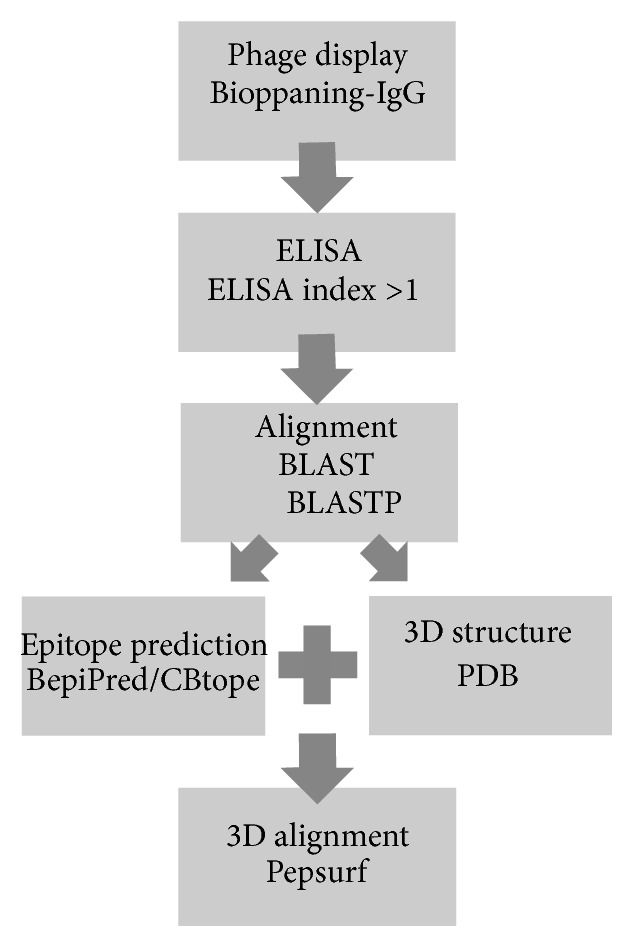
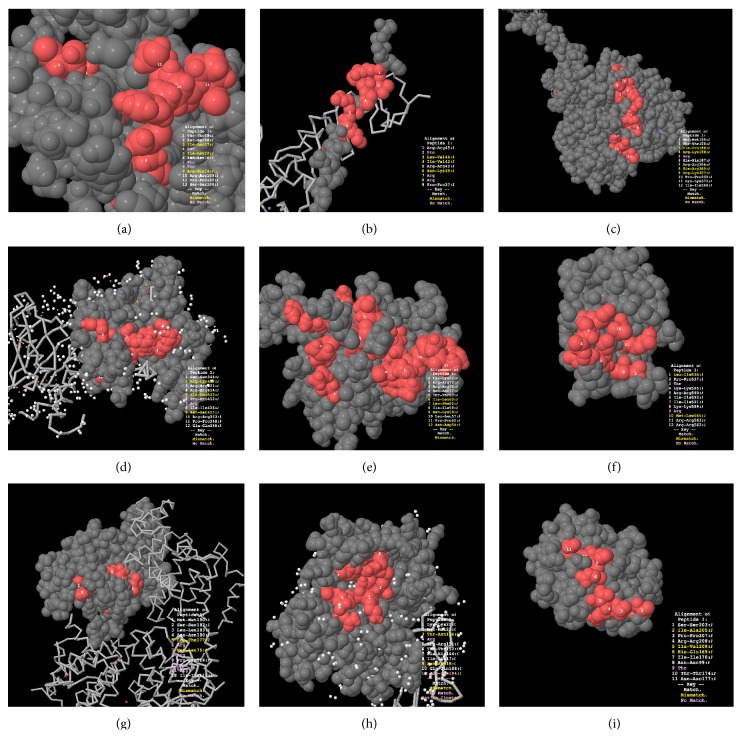
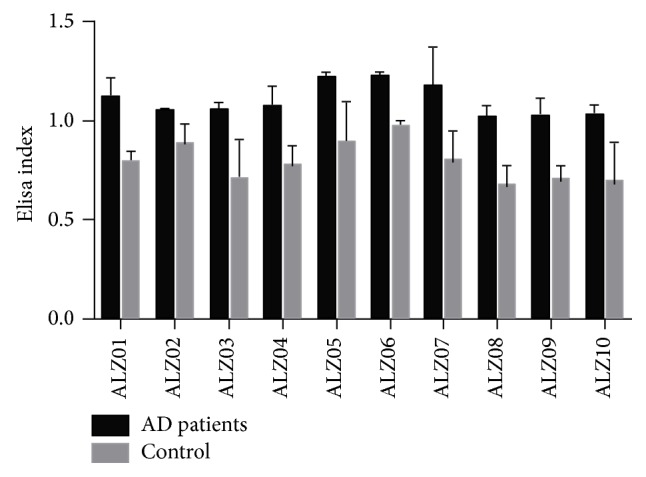
Autoantibodies (aAb) associated with Alzheimer's disease (AD) have not been sufficiently characterized and their exact involvement is undefined. The use of information technology and computerized analysis with phage display technology was used, in the present research, to map the epitope of putative self-antigens in AD patients. A 12-mer random peptide library, displayed on M13 phages, was screened using IgG from AD patients with two repetitions. Seventy-one peptides were isolated; however, only 10 were positive using the Elisa assay technique (Elisa Index > 1). The results showed that the epitope regions of the immunoreactive peptides, identified by phage display analysis, were on the exposed surfaces of the proteins. The putative antigens MAST1, Enah, MAO-A, X11/MINT1, HGF, SNX14, ARHGAP 11A, APC, and CENTG3, which have been associated with AD or have functions in neural tissue, may indicate possible therapeutic targets.
与阿尔茨海默病(AD)相关的自身抗体(aAb)尚未得到充分表征,其确切作用也不明确。在本研究中,利用信息技术和噬菌体展示技术进行计算机分析,以绘制AD患者中假定自身抗原的表位。使用来自AD患者的IgG对展示于M13噬菌体上的12聚体随机肽库进行了两轮筛选。分离出71种肽;然而,采用酶联免疫吸附测定(ELISA)技术时只有10种呈阳性(ELISA指数>1)。结果表明,通过噬菌体展示分析鉴定出的免疫反应性肽的表位区域位于蛋白质的暴露表面。已与AD相关或在神经组织中具有功能的假定抗原MAST1、Enabled(Ena)、单胺氧化酶A(MAO-A)、X11/ Mint1、肝细胞生长因子(HGF)、分选衔接蛋白14(SNX14)、Rho GTP酶激活蛋白11A(ARHGAP 11A)、腺瘤性息肉病 coli(APC)和中心体相关GTP酶3(CENTG3)可能提示了潜在的治疗靶点。