Gibson A K, Stoy K S, Gelarden I A, Penley M J, Lively C M, Morran L T
Department of Biology, Indiana University, Bloomington, Indiana, 47405.
Department of Biology, Emory University, Atlanta, Georgia, 30322.
Evolution. 2015 Nov;69(11):2820-30. doi: 10.1111/evo.12785. Epub 2015 Oct 13.
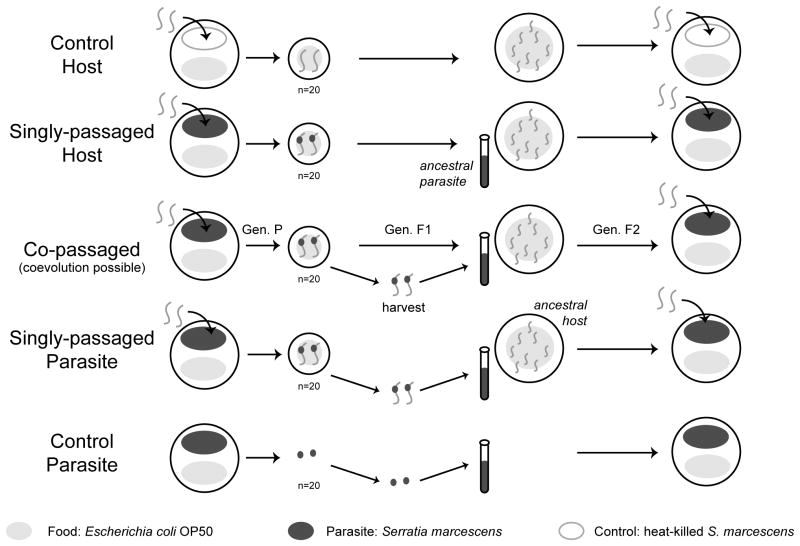
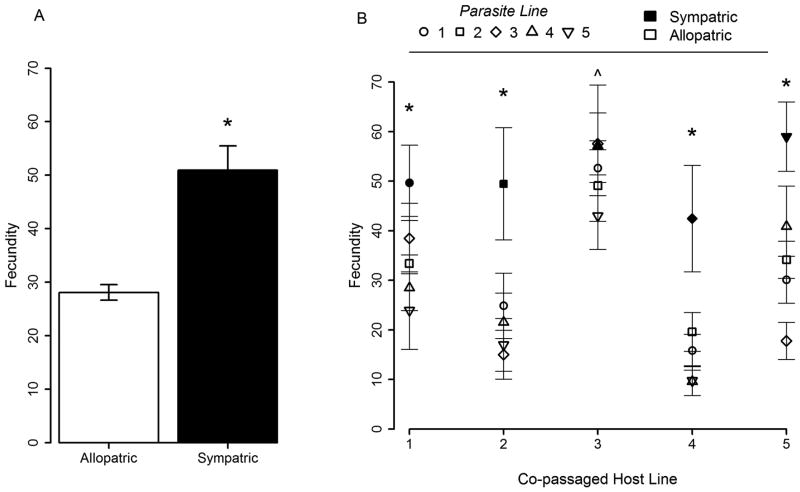
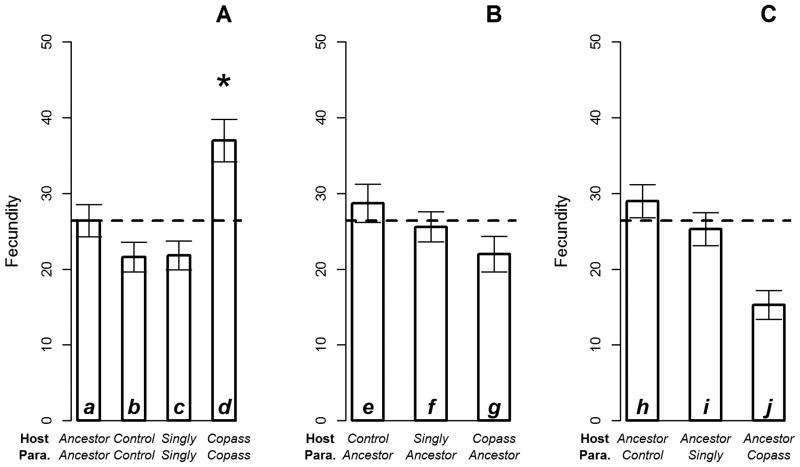
Why do some host-parasite interactions become less antagonistic over evolutionary time? Vertical transmission can select for reduced antagonism. Vertical transmission also promotes coevolution between hosts and parasites. Therefore, we hypothesized that coevolution itself may underlie transitions to reduced antagonism. To test the coevolution hypothesis, we selected for reduced antagonism between the host Caenorhabditis elegans and its parasite Serratia marcescens. This parasite is horizontally transmitted, which allowed us to study coevolution independently of vertical transmission. After 20 generations, we observed a response to selection when coevolution was possible: reduced antagonism evolved in the copassaged treatment. Reduced antagonism, however, did not evolve when hosts or parasites were independently selected without coevolution. In addition, we found strong local adaptation for reduced antagonism between replicate host/parasite lines in the copassaged treatment. Taken together, these results strongly suggest that coevolution was critical to the rapid evolution of reduced antagonism.
为什么有些宿主 - 寄生虫的相互作用在进化过程中会变得不那么对抗性呢?垂直传播能够选择降低对抗性。垂直传播还会促进宿主和寄生虫之间的共同进化。因此,我们推测共同进化本身可能是向降低对抗性转变的基础。为了检验共同进化假说,我们选择降低宿主秀丽隐杆线虫与其寄生虫粘质沙雷氏菌之间的对抗性。这种寄生虫是水平传播的,这使我们能够独立于垂直传播来研究共同进化。经过20代后,当共同进化可能发生时,我们观察到了对选择的响应:在共同传代处理中进化出了降低的对抗性。然而,当宿主或寄生虫在没有共同进化的情况下独立选择时,降低的对抗性并没有进化出来。此外,我们发现在共同传代处理中,重复的宿主/寄生虫品系之间存在很强的局部适应性以降低对抗性。综上所述,这些结果有力地表明,共同进化对于降低对抗性的快速进化至关重要。