Ouchi Kota, Takahashi Shin, Yamada Yasuhide, Tsuji Shingo, Tatsuno Kenji, Takahashi Hidekazu, Takahashi Naoki, Takahashi Masanobu, Shimodaira Hideki, Aburatani Hiroyuki, Ishioka Chikashi
Department of Clinical Oncology, Institute of Development, Aging and Cancer, Tohoku University, Sendai, Japan.
Department of Medical Oncology, Tohoku University Hospital, Sendai, Japan.
Cancer Sci. 2015 Dec;106(12):1722-9. doi: 10.1111/cas.12827. Epub 2015 Nov 12.
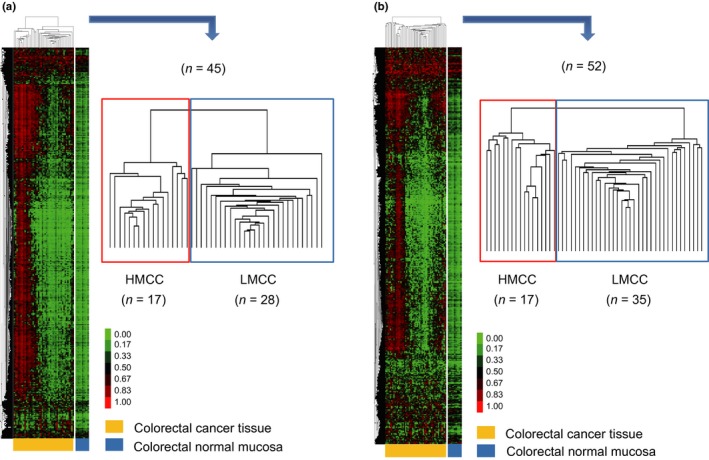
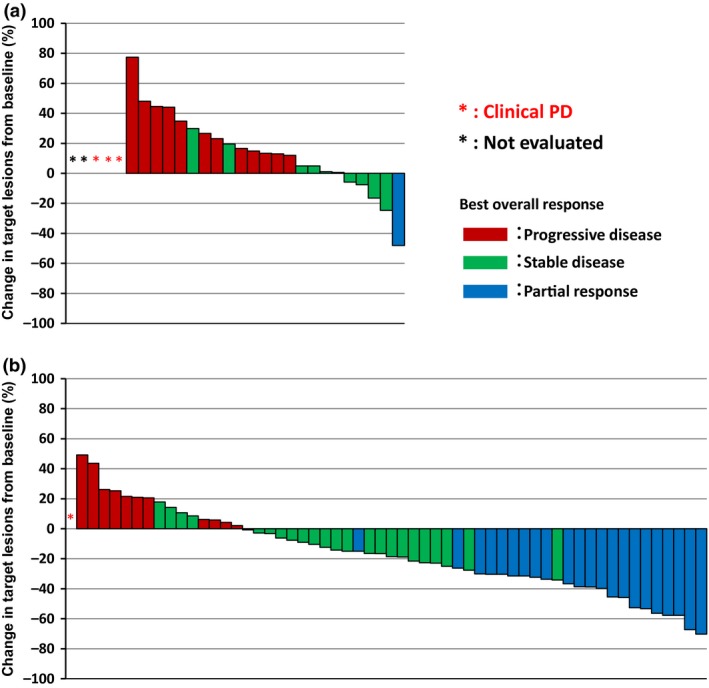
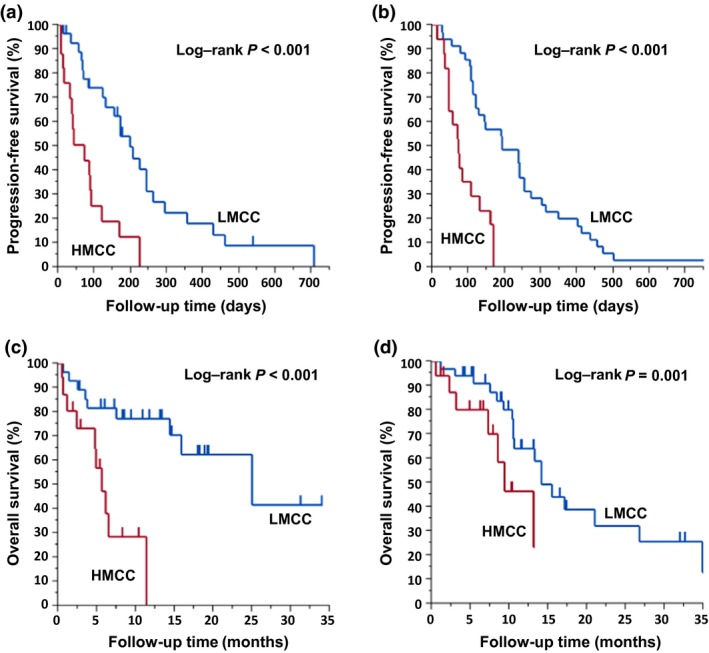
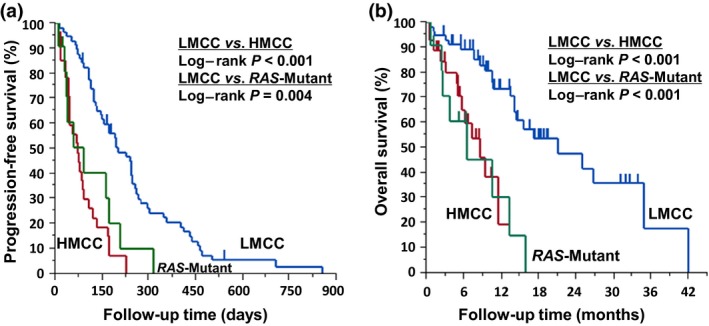
Anti-epidermal growth factor receptor (EGFR) treatment is an effective option for metastatic colorectal cancer (CRC) treatment. However, there are few reliable biomarkers to predict the clinical response to anti-EGFR treatment. We investigated the genome-wide DNA methylation status in metastatic colorectal cancer to identify associations between the methylation status and clinical response to anti-EGFR antibody. We retrospectively reviewed the medical records of 97 patients (45 patients for the first cohort and 52 patients for the second cohort) who received anti-EGFR treatment for KRAS wild-type metastatic CRC. Then we analyzed the associations between genome-wide DNA methylation status and clinical response to anti-EGFR treatment, and evaluated the predictive power and value of the methylation status statistically. As a result, each cohort was classified into highly methylated CRC and low methylated CRC subgroups by unsupervised clustering analyses. In the first cohort, clinical outcomes were significantly better in the low methylated CRC subgroup than in the highly methylated CRC subgroup (response rate, 35.7% vs 6.3%, P = 0.03; disease control rate, 75% vs 31.3%, P = 0.005; hazard ratio for progression-free survival, 0.27; 95% confidence interval, 0.13-0.57, P < 0.001; overall survival, 0.19; 95% confidence interval, 0.06-0.54, P < 0.001). These results were reproducible in the second cohort. The genome-wide methylation status was a predictive factor of progression-free survival and overall survival independently of RAS mutation status. In conclusion, we found that the genome-wide DNA methylation status is a powerful epigenetic predictor of anti-EGFR treatment in patients with KRAS wild-type metastatic colorectal cancer (UMIN000005490).
抗表皮生长因子受体(EGFR)治疗是转移性结直肠癌(CRC)治疗的一种有效选择。然而,几乎没有可靠的生物标志物来预测对抗EGFR治疗的临床反应。我们研究了转移性结直肠癌的全基因组DNA甲基化状态,以确定甲基化状态与抗EGFR抗体临床反应之间的关联。我们回顾性分析了97例接受抗EGFR治疗的KRAS野生型转移性CRC患者的病历(第一队列45例,第二队列52例)。然后我们分析了全基因组DNA甲基化状态与抗EGFR治疗临床反应之间的关联,并对甲基化状态的预测能力和价值进行了统计学评估。结果,通过无监督聚类分析,每个队列被分为高甲基化CRC和低甲基化CRC亚组。在第一队列中,低甲基化CRC亚组的临床结局明显优于高甲基化CRC亚组(缓解率,35.7%对6.3%,P = 0.03;疾病控制率,75%对31.3%,P = 0.005;无进展生存风险比,0.27;95%置信区间,0.13 - 0.57,P < 0.001;总生存,0.19;95%置信区间,0.06 - 0.54,P < 0.001)。这些结果在第二队列中具有可重复性。全基因组甲基化状态是独立于RAS突变状态的无进展生存和总生存的预测因素。总之,我们发现全基因组DNA甲基化状态是KRAS野生型转移性结直肠癌患者抗EGFR治疗的有力表观遗传预测指标(UMIN000005490)。