Liu Xinfeng, Bai Chunling, Ding Xiangbin, Wei Zhuying, Guo Hong, Li Guangpeng
The Key Laboratory of Mammalian Reproductive Biology and Biotechnology of the Ministry of Education, Inner Mongolia University, Hohhot, China; College of Animal Science and Animal Medicine, Tianjin Agriculture University, Tianjin, China.
The Key Laboratory of Mammalian Reproductive Biology and Biotechnology of the Ministry of Education, Inner Mongolia University, Hohhot, China.
PLoS One. 2015 Oct 1;10(10):e0138874. doi: 10.1371/journal.pone.0138874. eCollection 2015.
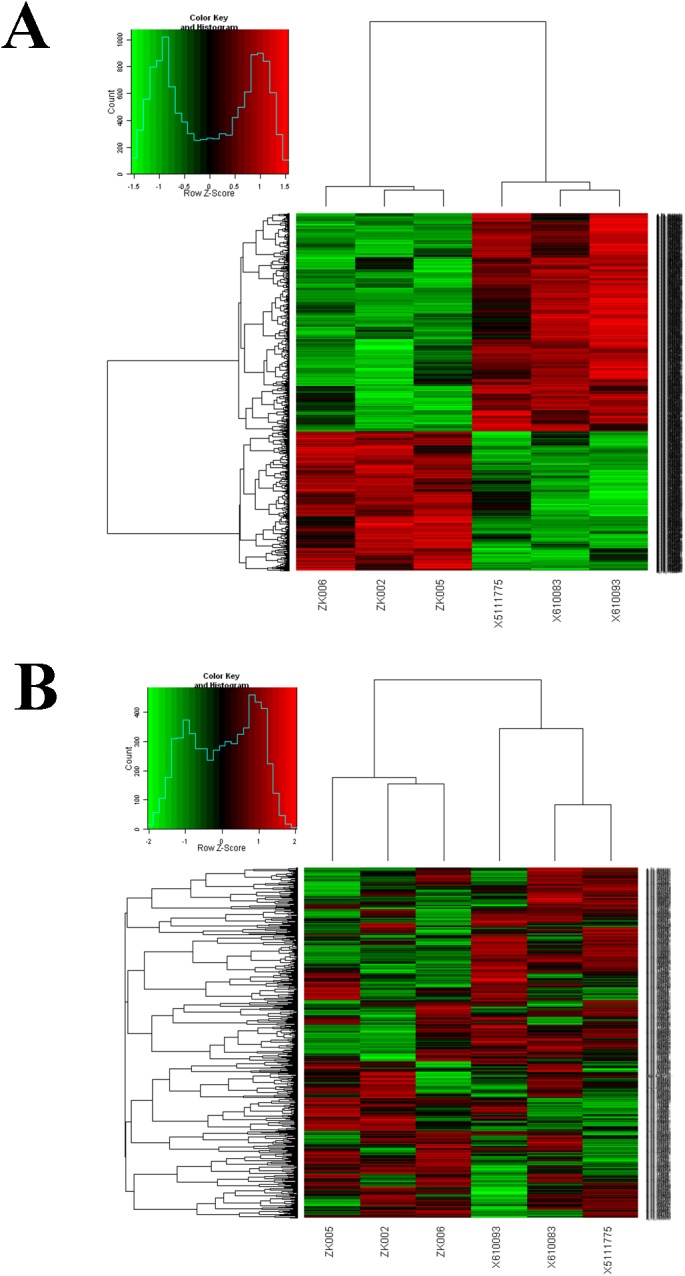
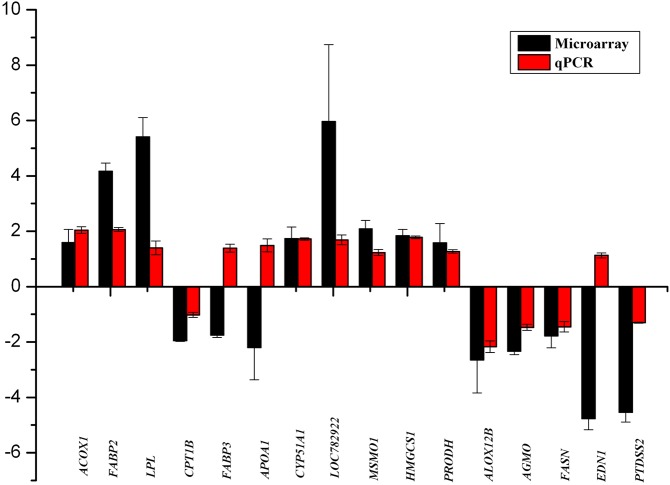
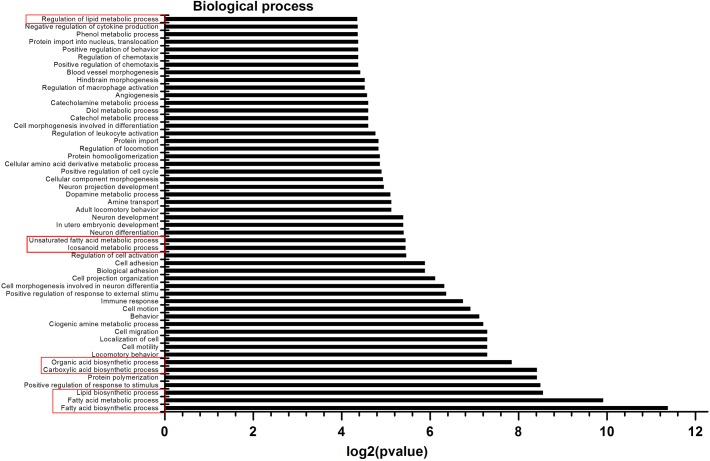
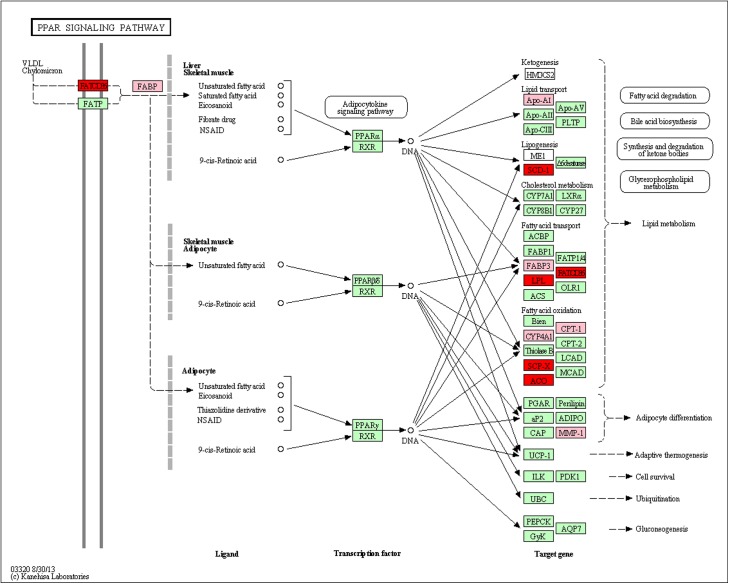
Long-chain n-3 polyunsaturated fatty acids (n-3 PUFAs) are beneficial for human health. However, humans and mammals are unable to synthesize n-3 PUFAs because they lack the n-3 desaturase gene fat-1 and must therefore obtain this type of fatty acid through their diet. Through the production of fat-1 transgenic animals, it is possible to obtain animal products that are rich in n-3 PUFAs, such as meat and milk. The aim of this study was to analyze the gene expression profile and the mechanism of lipid metabolism in fat-1 transgenic cattle and to accumulate important basic data that are required to obtain more efficient fat-1 transgenic cattle. Transcriptome profiling of fat-1 transgenic and wild-type cattle identified differentially expressed genes that are involved in 90 biological pathways, eight pathways of which were related to lipid metabolism processes 36 genes of which were related to lipid metabolism. This analysis also identified 11 significantly enriched genes that were involved in the peroxisome proliferator-activated receptor signaling pathway. These findings were verified by quantitative polymerase chain reaction. The information obtained in this study indicated that the introduction of an exogenous fat-1 gene into cattle affects the gene expression profile and the process of lipid metabolism in these animals. These results may provide important insights into how an exogenous fat-1 gene synthesizes n-3 PUFAs in transgenic cattle and other mammals.
长链n-3多不饱和脂肪酸(n-3 PUFAs)对人类健康有益。然而,人类和哺乳动物无法合成n-3 PUFAs,因为它们缺乏n-3去饱和酶基因fat-1,因此必须通过饮食获取这类脂肪酸。通过培育fat-1转基因动物,有可能获得富含n-3 PUFAs的动物产品,如肉和奶。本研究的目的是分析fat-1转基因牛的基因表达谱和脂质代谢机制,并积累培育更高效的fat-1转基因牛所需的重要基础数据。对fat-1转基因牛和野生型牛进行转录组分析,确定了参与90条生物学途径的差异表达基因,其中8条途径与脂质代谢过程相关,36个基因与脂质代谢相关。该分析还确定了11个在过氧化物酶体增殖物激活受体信号通路中显著富集的基因。这些发现通过定量聚合酶链反应得到了验证。本研究获得的信息表明,将外源fat-1基因导入牛体内会影响这些动物的基因表达谱和脂质代谢过程。这些结果可能为外源fat-1基因在转基因牛和其他哺乳动物中合成n-3 PUFAs的机制提供重要见解。