Maehara Y, Anai H, Kusumoto T, Sakaguchi Y, Sugimachi K
Cancer Center of Kyushu University Hospital, Faculty of Medicine, Kyushu University, Fukuoka, Japan.
Am J Pathol. 1989 Jan;134(1):7-10.
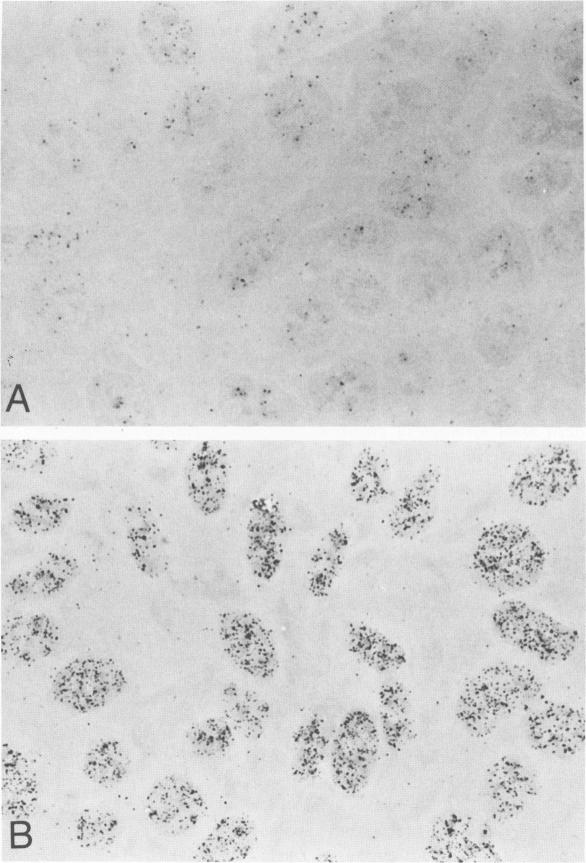
DNA strand break in HeLa cells induced by radiation was detected using the in situ nick translation method. The cells were exposed to radiation of 3, 6, 12, 18, and 24 Gy in Lab-Tek tissue culture chamber/slides and were fixed with ethanol/acetic acid on the slide glass. The break sites in DNA were translated artificially in the presence of Escherichia coli DNA polymerase I and [3H]-labeled dTTP. Autoradiographic observation was made of the level of break sites in the DNA. The DNA strand break appeared even with a 3 Gy exposure, increased 8.6 times at 24 Gy compared with the control cells, and this level correlated reciprocally to change in cell viability. This nick translation method provides a rapid in situ assay for determining radiation-induced DNA damage of cultured cells, in a semi-quantitative manner.
采用原位缺口平移法检测辐射诱导的HeLa细胞中的DNA链断裂。将细胞置于Lab-Tek组织培养室/载玻片上,分别接受3、6、12、18和24 Gy的辐射,然后用乙醇/乙酸固定在载玻片上。在大肠杆菌DNA聚合酶I和[3H]标记的dTTP存在的情况下,人工翻译DNA中的断裂位点。通过放射自显影观察DNA中断裂位点的水平。即使在3 Gy的照射下也出现了DNA链断裂,与对照细胞相比,在24 Gy时增加了8.6倍,并且该水平与细胞活力的变化呈反比关系。这种缺口平移法提供了一种快速的原位检测方法,以半定量方式测定培养细胞的辐射诱导DNA损伤。