Svenkeson A, Swami A
Army Research Laboratory, 2800 Powder Mill Road, Adelphi, MD 20783, USA.
Sci Rep. 2015 Oct 6;5:14839. doi: 10.1038/srep14839.
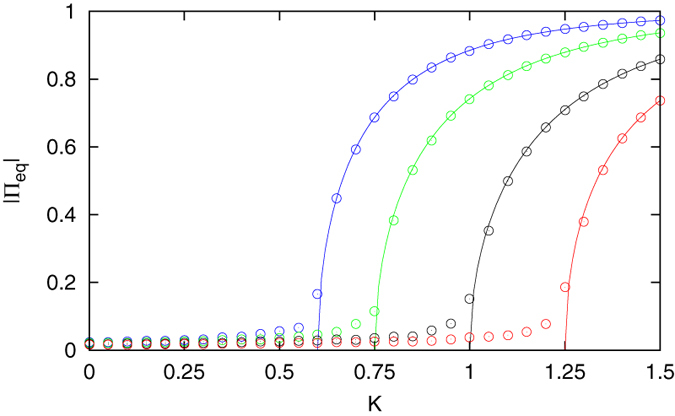
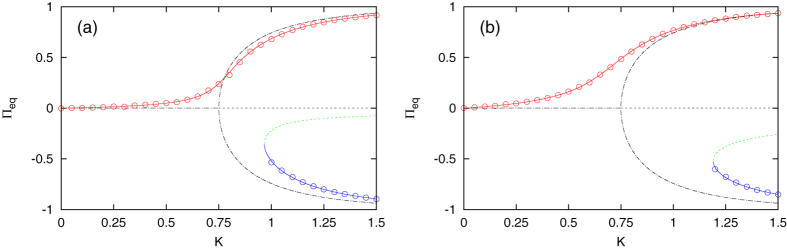
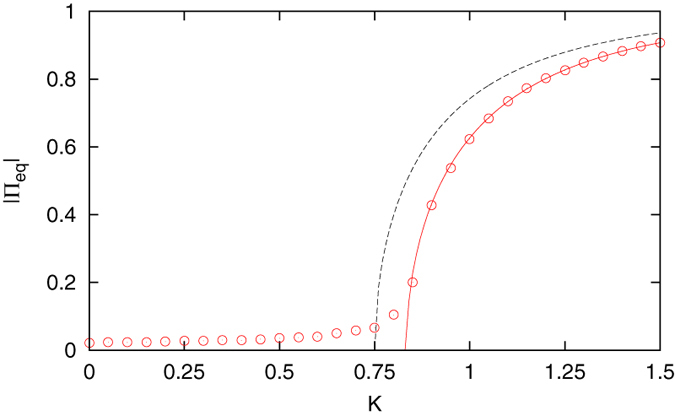
Group decision-making processes often turn into a drawn out and costly battle between two opposing subgroups. Using analytical arguments based on a master equation description of the opinion dynamics occurring in a three-state model of cooperatively interacting units, we show how the capability of a social group to reach consensus can be enhanced when there is an intermediate state for indecisive individuals to pass through. The time spent in the intermediate state must be relatively short compared to that of the two polar states in order to create the beneficial effect. Furthermore, the cooperation between individuals must not be too low, as the benefit to consensus is possible only when the cooperation level exceeds a specific threshold. We also discuss how zealots, agents that remain in one state forever, can affect the consensus among the rest of the population by counteracting the benefit of the intermediate state or making it virtually impossible for an opposition to form.
群体决策过程常常演变成两个对立子群体之间旷日持久且代价高昂的斗争。基于对协同相互作用单元的三态模型中意见动态的主方程描述,运用分析论证,我们展示了在存在一个中间状态供犹豫不决的个体过渡时,社会群体达成共识的能力如何得到增强。为了产生有益效果,在中间状态所花费的时间与两个极端状态相比必须相对较短。此外,个体之间的合作不能过低,因为只有当合作水平超过特定阈值时,达成共识才有可能。我们还讨论了狂热者,即永远处于一种状态的个体,如何通过抵消中间状态的益处或使形成对立面几乎不可能,来影响其余人群的共识。