Nunes Flavia L D, Aquilina Luc, de Ridder Jo, Francez André-Jean, Quaiser Achim, Caudal Jean-Pierre, Vandenkoornhuyse Philippe, Dufresne Alexis
Laboratoire des Sciences de l'Environnement Marin, LEMAR UMR 6539 CNRS/UBO/IRD/Ifremer, Université de Brest (UBO), Université Européenne de Bretagne (UEB), Institut Universitaire Européen de la Mer (IUEM), 29280 Plouzané, France.
Université de Rennes 1, CNRS, UMR6118 Géosciences, Rennes, France.
Sci Rep. 2015 Oct 6;5:14612. doi: 10.1038/srep14612.
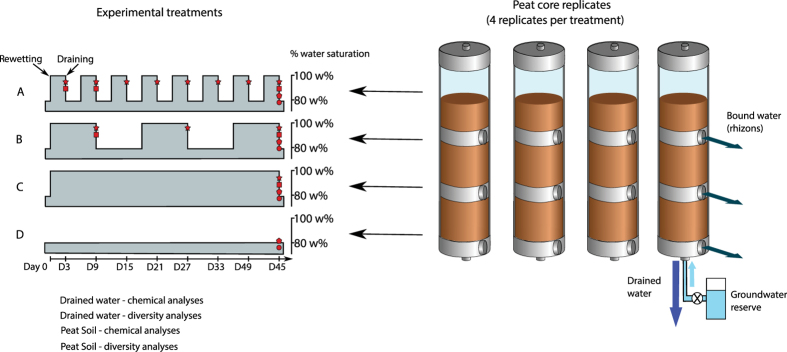
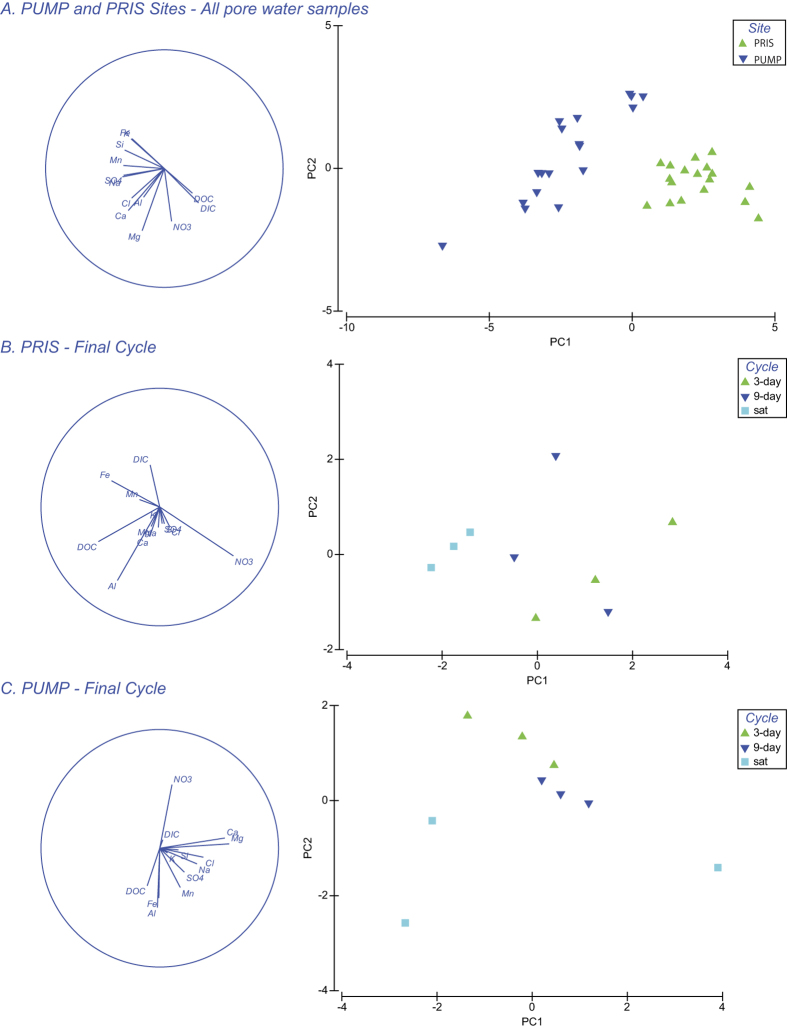
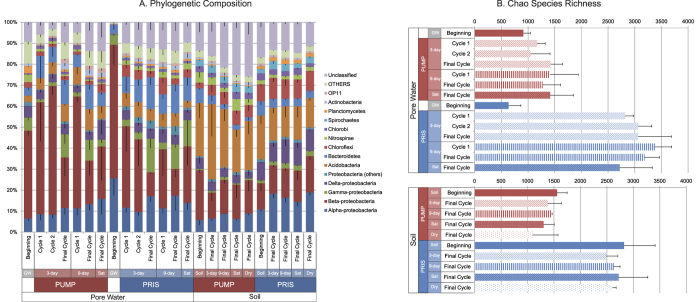
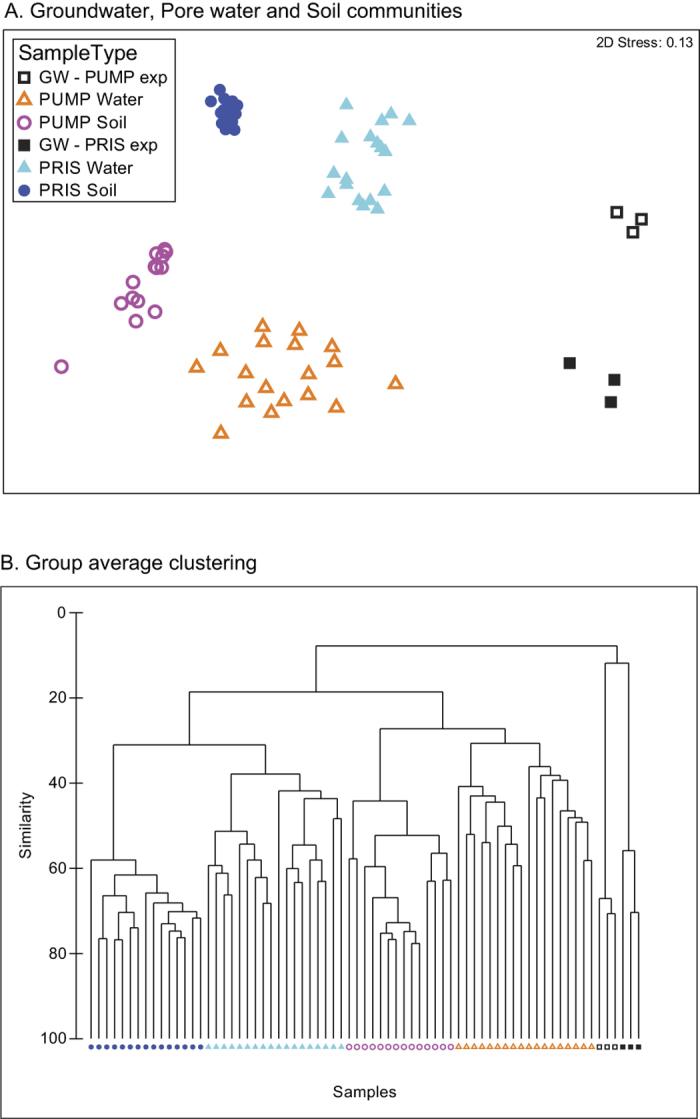
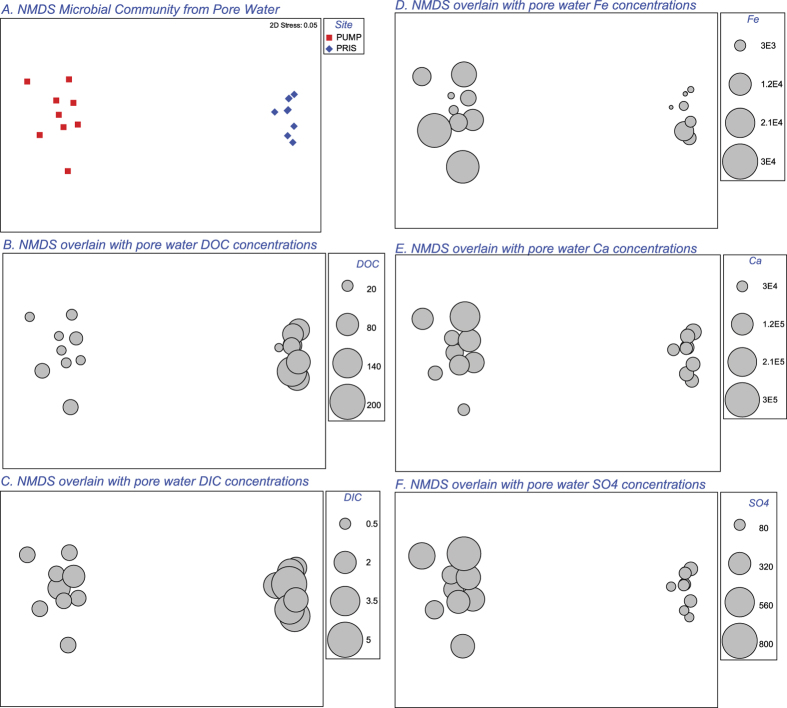
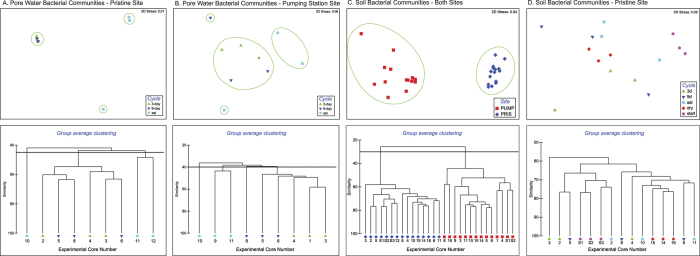
Peatlands are an important global carbon reservoir. The continued accumulation of carbon in peatlands depends on the persistence of anoxic conditions, in part induced by water saturation, which prevents oxidation of organic matter, and slows down decomposition. Here we investigate how and over what time scales the hydrological regime impacts the geochemistry and the bacterial community structure of temperate peat soils. Peat cores from two sites having contrasting groundwater budgets were subjected to four controlled drought-rewetting cycles. Pore water geochemistry and metagenomic profiling of bacterial communities showed that frequent water table drawdown induced lower concentrations of dissolved carbon, higher concentrations of sulfate and iron and reduced bacterial richness and diversity in the peat soil and water. Short-term drought cycles (3-9 day frequency) resulted in different communities from continuously saturated environments. Furthermore, the site that has more frequently experienced water table drawdown during the last two decades presented the most striking shifts in bacterial community structure, altering biogeochemical functioning of peat soils. Our results suggest that the increase in frequency and duration of drought conditions under changing climatic conditions or water resource use can induce profound changes in bacterial communities, with potentially severe consequences for carbon storage in temperate peatlands.
泥炭地是重要的全球碳库。泥炭地中碳的持续积累取决于缺氧条件的持续存在,部分是由水分饱和引起的,水分饱和可防止有机质氧化并减缓分解。在此,我们研究水文状况如何以及在何种时间尺度上影响温带泥炭土的地球化学和细菌群落结构。从两个具有不同地下水收支情况的地点采集泥炭芯,使其经历四个受控的干旱-再湿润循环。孔隙水地球化学和细菌群落的宏基因组分析表明,频繁的地下水位下降导致泥炭土壤和水中溶解碳浓度降低、硫酸盐和铁浓度升高,细菌丰富度和多样性降低。短期干旱循环(频率为3-9天)导致的群落与持续饱和环境中的不同。此外,在过去二十年中更频繁经历地下水位下降的地点,细菌群落结构变化最为显著,改变了泥炭土的生物地球化学功能。我们的结果表明,在气候变化或水资源利用变化的情况下,干旱条件的频率和持续时间增加会引发细菌群落的深刻变化,对温带泥炭地的碳储存可能产生严重后果。