do Sambo Maria Rosário, Penha-Gonçalves Carlos, Trovoada Maria Jesus, Costa João, Lardoeyt Roberto, Coutinho António
Instituto Gulbenkian de Ciência, Oeiras, Portugal.
Hospital Pediátrico David Bernardino, Luanda, Angola.
Malar J. 2015 Oct 7;14:393. doi: 10.1186/s12936-015-0920-z.
Haemoglobin S (HbS) is the gene known to confer the strongest advantage against malaria morbidity and mortality. Multiple HbS effects have been described resulting in protection against parasitaemia and reduction of severe malaria risk. This study aimed to explore HbS protection against severe malaria and Plasmodium falciparum parasitaemia in Angolan children exhibiting different severe malaria syndromes.
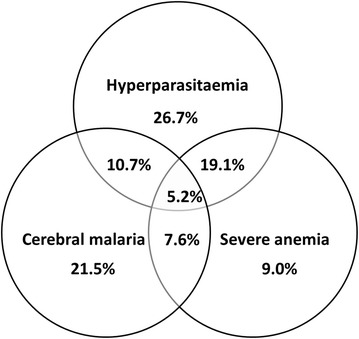
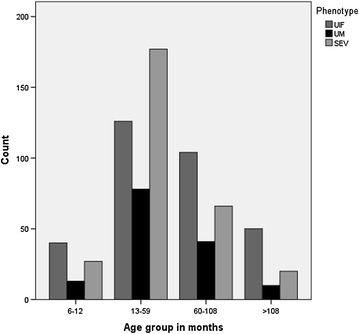
A case-control study was designed with 430 malaria cases (n = 288 severe malaria and n = 142 uncomplicated malaria) and 319 uninfected controls, attending a central paediatric hospital in Luanda. Severe malaria syndromes were cerebral malaria (n = 130), severe malaria anaemia (n = 30) and hyperparasitaemia (n = 128). Quantitative trait locus analysis was carried out to study HbS association to parasite densities.
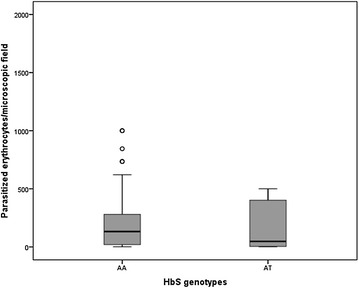
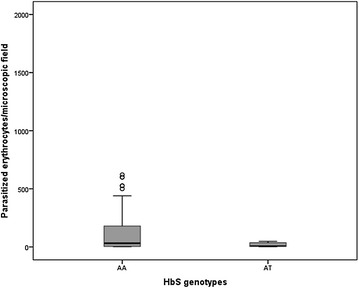
Previously reported HbS protection against severe malaria was confirmed in case-control analysis (P = 2 × 10(-13)) and corroborated by transmission disequilibrium test (P = 4 × 10(-3)). High parasite density protection conferred by HbS was detectable within severe malaria patients (P = 0.04). Stratifying severe malaria patients according parasite densities, it was found that HbS was highly associated to hyperparasitaemia protection (P = 1.9 × 10(-9)) but did not protect non-hyperparasitaemic children against severe malaria complications, namely cerebral malaria and severe malaria anaemia. Many studies have shown that HbS protects from severe malaria and controls parasite densities but the analysis further suggests that HbS protection against severe malaria syndromes was at a large extent correlated with control of parasitaemia levels.
This study supports the hypothesis that HbS confers resistance to hyperparasitaemia in patients exhibiting severe malaria syndromes and highlights that parasitaemia should be taken into account when evaluating HbS protection in severe malaria.
血红蛋白S(HbS)基因是已知的对疟疾发病率和死亡率具有最强保护优势的基因。已描述了HbS的多种作用,可预防寄生虫血症并降低严重疟疾风险。本研究旨在探讨HbS对安哥拉患有不同严重疟疾综合征儿童的严重疟疾和恶性疟原虫血症的保护作用。
设计了一项病例对照研究,纳入了430例疟疾病例(n = 288例严重疟疾和n = 142例非复杂性疟疾)以及319例未感染的对照,这些病例和对照均来自罗安达的一家中心儿科医院。严重疟疾综合征包括脑型疟疾(n = 130)、严重疟疾贫血(n = 30)和高寄生虫血症(n = 128)。进行了数量性状位点分析以研究HbS与寄生虫密度的关联。
病例对照分析证实了先前报道的HbS对严重疟疾的保护作用(P = 2×10⁻¹³),并通过传递不平衡检验得到了佐证(P = 4×10⁻³)。在严重疟疾患者中可检测到HbS对高寄生虫密度的保护作用(P = 0.04)。根据寄生虫密度对严重疟疾患者进行分层后发现,HbS与高寄生虫血症保护高度相关(P = 1.9×10⁻⁹),但对非高寄生虫血症儿童的严重疟疾并发症(即脑型疟疾和严重疟疾贫血)没有保护作用。许多研究表明HbS可预防严重疟疾并控制寄生虫密度,但该分析进一步表明,HbS对严重疟疾综合征的保护作用在很大程度上与寄生虫血症水平的控制相关。
本研究支持以下假设,即HbS使患有严重疟疾综合征的患者对高寄生虫血症具有抵抗力,并强调在评估严重疟疾中HbS的保护作用时应考虑寄生虫血症。