Potůčková Eliška, Roh Jaroslav, Macháček Miloslav, Sahni Sumit, Stariat Ján, Šesták Vít, Jansová Hana, Hašková Pavlína, Jirkovská Anna, Vávrová Kateřina, Kovaříková Petra, Kalinowski Danuta S, Richardson Des R, Šimůnek Tomáš
Department of Biochemical Sciences, Charles University in Prague, Faculty of Pharmacy, Hradec Králové, Czech Republic.
Department of Inorganic and Organic Chemistry, Charles University in Prague, Faculty of Pharmacy, Hradec Králové, Czech Republic.
PLoS One. 2015 Oct 13;10(10):e0139929. doi: 10.1371/journal.pone.0139929. eCollection 2015.
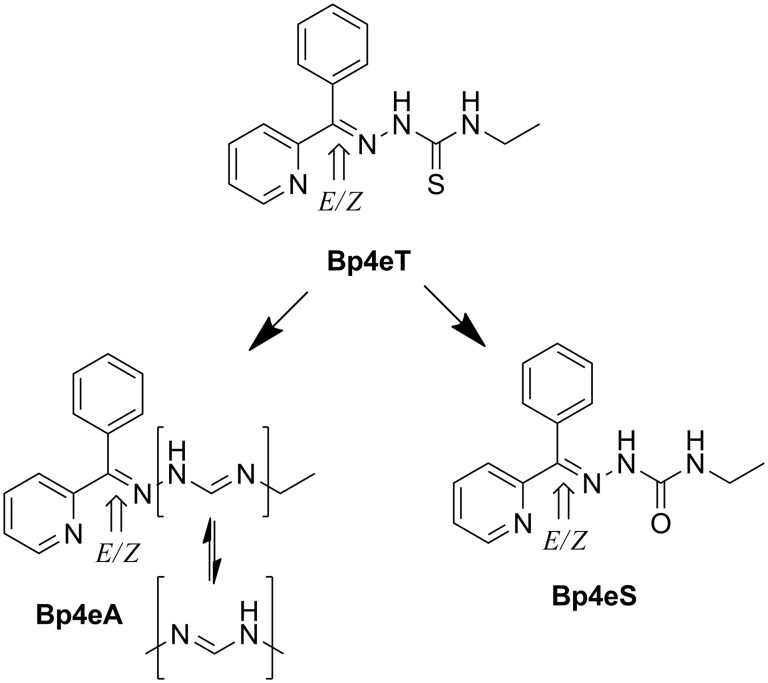
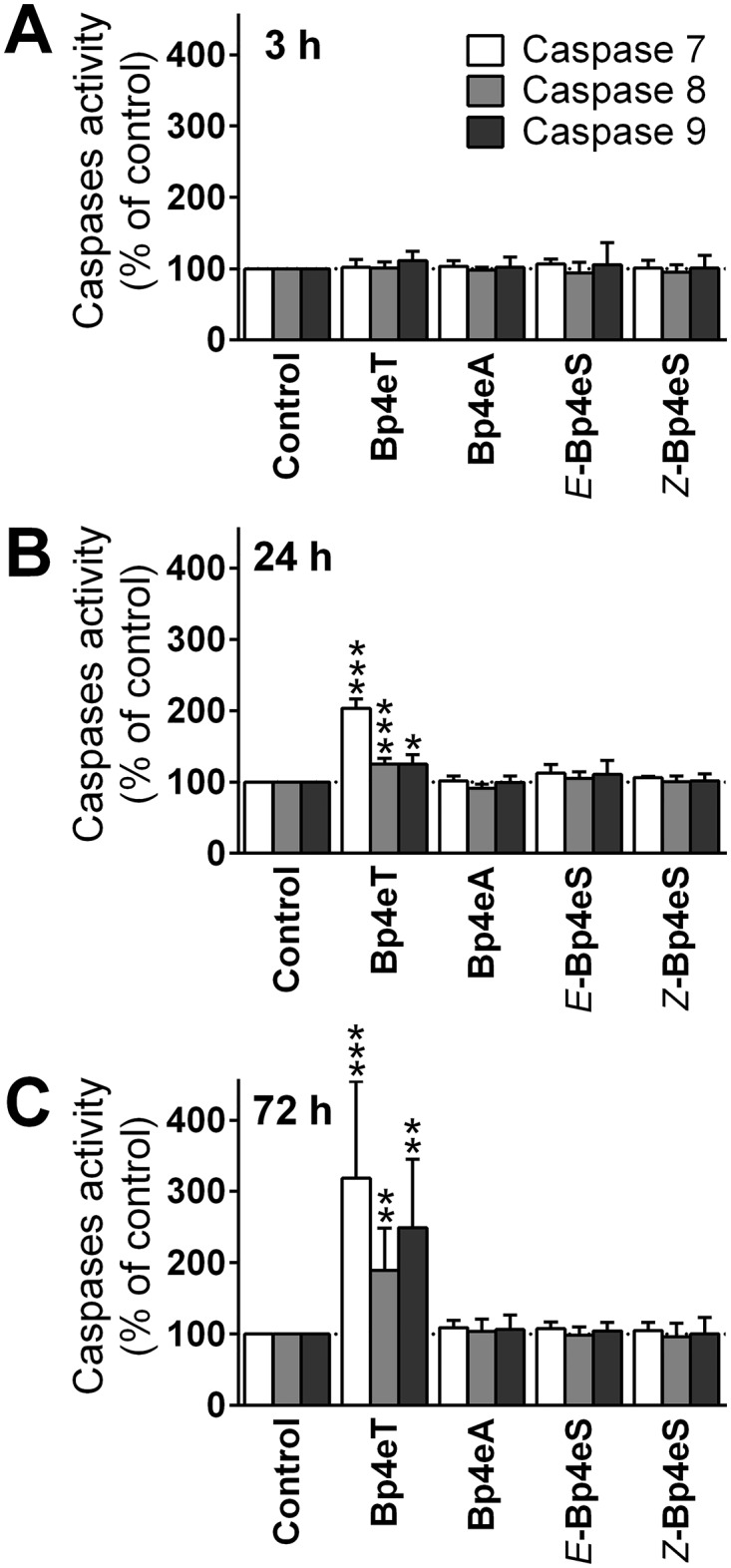
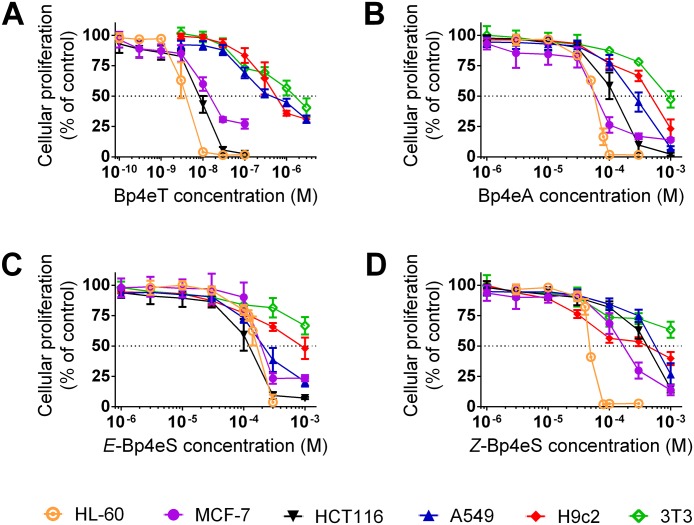
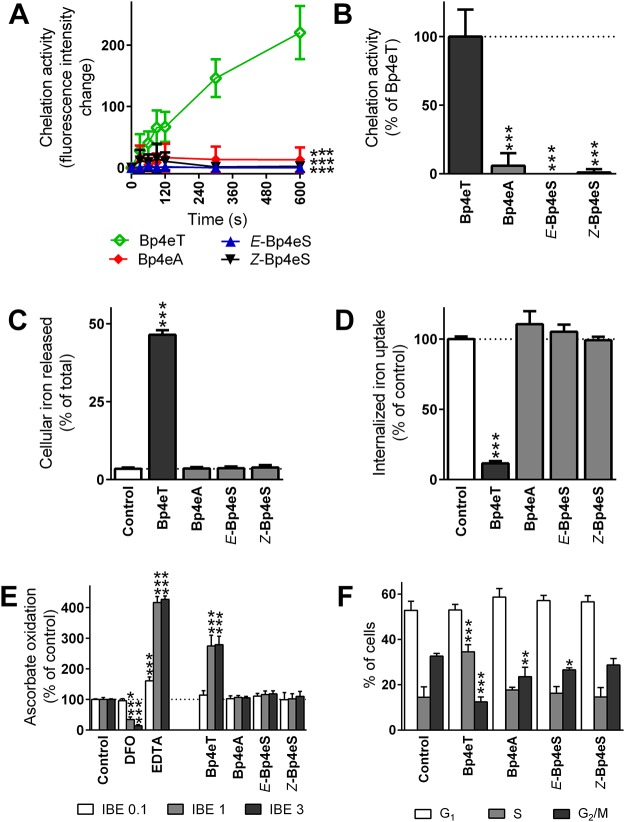
Cancer cells have a high iron requirement and many experimental studies, as well as clinical trials, have demonstrated that iron chelators are potential anti-cancer agents. The ligand, 2-benzoylpyridine 4-ethyl-3-thiosemicarbazone (Bp4eT), demonstrates both potent anti-neoplastic and anti-retroviral properties. In this study, Bp4eT and its recently identified amidrazone and semicarbazone metabolites were examined and compared with respect to their anti-proliferative activity towards cancer cells (HL-60 human promyelocytic leukemia, MCF-7 human breast adenocarcinoma, HCT116 human colon carcinoma and A549 human lung adenocarcinoma), non-cancerous cells (H9c2 neonatal rat-derived cardiomyoblasts and 3T3 mouse embryo fibroblasts) and their interaction with intracellular iron pools. Bp4eT was demonstrated to be a highly potent and selective anti-neoplastic agent that induces S phase cell cycle arrest, mitochondrial depolarization and apoptosis in MCF-7 cells. Both semicarbazone and amidrazone metabolites showed at least a 300-fold decrease in cytotoxic activity than Bp4eT towards both cancer and normal cell lines. The metabolites also lost the ability to: (1) promote the redox cycling of iron; (2) bind and mobilize iron from labile intracellular pools; and (3) prevent 59Fe uptake from 59Fe-labeled transferrin by MCF-7 cells. Hence, this study demonstrates that the highly active ligand, Bp4eT, is metabolized to non-toxic and pharmacologically inactive analogs, which most likely contribute to its favorable pharmacological profile. These findings are important for the further development of this drug candidate and contribute to the understanding of the structure-activity relationships of these agents.
癌细胞对铁有很高的需求,许多实验研究以及临床试验均已证明,铁螯合剂是潜在的抗癌剂。配体2-苯甲酰基吡啶4-乙基-3-硫代半卡巴腙(Bp4eT)具有强大的抗肿瘤和抗逆转录病毒特性。在本研究中,对Bp4eT及其最近鉴定出的脒腙和氨基脲代谢物进行了检测,并比较了它们对癌细胞(HL-60人早幼粒细胞白血病细胞、MCF-7人乳腺腺癌细胞、HCT116人结肠癌细胞和A549人肺腺癌细胞)、非癌细胞(H9c2新生大鼠来源的心肌成纤维细胞和3T3小鼠胚胎成纤维细胞)的抗增殖活性以及它们与细胞内铁池的相互作用。结果表明,Bp4eT是一种高效且具有选择性的抗肿瘤剂,可诱导MCF-7细胞发生S期细胞周期阻滞、线粒体去极化和凋亡。氨基脲和脒腙代谢物对癌细胞系和正常细胞系的细胞毒活性比Bp4eT至少降低了300倍。这些代谢物还失去了以下能力:(1)促进铁的氧化还原循环;(2)结合并从不稳定的细胞内铁池中动员铁;(3)阻止MCF-7细胞从59Fe标记的转铁蛋白中摄取59Fe。因此,本研究表明,高活性配体Bp4eT被代谢为无毒且无药理活性的类似物,这很可能是其良好药理特性的原因。这些发现对于该候选药物的进一步开发具有重要意义,并有助于理解这些药物的构效关系。