Division of Life Science, The Hong Kong University of Science and Technology , Clear Water Bay, Kowloon, Hong Kong.
eNeuro. 2015 Aug 18;2(4). doi: 10.1523/ENEURO.0032-15.2015. eCollection 2015 Jul-Aug.
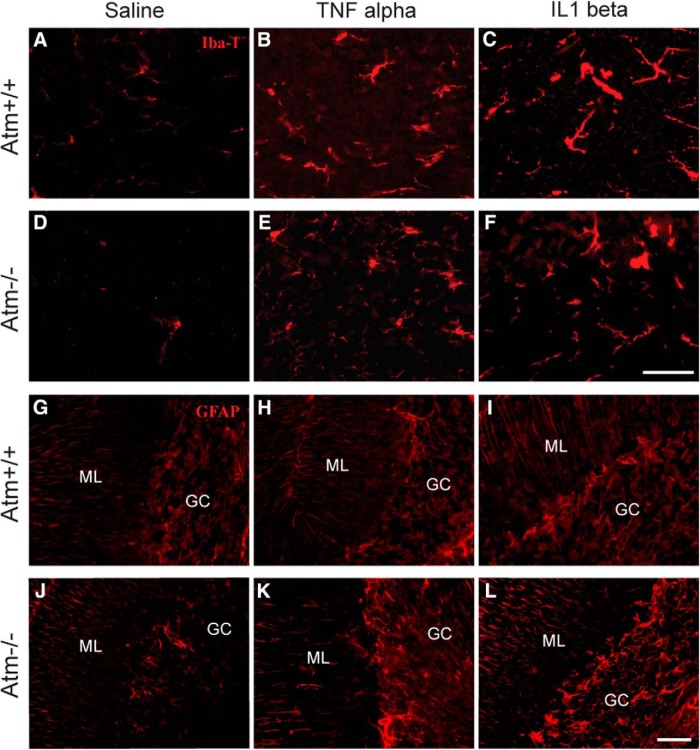
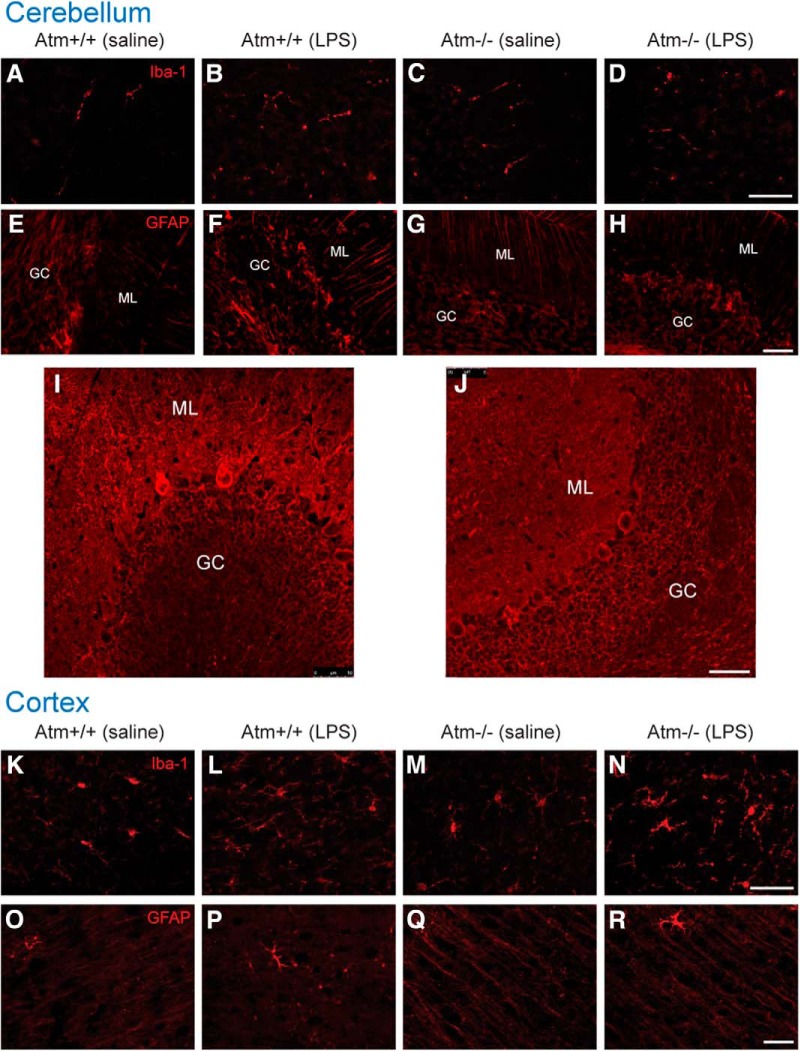
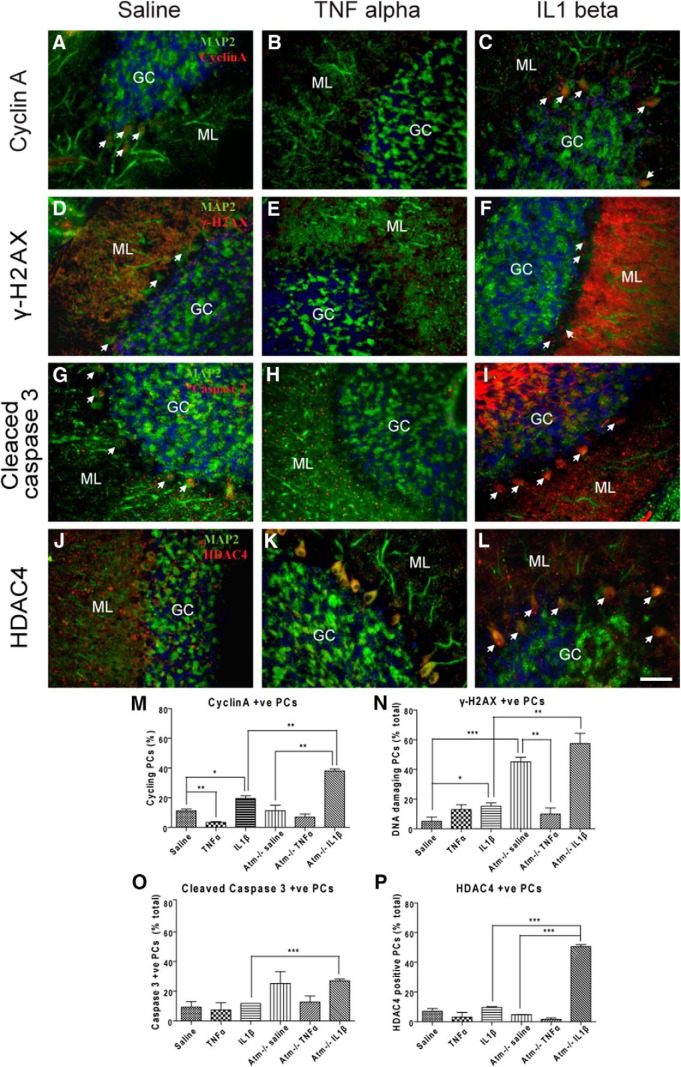
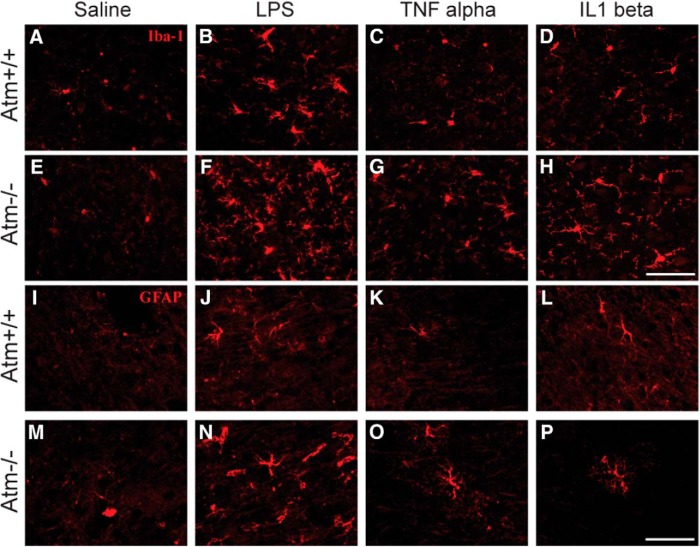
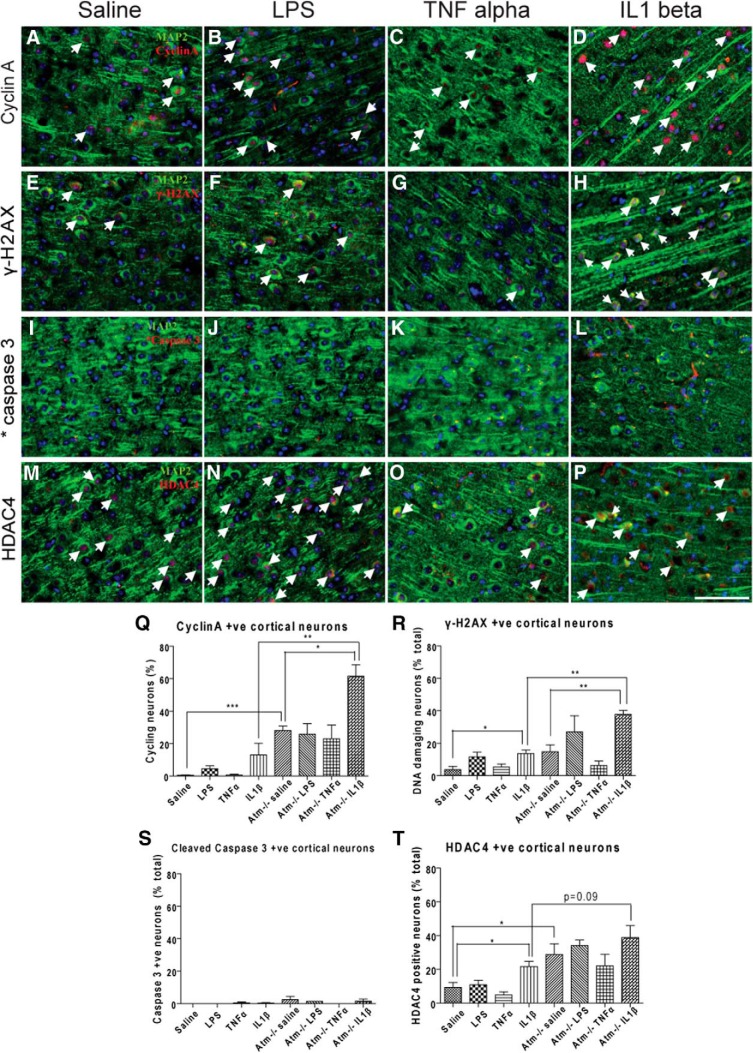
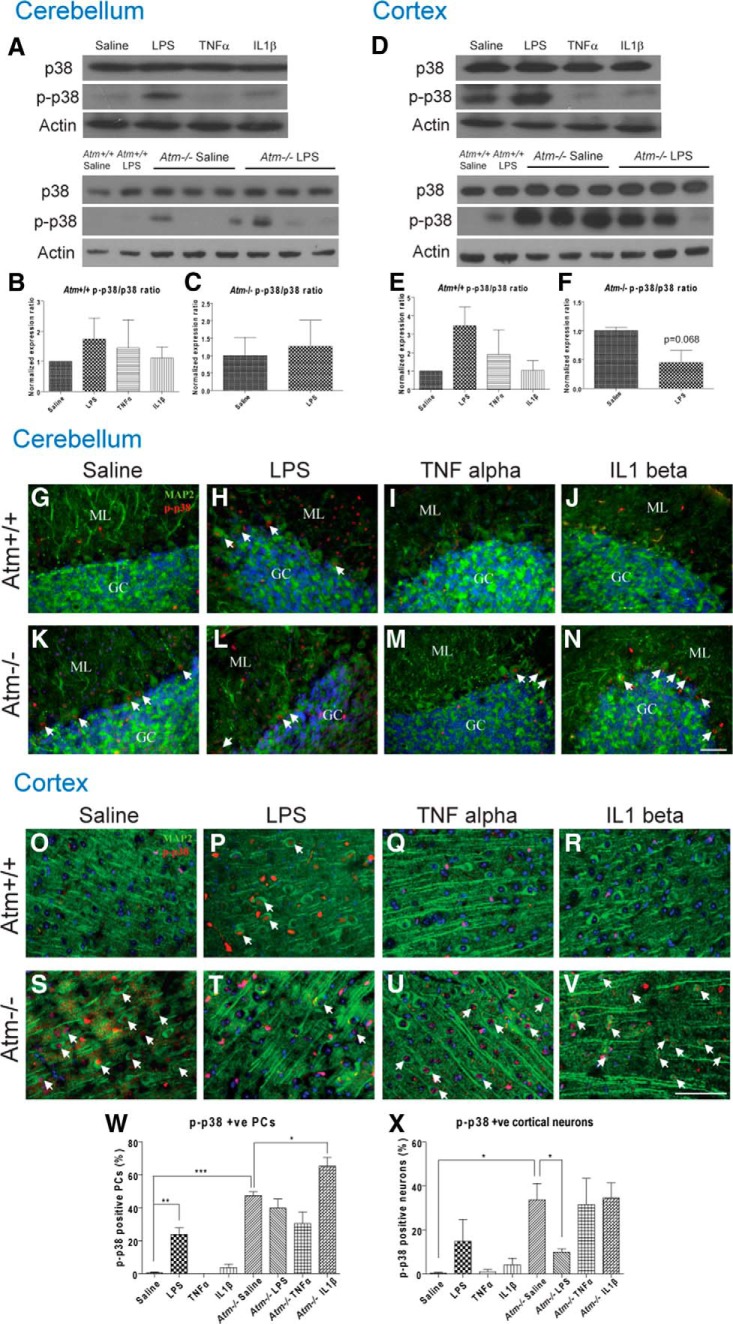
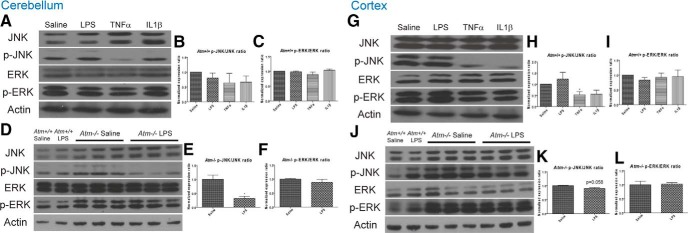
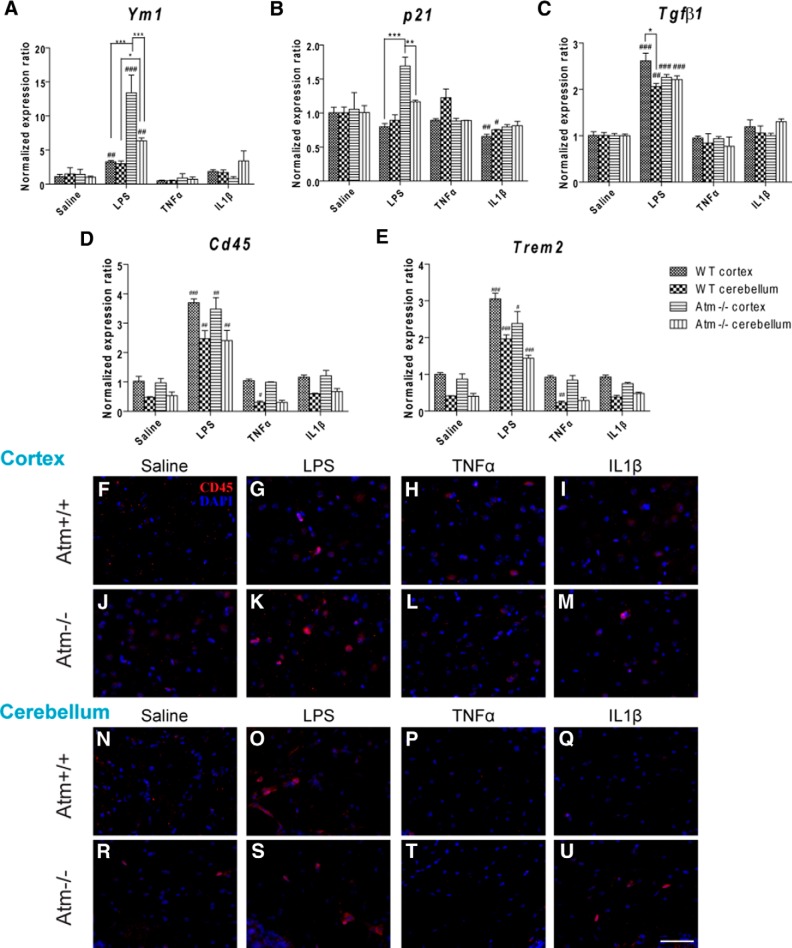
Ataxia-telangiectasia (A-T) is a multisystemic neurodegenerative disease of childhood caused by the absence of functional ATM (A-T mutated) protein. The cerebellar cortex has the most obvious neuropathology, yet cells in other brain regions are also abnormal. A-T mouse models have been produced that replicate much, though not all, of the complex A-T phenotype. Nongenetic factors, including modulations of the immune status of the animal, have also recently been found to play a role in the disease phenotype. Here we report that these modulations show both cytokine and brain region specificity. The CNS changes induced by broad-spectrum immune challenges, such as lipopolysaccharide (LPS) injections are a complex mixture of neuroprotective (TNFα) and neurodegenerative (IL1β) cytokine responses that change over time. For example, LPS first induces a protective response in A-T neurons through activation of tissue repair genes through infiltration of monocytes with M2 phenotype, followed over time by a set of more degenerative responses. Additional phenotypic complexity arises because the neuronal response to an immune challenge is regionally variable; cerebellum and cortex differ in important ways in their patterns of cellular and biochemical changes. Tracking these changes reveals an important though not exclusive role for the MAP kinase pathway. Our findings suggest brain responses to cytokine challenges are temporally and regionally specific and that both features are altered by the absence of ATM. This implies that management of the immune status of A-T patients might have significant clinical benefit.
共济失调毛细血管扩张症(A-T)是一种儿童多系统神经退行性疾病,由功能失调的 ATM(突变型 A-T)蛋白缺失引起。小脑皮质具有最明显的神经病理学表现,但其他脑区的细胞也异常。已成功构建 A-T 小鼠模型,这些模型可模拟 A-T 复杂表型的大部分而非全部特征。最近还发现,非遗传因素,包括动物免疫状态的调节,也在疾病表型中发挥作用。在这里,我们报告说这些调节具有细胞因子和脑区特异性。广谱免疫挑战(如脂多糖(LPS)注射)引起的中枢神经系统变化是神经保护(TNFα)和神经退行性(IL1β)细胞因子反应的复杂混合物,且随着时间的推移而变化。例如,LPS 通过单核细胞浸润并表现出 M2 表型,激活组织修复基因,从而在 A-T 神经元中首先诱导保护性反应,随后随着时间的推移,出现一系列更具退行性的反应。由于神经元对免疫挑战的反应在区域上存在差异,因此会产生额外的表型复杂性;小脑和皮层在细胞和生化变化模式上存在重要差异。跟踪这些变化揭示了 MAP 激酶通路的重要但非排他性作用。我们的研究结果表明,针对细胞因子挑战的大脑反应具有时间和区域特异性,而 ATM 的缺失会改变这两个特征。这意味着对 A-T 患者免疫状态的管理可能具有重要的临床意义。