Ingle Robert A, Stoker Claire, Stone Wendy, Adams Nicolette, Smith Rob, Grant Murray, Carré Isabelle, Roden Laura C, Denby Katherine J
Department of Molecular and Cell Biology, University of Cape Town, Rondebosch, 7701, South Africa.
School of Life Sciences, University of Warwick, Coventry, CV4 7AL, UK.
Plant J. 2015 Dec;84(5):937-48. doi: 10.1111/tpj.13050. Epub 2015 Nov 21.
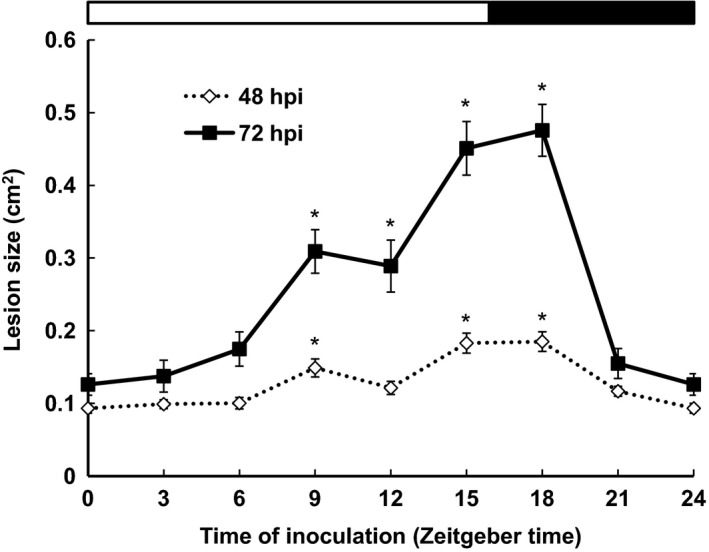
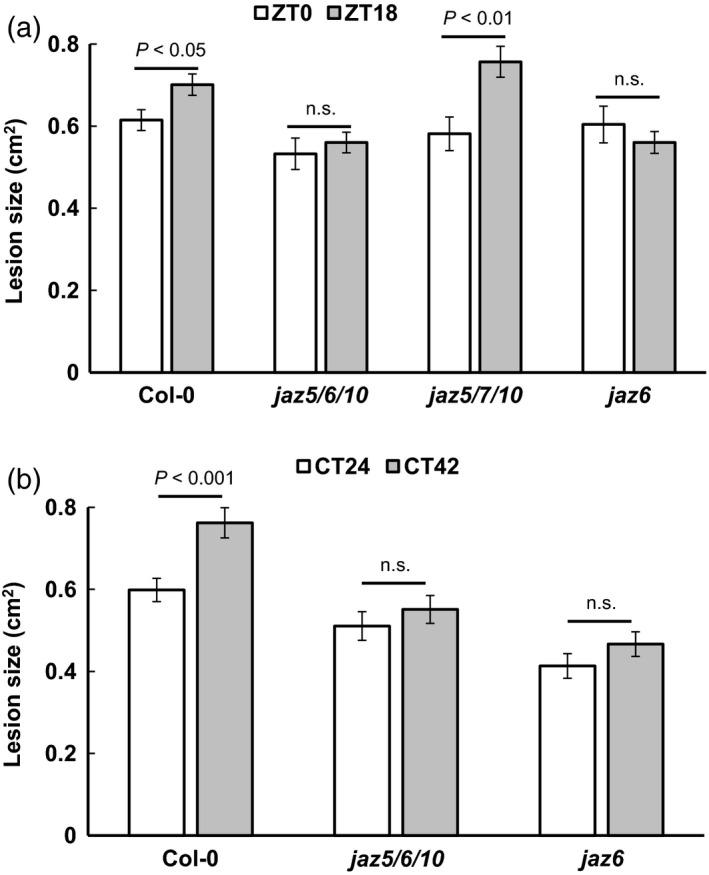
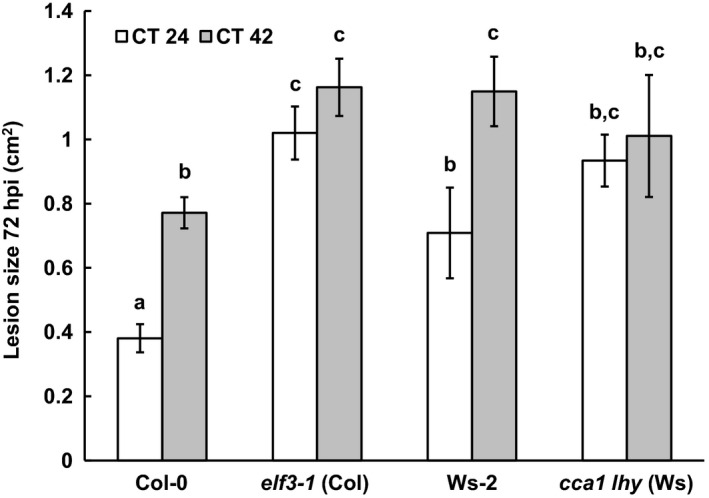
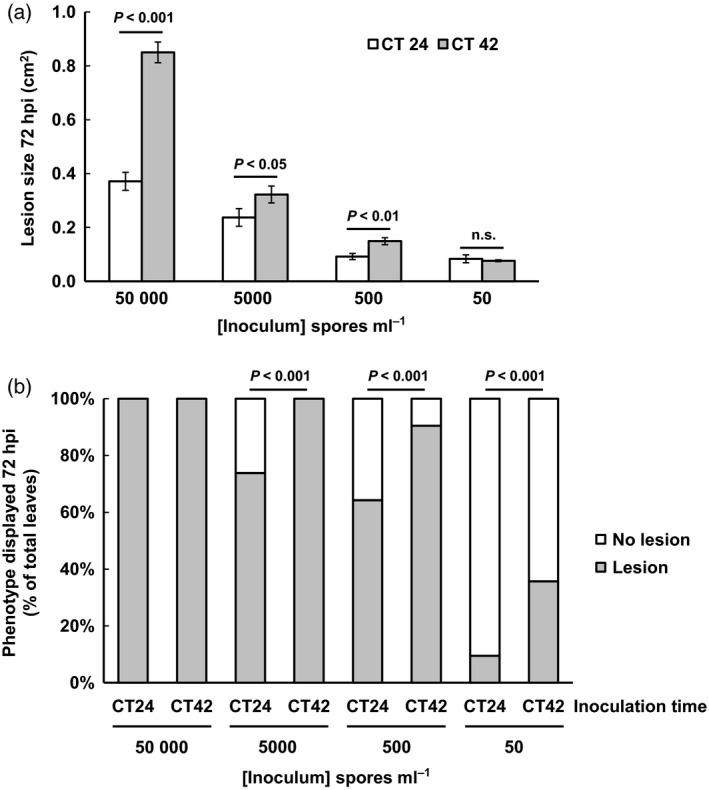
The circadian clock, an internal time-keeping mechanism, allows plants to anticipate regular changes in the environment, such as light and dark, and biotic challenges such as pathogens and herbivores. Here, we demonstrate that the plant circadian clock influences susceptibility to the necrotrophic fungal pathogen, Botrytis cinerea. Arabidopsis plants show differential susceptibility to B. cinerea depending on the time of day of inoculation. Decreased susceptibility after inoculation at dawn compared with night persists under constant light conditions and is disrupted in dysfunctional clock mutants, demonstrating the role of the plant clock in driving time-of-day susceptibility to B. cinerea. The decreased susceptibility to B. cinerea following inoculation at subjective dawn was associated with faster transcriptional reprogramming of the defence response with gating of infection-responsive genes apparent. Direct target genes of core clock regulators were enriched among the transcription factors that responded more rapidly to infection at subjective dawn than subjective night, suggesting an influence of the clock on the defence-signalling network. In addition, jasmonate signalling plays a crucial role in the rhythmic susceptibility of Arabidopsis to B. cinerea with the enhanced susceptibility to this pathogen at subjective night lost in a jaz6 mutant.
生物钟作为一种内部计时机制,使植物能够预测环境中的常规变化,如昼夜交替,以及生物挑战,如病原体和食草动物。在此,我们证明植物生物钟会影响对坏死营养型真菌病原体灰葡萄孢的易感性。拟南芥植株对灰葡萄孢的易感性因接种时间的不同而存在差异。与夜间接种相比,黎明时接种后易感性降低,在持续光照条件下依然如此,且在生物钟功能失调的突变体中这种现象被破坏,这表明植物生物钟在驱动对灰葡萄孢的昼夜易感性方面发挥作用。在主观黎明时接种后对灰葡萄孢易感性降低与防御反应更快的转录重编程相关,感染响应基因的开启明显可见。核心生物钟调节因子的直接靶基因在主观黎明时比主观夜间对感染反应更快的转录因子中富集,这表明生物钟对防御信号网络有影响。此外,茉莉酸信号传导在拟南芥对灰葡萄孢的节律性易感性中起关键作用,在jaz6突变体中,主观夜间对这种病原体的易感性增强的现象消失。