Kageyama Daisuke, Narita Satoko, Watanabe Masaya
Insect-Microbe Research Unit, National Institute of Agrobiological Sciences (NIAS), Owashi 1-2, Tsukuba, Ibaraki 305-8634, Japan.
Insects. 2012 Feb 10;3(1):161-99. doi: 10.3390/insects3010161.
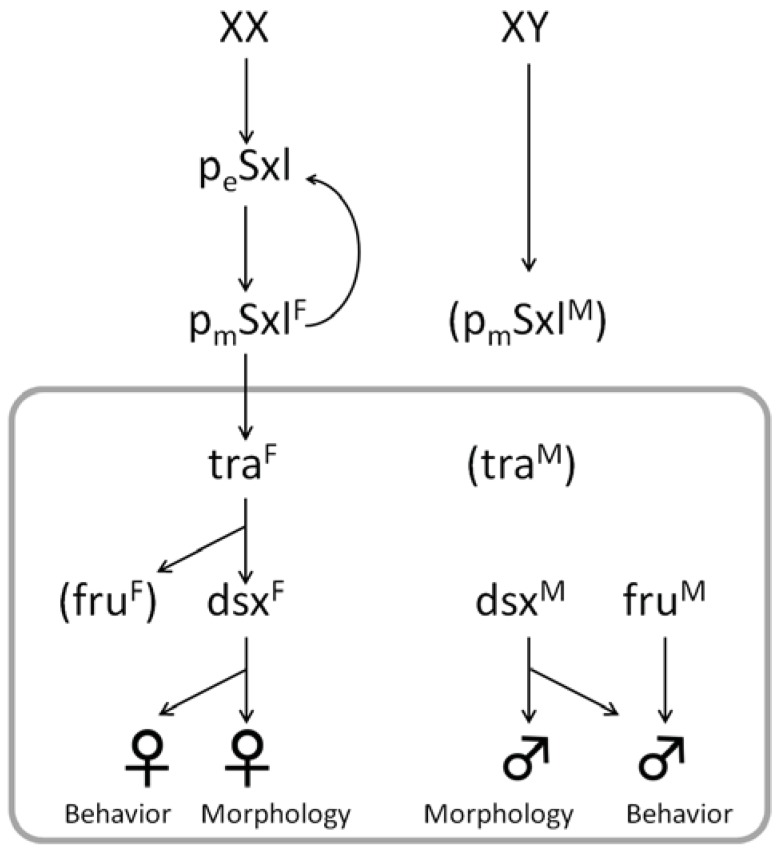
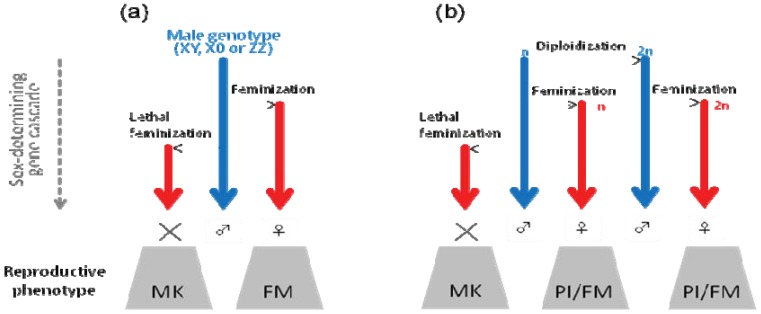
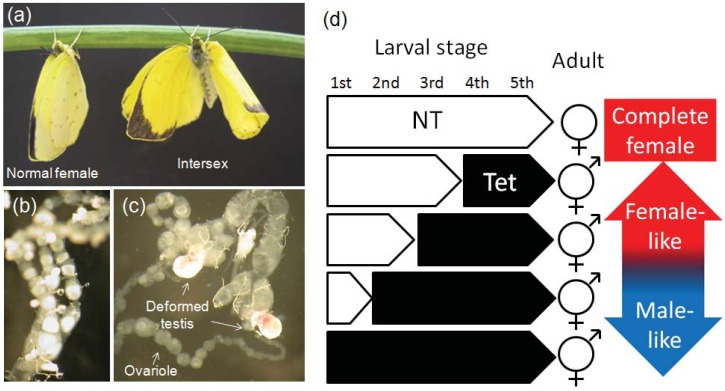
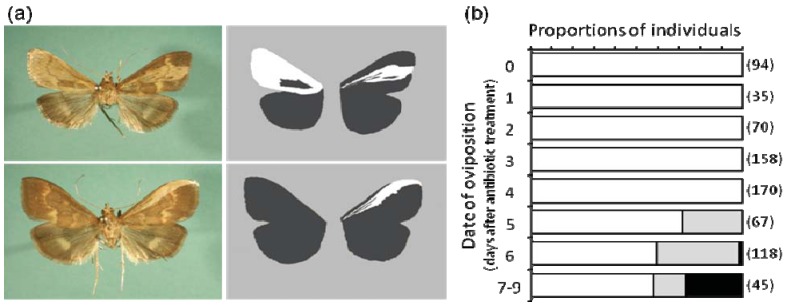
The sex-determining systems of arthropods are surprisingly diverse. Some species have male or female heterogametic sex chromosomes while other species do not have sex chromosomes. Most species are diploids but some species, including wasps, ants, thrips and mites, are haplodiploids (n in males; 2n in females). Many of the sexual aberrations, such as sexual mosaics, sex-specific lethality and conversion of sexuality, can be explained by developmental defects including double fertilization of a binucleate egg, loss of a sex chromosome or perturbation of sex-determining gene expression, which occur accidentally or are induced by certain environmental conditions. However, recent studies have revealed that such sexual aberrations can be caused by various groups of vertically-transmitted endosymbiotic microbes such as bacteria of the genera Wolbachia, Rickettsia, Arsenophonus, Spiroplasma and Cardinium, as well as microsporidian protists. In this review, we first summarize the accumulated data on endosymbiont-induced sexual aberrations, and then discuss how such endosymbionts affect the developmental system of their hosts and what kinds of ecological and evolutionary effects these endosymbionts have on their host populations.
节肢动物的性别决定系统出奇地多样。一些物种具有雄性或雌性异配性染色体,而其他物种则没有性染色体。大多数物种是二倍体,但有些物种,包括黄蜂、蚂蚁、蓟马和螨虫,是单倍二倍体(雄性为n;雌性为2n)。许多性畸变,如性镶嵌体、性别特异性致死和性别的转变,可以通过发育缺陷来解释,包括双核卵的双受精、性染色体的丢失或性别决定基因表达的扰动,这些情况偶然发生或由某些环境条件诱导。然而,最近的研究表明,这种性畸变可能是由各种垂直传播的内共生微生物引起的,如沃尔巴克氏体属、立克次氏体属、嗜菌属、螺原体属和卡丁尼亚属的细菌,以及微孢子虫原生生物。在这篇综述中,我们首先总结了关于内共生体诱导性畸变的累积数据,然后讨论这些内共生体如何影响其宿主的发育系统,以及这些内共生体对其宿主种群有何种生态和进化影响。