Evans Gary W, Swain James E, King Anthony P, Wang Xin, Javanbakht Arash, Ho S Shaun, Angstadt Michael, Phan K Luan, Xie Hong, Liberzon Israel
Departments of Design and Environmental Analysis and of Human Development, Bronfenbrenner Center for Translational Research, Cornell University, Ithaca, New York.
Department of Psychiatry, University of Michigan, Ann Arbor, Michigan.
J Neurosci Res. 2016 Jun;94(6):535-43. doi: 10.1002/jnr.23681. Epub 2015 Oct 15.
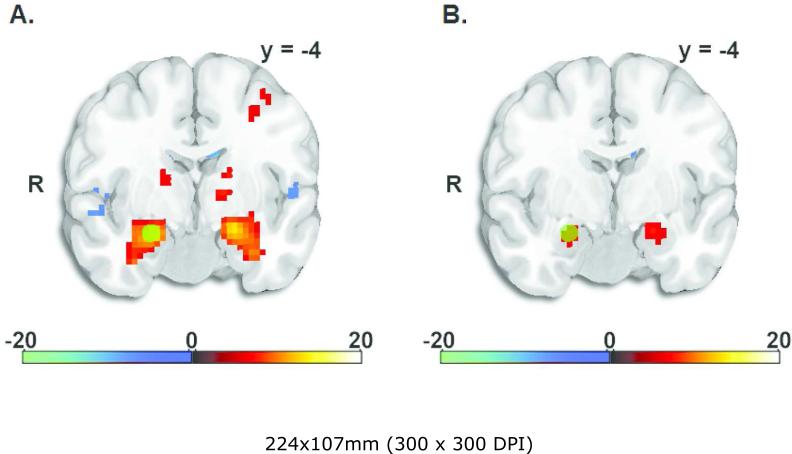
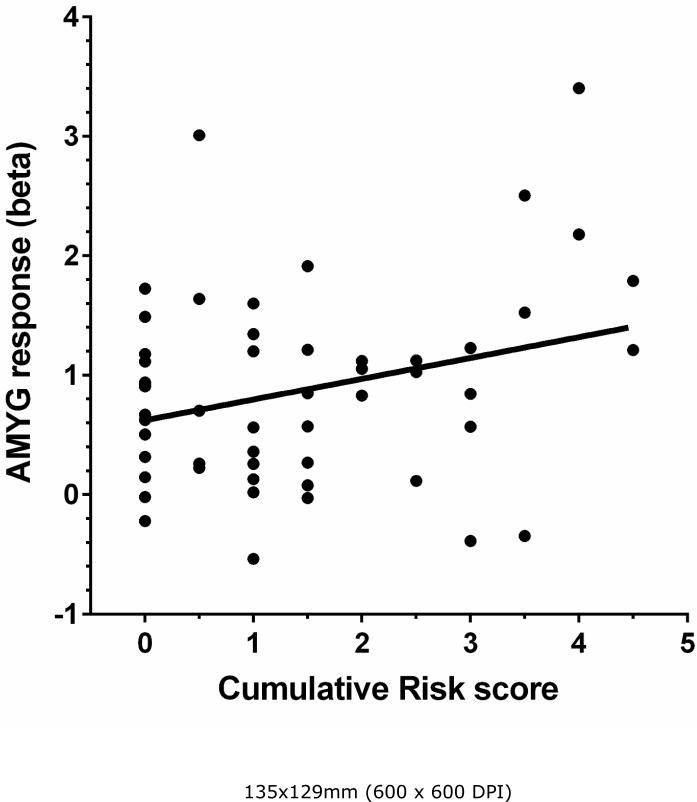
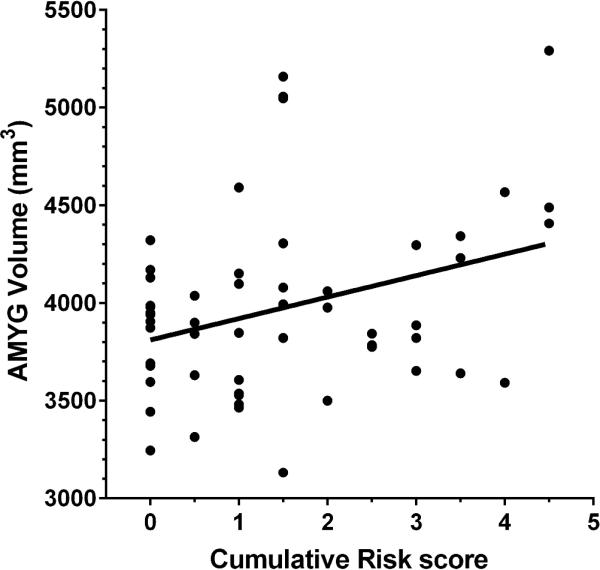
Considerable work indicates that early cumulative risk exposure is aversive to human development, but very little research has examined the neurological underpinnings of these robust findings. This study investigates amygdala volume and reactivity to facial stimuli among adults (mean 23.7 years of age, n = 54) as a function of cumulative risk exposure during childhood (9 and 13 years of age). In addition, we test to determine whether expected cumulative risk elevations in amygdala volume would mediate functional reactivity of the amygdala during socioemotional processing. Risks included substandard housing quality, noise, crowding, family turmoil, child separation from family, and violence. Total and left hemisphere adult amygdala volumes were positively related to cumulative risk exposure during childhood. The links between childhood cumulative risk exposure and elevated amygdala responses to emotionally neutral facial stimuli in adulthood were mediated by the corresponding amygdala volumes. Cumulative risk exposure in later adolescence (17 years of age), however, was unrelated to subsequent adult amygdala volume or function. Physical and socioemotional risk exposures early in life appear to alter amygdala development, rendering adults more reactive to ambiguous stimuli such as neutral faces. These stress-related differences in childhood amygdala development might contribute to the well-documented psychological distress as a function of early risk exposure.
大量研究表明,早期累积风险暴露对人类发展具有负面影响,但很少有研究探讨这些确凿发现的神经学基础。本研究调查了成年人(平均年龄23.7岁,n = 54)杏仁核体积以及对面部刺激的反应性,作为童年期(9岁和13岁)累积风险暴露的函数。此外,我们进行测试以确定杏仁核体积预期的累积风险升高是否会在社会情感加工过程中介导杏仁核的功能反应性。风险包括住房质量不合格、噪音、拥挤、家庭动荡、儿童与家人分离以及暴力。成年后杏仁核的总体积和左半球体积与童年期的累积风险暴露呈正相关。童年期累积风险暴露与成年后杏仁核对情绪中性面部刺激的反应增强之间的联系由相应的杏仁核体积介导。然而,青春期后期(17岁)的累积风险暴露与随后的成年杏仁核体积或功能无关。生命早期的身体和社会情感风险暴露似乎会改变杏仁核的发育,使成年人对诸如中性面孔等模糊刺激更具反应性。童年期杏仁核发育中这些与压力相关的差异可能导致了早期风险暴露所带来的心理困扰,这一点已有充分记录。