
P2X7R阻断可预防脑出血大鼠模型中的NLRP3炎性小体激活和脑损伤:过氧亚硝酸盐的作用
P2X7R blockade prevents NLRP3 inflammasome activation and brain injury in a rat model of intracerebral hemorrhage: involvement of peroxynitrite.
作者信息
Feng Liang, Chen Yizhao, Ding Rui, Fu Zhenghao, Yang Shuo, Deng Xinqing, Zeng Jun
机构信息
The National Key Clinical Specialty, The Engineering Technology Research Center of Education Ministry of China, Guangdong Provincial Key Laboratory on Brain Function Repair and Regeneration, Department of Neurosurgery, Zhujiang Hospital, Southern Medical University, Guangzhou, 510282, China.
Department of Neurosurgery, Jingmen No. 1 People's Hospital, Jingmen, 448000, Hubei, China.
出版信息
J Neuroinflammation. 2015 Oct 17;12:190. doi: 10.1186/s12974-015-0409-2.
BACKGROUND
The NLR family, pyrin domain-containing 3 (NLRP3) inflammasome plays a key role in intracerebral hemorrhage (ICH)-induced inflammatory injury, and the purinergic 2X7 receptor (P2X7R) is upstream of NLRP3 activation. This study aimed to investigate how P2X7R functions in ICH-induced inflammatory injury and how the receptor interacts with the NLRP3 inflammasome.
METHODS
Rats were treated with P2X7R small interfering RNA (siRNA) 24 h before undergoing collagenase-induced ICH. A selective P2X7R inhibitor (blue brilliant G, BBG) or a peroxynitrite (ONOO(-)) decomposition catalyst (5,10,15,20-tetrakis(4-sulfonatophenyl)porphyrinato iron(III) [FeTPPS]) was injected 30 min after ICH. Brain water content, hemorrhagic lesion volume, and neurological deficits were evaluated, and western blot, immunofluorescence, and terminal deoxynucleotidyl transferase dUTP nick end labeling (TUNEL) were carried out.
RESULTS
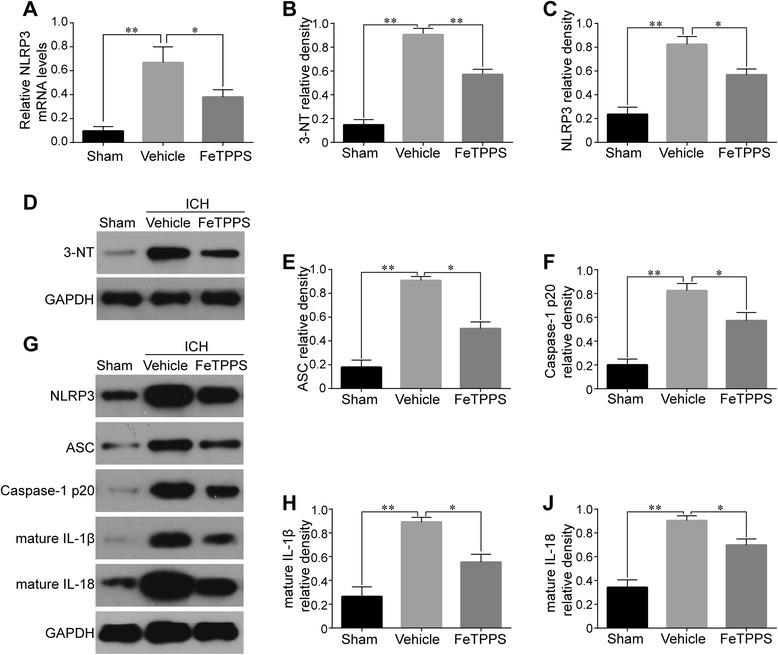
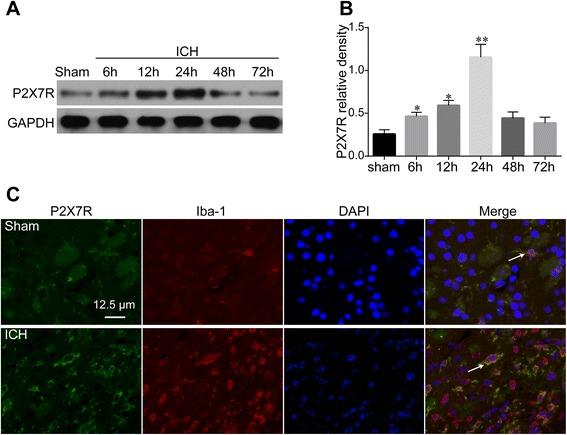
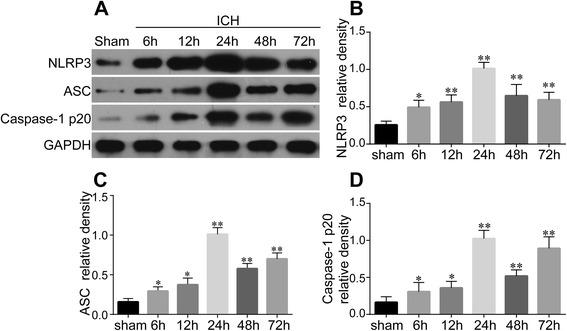
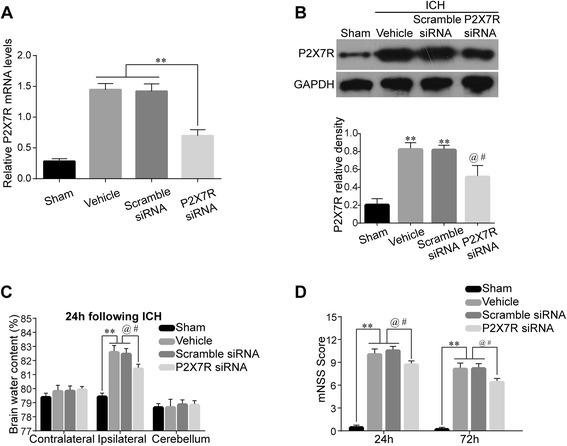
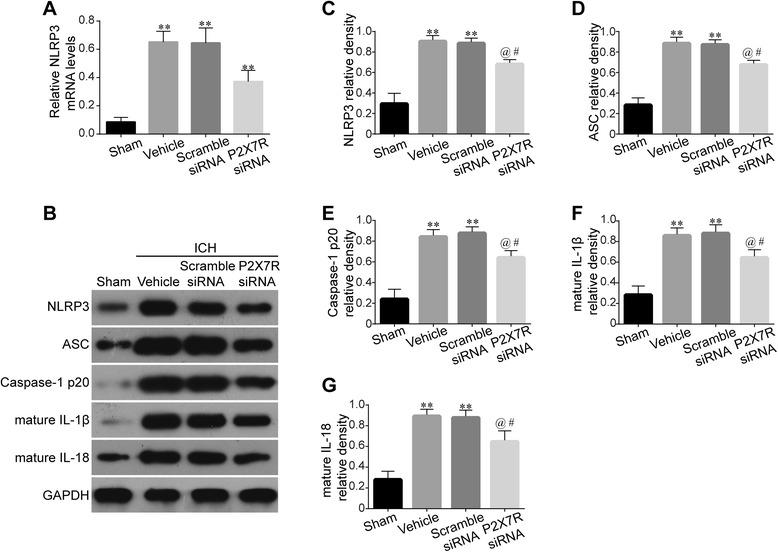
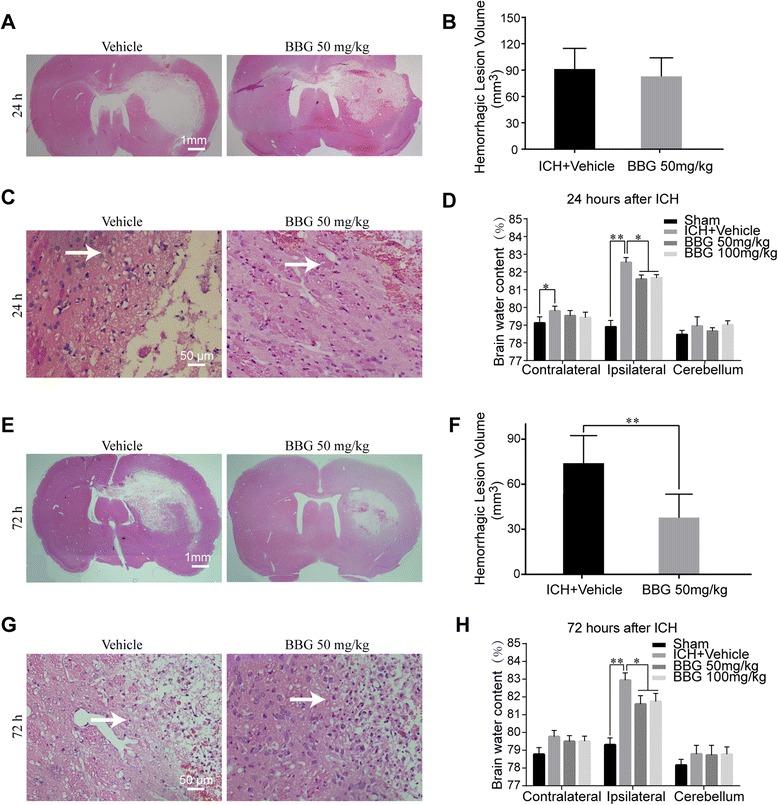
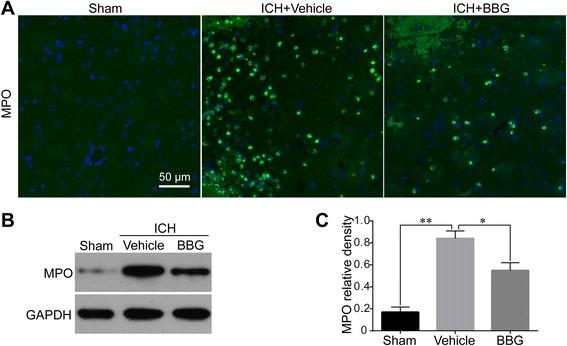
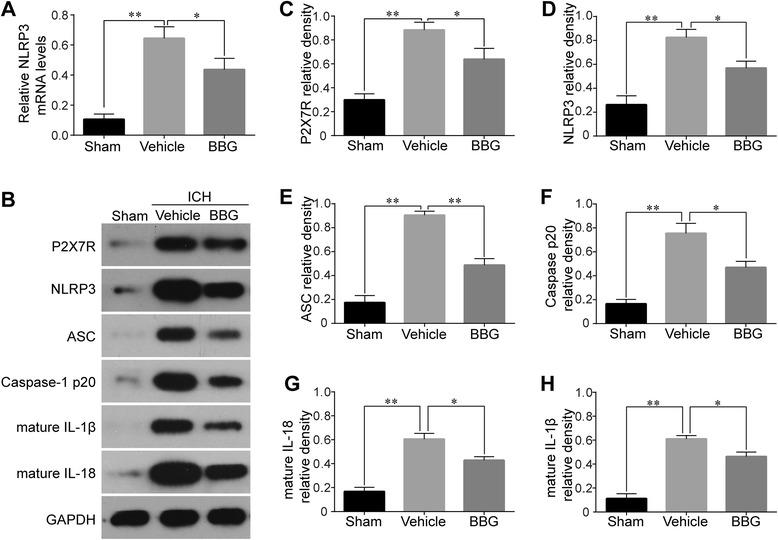
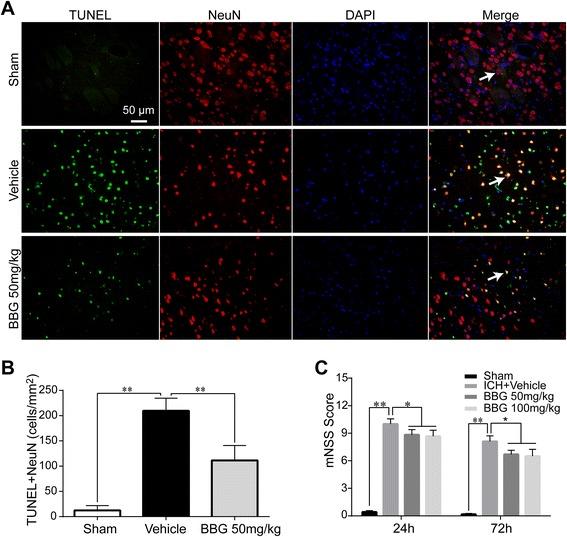
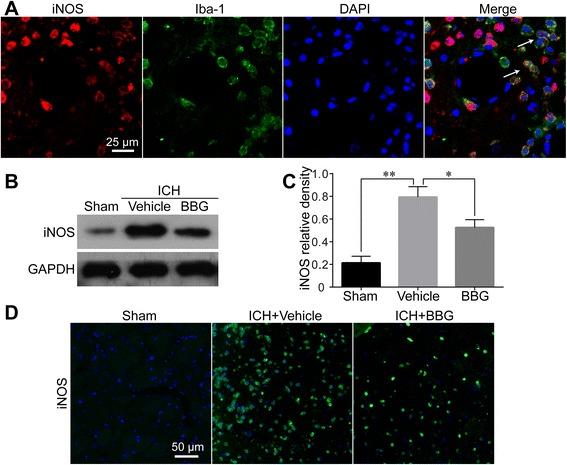
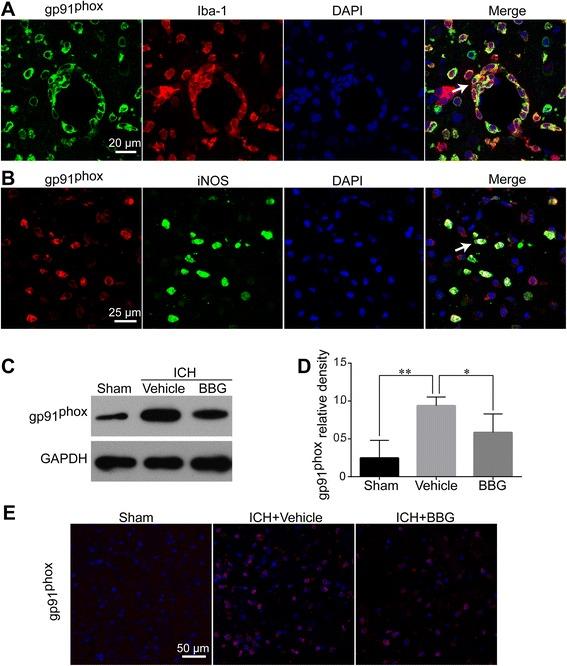
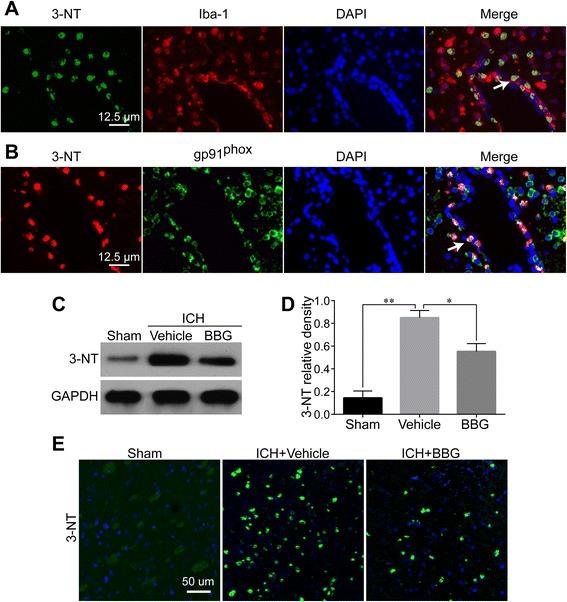
Striatal P2X7R and NLRP3 inflammasomes were activated after ICH. Gene silencing of P2X7R suppressed NLRP3 inflammasome activation and interleukin (IL)-1β/IL-18 release and significantly ameliorated brain edema and neurological deficits. Additionally, enhanced NADPH oxidase 2 (NOX2, gp91(phox)) and inducible nitric oxide synthase (iNOS), as well as their cytotoxic product (ONOO(-)) were markedly attenuated by BBG treatment following ICH. This was accompanied by downregulations of the inflammasome components, IL-1β/IL-18 and myeloperoxidase (MPO, a neutrophil marker). Most importantly, inflammasome activation and IL-1β/IL-18 release were significantly inhibited by ONOO(-) decomposition with FeTPPS.
CONCLUSIONS
Our findings implicate that P2X7R exacerbated inflammatory progression and brain damage in ICH rats possibly via NLRP3 inflammasome-dependent IL-1β/IL-18 release and neutrophil infiltration. ONOO(-), a potential downstream signaling molecule of P2X7R, may play a critical role in triggering NLRP3 inflammasome activation.
背景
含吡咯结构域的NLR家族成员3(NLRP3)炎性小体在脑出血(ICH)诱导的炎症损伤中起关键作用,嘌呤能2X7受体(P2X7R)位于NLRP3激活的上游。本研究旨在探讨P2X7R在ICH诱导的炎症损伤中的作用机制以及该受体与NLRP3炎性小体的相互作用方式。
方法
在大鼠接受胶原酶诱导的ICH前24小时,用P2X7R小干扰RNA(siRNA)进行处理。在ICH后30分钟,注射选择性P2X7R抑制剂(亮蓝G,BBG)或过氧亚硝酸盐(ONOO(-))分解催化剂(5,10,15,20-四(4-磺酸苯基)卟啉铁(III)[FeTPPS])。评估脑含水量、出血性损伤体积和神经功能缺损,并进行蛋白质免疫印迹、免疫荧光和末端脱氧核苷酸转移酶介导的dUTP缺口末端标记(TUNEL)检测。
结果
ICH后纹状体P2X7R和NLRP3炎性小体被激活。P2X7R基因沉默抑制了NLRP3炎性小体的激活以及白细胞介素(IL)-1β/IL-18的释放,并显著改善了脑水肿和神经功能缺损。此外,BBG处理显著减轻了ICH后NADPH氧化酶2(NOX2,gp91(phox))和诱导型一氧化氮合酶(iNOS)及其细胞毒性产物(ONOO(-))的增强。这伴随着炎性小体成分、IL-1β/IL-18和髓过氧化物酶(MPO,一种中性粒细胞标志物)的下调。最重要的是,FeTPPS分解ONOO(-)显著抑制了炎性小体的激活和IL-1β/IL-十八的释放。
结论
我们的研究结果表明,P2X7R可能通过NLRP3炎性小体依赖性IL-1β/IL-18释放和中性粒细胞浸润加剧ICH大鼠的炎症进展和脑损伤。ONOO(-)作为P2X7R的潜在下游信号分子,可能在触发NLRP3炎性小体激活中起关键作用。
 Zotero 插件