Zhang Li, Takara Kazuhiro, Yamakawa Daishi, Kidoya Hiroyasu, Takakura Nobuyuki
Department of Signal Transduction, Research Institute for Microbial Diseases, Osaka University, Osaka, Japan.
Cancer Sci. 2016 Jan;107(1):36-44. doi: 10.1111/cas.12836. Epub 2015 Nov 12.
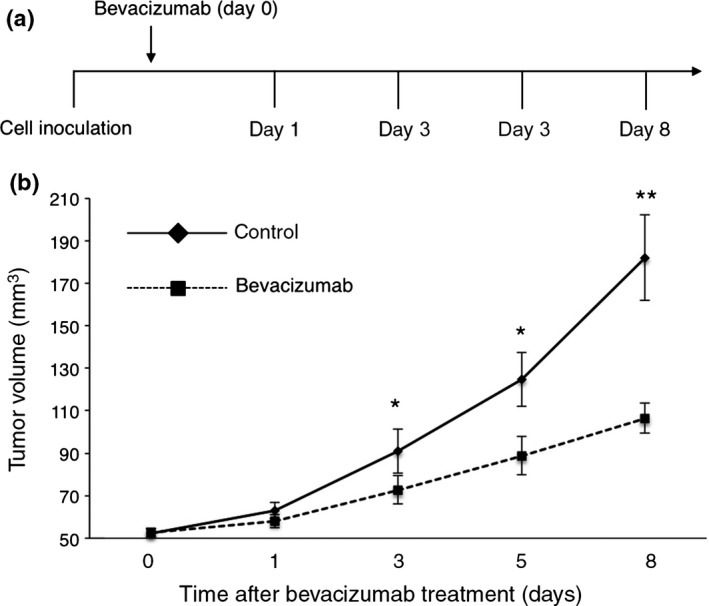
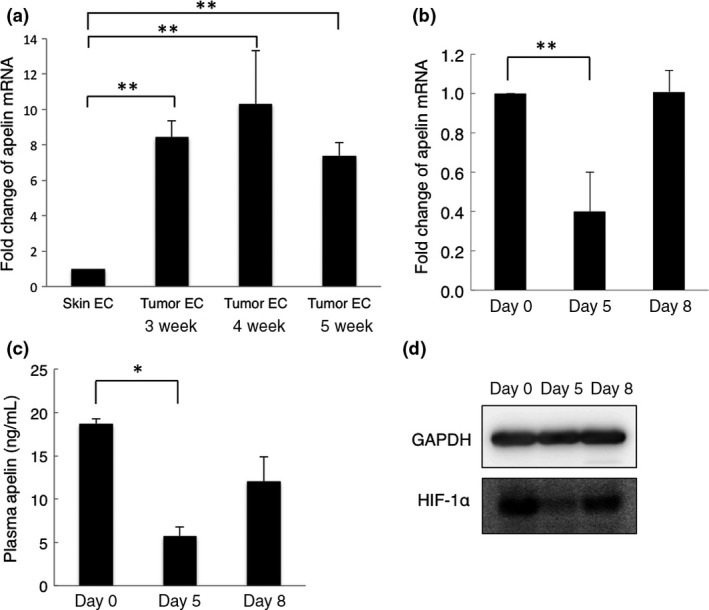
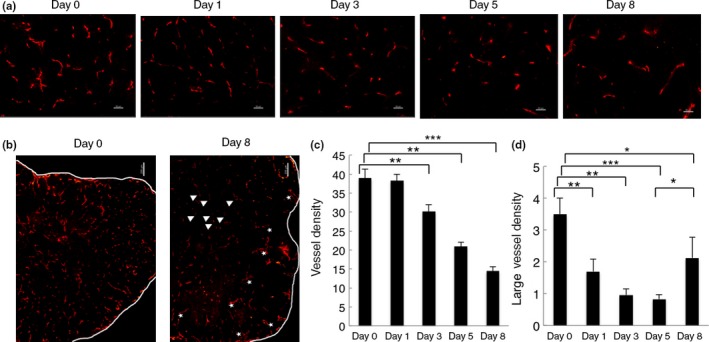
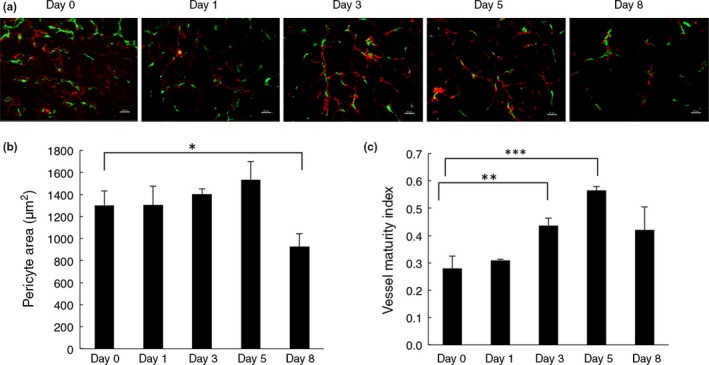
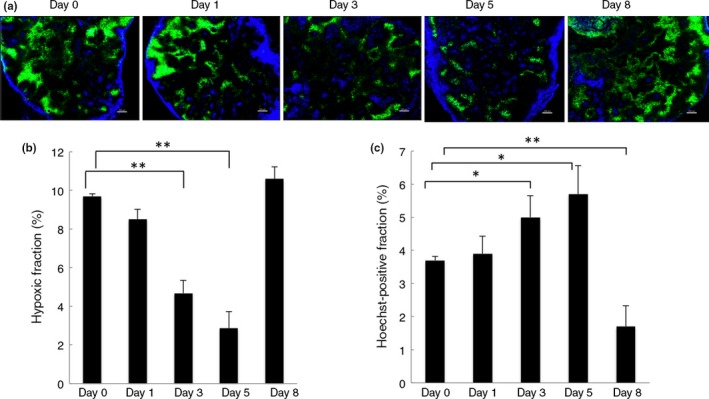
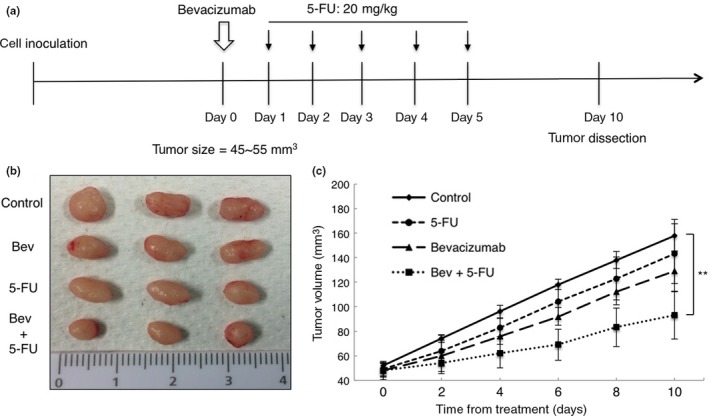
Antiangiogenic agents transiently normalize tumor vessel structure and improve vessel function, thereby providing a window of opportunity for enhancing the efficacy of chemotherapy or radiotherapy. Currently, there are no reliable predictors or markers reflecting this vessel normalization window during antiangiogenic therapy. Apelin, the expression of which is regulated by hypoxia, and which has well-described roles in tumor progression, is an easily measured secreted protein. Here, we show that apelin can be used as a marker for the vessel normalization window during antiangiogenic therapy. Mice bearing s.c. tumors resulting from inoculation of the colon adenocarcinoma cell line HT29 were treated with a single injection of bevacizumab, a mAb neutralizing vascular endothelial growth factor. Tumor growth, vessel density, pericyte coverage, tumor hypoxia, and small molecule delivery were determined at four different times after treatment with bevacizumab (days 1, 3, 5, and 8). Tumor growth and vessel density were significantly reduced after bevacizumab treatment, which also significantly increased tumor vessel maturity, and improved tumor hypoxia and small molecule delivery between days 3 and 5. These effects abated by day 8, suggesting that a time window for vessel normalization was opened between days 3 and 5 during bevacizumab treatment in this model. Apelin mRNA expression and plasma apelin levels decreased transiently at day 5 post-treatment, coinciding with vessel normalization. Thus, apelin is a potential indicator of the vessel normalization window during antiangiogenic therapy.
抗血管生成药物可使肿瘤血管结构短暂正常化并改善血管功能,从而为提高化疗或放疗疗效提供一个机会窗口。目前,在抗血管生成治疗期间,尚无可靠的预测指标或标志物来反映这个血管正常化窗口。Apelin是一种易于检测的分泌蛋白,其表达受缺氧调节,且在肿瘤进展中具有多种明确的作用。在此,我们表明Apelin可作为抗血管生成治疗期间血管正常化窗口的标志物。给接种结肠腺癌细胞系HT29后形成皮下肿瘤的小鼠单次注射贝伐单抗(一种中和血管内皮生长因子的单克隆抗体)进行治疗。在贝伐单抗治疗后的四个不同时间点(第1、3、5和8天)测定肿瘤生长、血管密度、周细胞覆盖率、肿瘤缺氧情况以及小分子递送情况。贝伐单抗治疗后肿瘤生长和血管密度显著降低,同时在第3天至第5天期间显著提高了肿瘤血管成熟度,并改善了肿瘤缺氧情况和小分子递送。这些效应在第8天时减弱,表明在该模型中贝伐单抗治疗期间第3天至第5天开启了一个血管正常化的时间窗口。治疗后第5天Apelin mRNA表达和血浆Apelin水平短暂下降,与血管正常化时间一致。因此,Apelin是抗血管生成治疗期间血管正常化窗口的一个潜在指标。