Dubousset Jean, Guillaumat Michel
, 23bis Rue Des Cordelières, 75013, Paris, France.
Orthopedic department, Hopital Saint Joseph, Rue Raymond Losserand, 75014, Paris, France.
J Child Orthop. 2015 Dec;9(6):449-58. doi: 10.1007/s11832-015-0692-6. Epub 2015 Oct 26.
To access the long-term outcomes for patients with arthrogryposis multiplex congenita at adult age.
The cases were traced for most of them thanks to direct contact maintained from child hood, from colleagues interested from other parts of the country, and from the list from Alliance arthrogryposis association (parents and patients). The methods used were: mostly direct clinical examination, some phone calls or email. All answered a questionnaire for general life and mainly for function. One of these questions was: what is the function you missed most during your life?
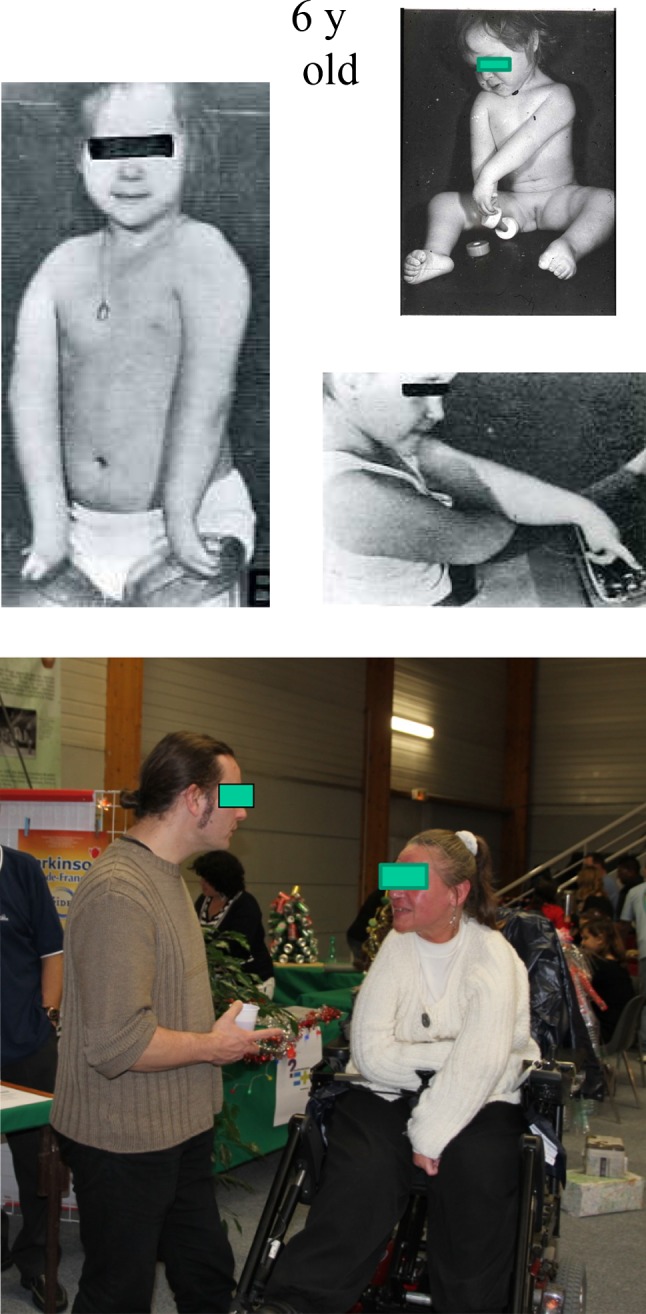
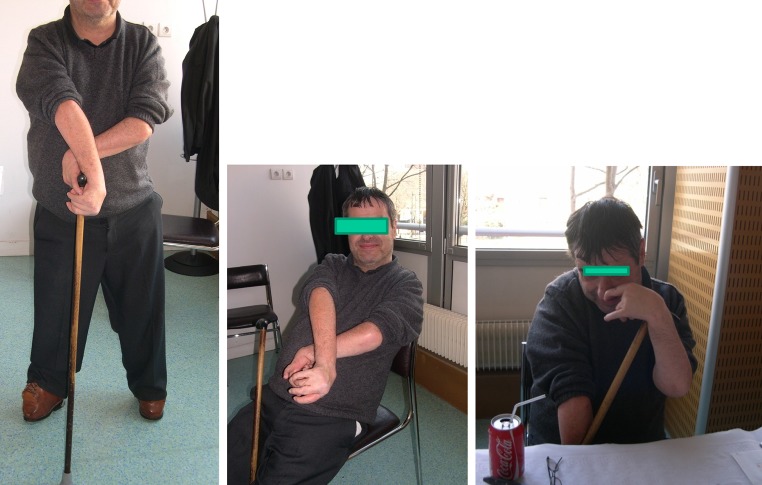
65 patients( 41 females and 24 males) were reviewed at adult age from 22 to 65 years. For the personal life: 38 are married and had 34 children with only 4 having arthrogryposis. Only 27 (15 F/12 M) were living alone. Self-sufficiency was observed in 35, partial in 20, total dependence in 10 people. 38 reached university level, 20 had secondary school level, 10 had primary school level. Ambulation was made possible with wheelchair: permanent for 18, partial for 9 ambulating at home only, 8 ambulating outside with crutches and 29 were free walkers. 36 patients out of 65 were driving a car sometimes modified with special equipment. The involvement of spine was seen in 26 patients requiring surgical treatment sometimes complex combining anterior and posterior approach in 14 cases. Surgery of the lower limbs (hips, knee, feet) was very often repeated, with almost always stability, pain free and function. The most important finding was that 52 patients had more or less severe involvement of the upper limbs which was considered by the majority of the patients to be the most disabling, more than the absence of walking!
Finally, it appeared that for the care of these patients, priority goes to the upper limbs function, because majority of these patients have a high level of intelligence. A remarkable fact is that many of these patients had to spend a lot of time during infancy and childhood in rehabilitation centers with education adapted for schools and teachers. Finally, they are grateful for that, telling often that it would have been much more difficult if not impossible to have such a treatment and education at home.
评估先天性多发性关节挛缩症患者成年后的长期预后。
通过自儿童时期就保持的直接联系、来自国内其他地区感兴趣的同事以及先天性多发性关节挛缩症联盟协会(家长和患者)的名单,对大多数病例进行了追踪。所采用的方法主要是直接临床检查,也有一些电话或电子邮件沟通。所有人都回答了一份关于一般生活,主要是关于功能的问卷。其中一个问题是:你一生中最缺失的功能是什么?
对65例成年患者(41名女性和24名男性)进行了评估,年龄在22至65岁之间。在个人生活方面:38人已婚,育有34个孩子,其中只有4个患有先天性多发性关节挛缩症。只有27人(15名女性/12名男性)独自生活。35人能够自理,20人部分自理,10人完全依赖他人。38人达到大学水平,20人具有中学水平,10人具有小学水平。借助轮椅可行走:18人长期依赖轮椅,9人仅在家中可部分行走,8人借助拐杖可外出行走,29人可自由行走。65例患者中有36人有时驾驶经过特殊设备改装的汽车。26例患者存在脊柱受累情况,其中14例有时需要采用复杂的前后联合手术治疗。下肢(髋、膝、足)手术经常重复进行,几乎总能实现稳定、无痛且功能良好。最重要的发现是,52例患者或多或少存在上肢严重受累情况,大多数患者认为这比无法行走更具致残性!
最后,对于这些患者的护理而言,似乎上肢功能应作为优先考虑因素,因为这些患者大多智力水平较高。一个显著的事实是,许多此类患者在婴儿期和儿童期不得不花费大量时间在康复中心接受适合学校和教师的教育。最后,他们对此心怀感激,常说如果不是在康复中心接受这样的治疗和教育,在家中即便不是完全不可能,也会困难得多。