Leo M, Argalski S, Schäfers M, Hagenacker T
Department of Neurology, University of Duisburg-Essen, Germany.
Mediators Inflamm. 2015;2015:124942. doi: 10.1155/2015/124942. Epub 2015 Oct 4.
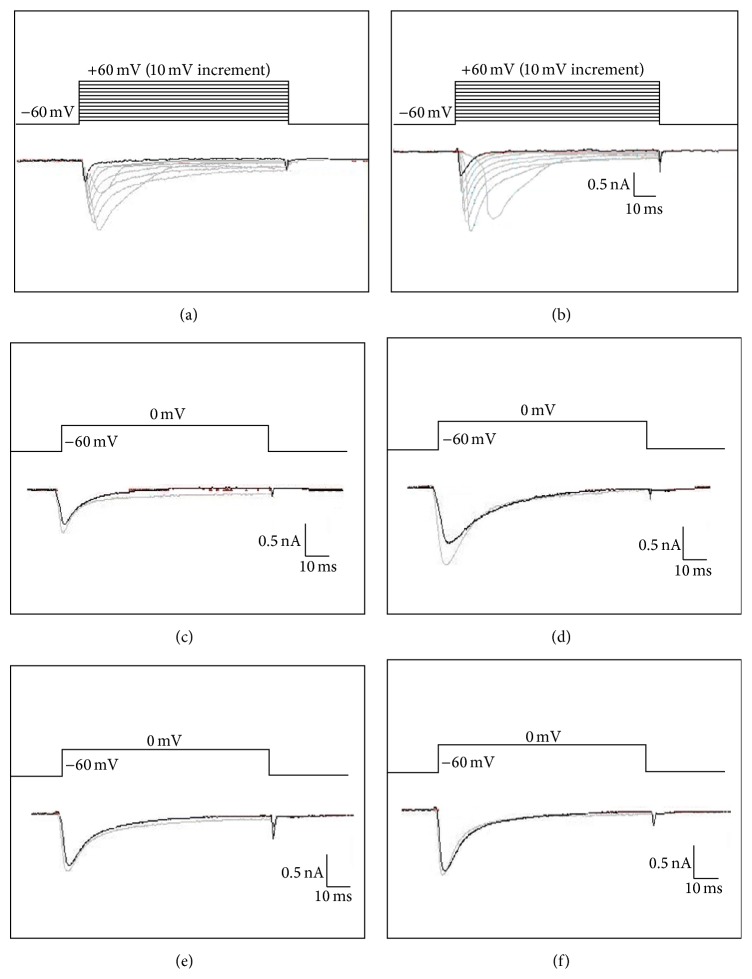
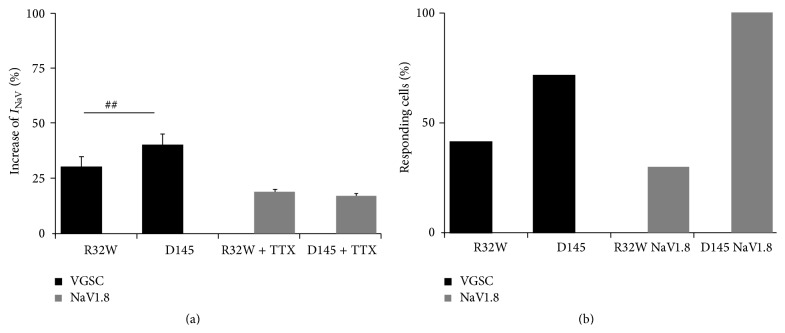
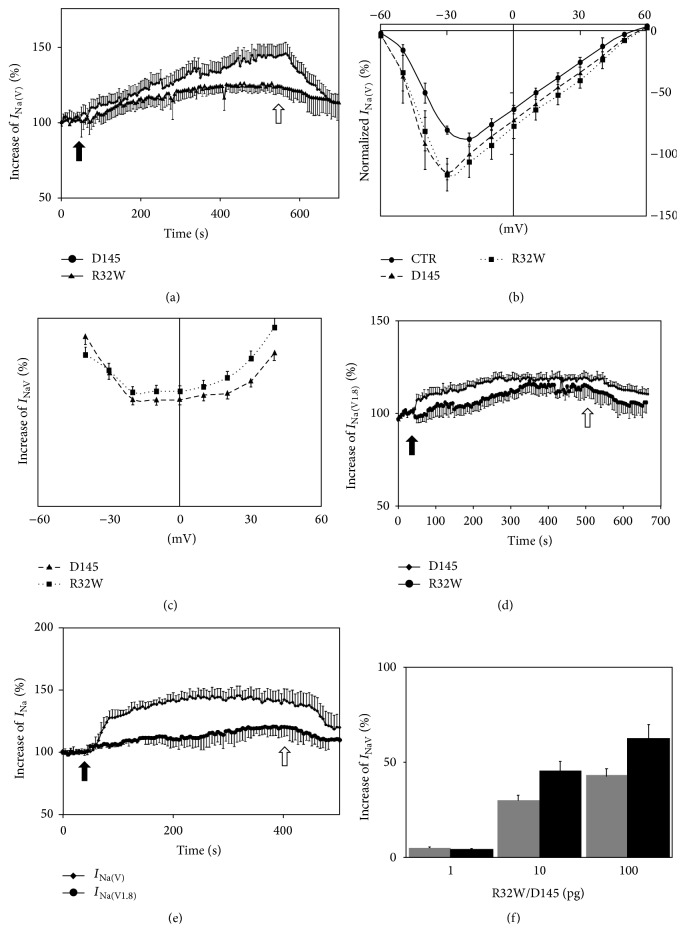
Tumor necrosis factor- (TNF-) α is a proinflammatory cytokine involved in the development and maintenance of inflammatory and neuropathic pain. Its effects are mediated by two receptors, TNF receptor-1 (TNFR-1) and TNF receptor-2 (TNFR-2). These receptors play a crucial role in the sensitization of voltage-gated sodium channels (VGSCs), a key mechanism in the pathogenesis of chronic pain. Using the whole-cell patch-clamp technique, we examined the influence of TNFR-1 and TNFR-2 on VGSCs and TTX-resistant NaV1.8 channels in isolated rat dorsal root ganglion neurons by using selective TNFR agonists. The TNFR-1 agonist R32W (10 pg/mL) caused an increase in the VGSC current (I(Na(V))) by 27.2 ± 5.1%, while the TNFR-2 agonist D145 (10 pg/mL) increased the current by 44.9 ± 2.6%. This effect was dose dependent. Treating isolated NaV1.8 with R32W (100 pg/mL) resulted in an increase in I(NaV(1.8)) by 18.9 ± 1.6%, while treatment with D145 (100 pg/mL) increased the current by 14.5 ± 3.7%. Based on the current-voltage relationship, 10 pg of R32W or D145 led to an increase in I(Na(V)) in a bell-shaped, voltage-dependent manner with a maximum effect at -30 mV. The effects of TNFR activation on VGSCs promote excitation in primary afferent neurons and this might explain the sensitization mechanisms associated with neuropathic and inflammatory pain.
肿瘤坏死因子-α(TNF-α)是一种促炎细胞因子,参与炎症性疼痛和神经性疼痛的发生与维持。其作用由两种受体介导,即TNF受体-1(TNFR-1)和TNF受体-2(TNFR-2)。这些受体在电压门控钠通道(VGSCs)的敏化过程中起关键作用,而VGSCs的敏化是慢性疼痛发病机制中的一个关键机制。我们使用全细胞膜片钳技术,通过使用选择性TNFR激动剂,研究了TNFR-1和TNFR-2对离体大鼠背根神经节神经元中VGSCs和耐河豚毒素的NaV1.8通道的影响。TNFR-1激动剂R32W(10 pg/mL)使VGSC电流(I(Na(V)))增加了27.2±5.1%,而TNFR-2激动剂D145(10 pg/mL)使电流增加了44.9±2.6%。这种效应呈剂量依赖性。用R32W(100 pg/mL)处理离体的NaV1.8,使I(NaV(1.8))增加了18.9±1.6%,而用D145(100 pg/mL)处理使电流增加了14.5±3.7%。根据电流-电压关系,10 pg的R32W或D145导致I(Na(V))以钟形、电压依赖性方式增加,在-30 mV时达到最大效应。TNFR激活对VGSCs的影响促进了初级传入神经元的兴奋,这可能解释了与神经性疼痛和炎症性疼痛相关的敏化机制。