Reams B Diane, Dluzniewski Paul J, Do Thy P, Yue Susan V, Bradbury Brian D, Kshirsagar Abhijit V, Brookhart M Alan
Cecil G. Sheps Center for Health Services Research, University of North Carolina, Chapel Hill, NC, USA.
Amgen, Inc, Thousand Oaks, CA, USA.
BMC Nephrol. 2015 Oct 29;16:175. doi: 10.1186/s12882-015-0174-6.
Cinacalcet is used to treat secondary hyperparathyroidism among hemodialysis patients. Large-scale epidemiologic studies describing patterns of cinacalcet use, effects on parathyroid hormone (PTH), calcium, and phosphorous levels, and predictors of discontinuation have not been previously reported.
This retrospective cohort study used a clinical database of a large U.S. dialysis provider (2007-2010) merged with administrative data from the United States Renal Data System. Among new users of cinacalcet with Medicare coverage, trends in PTH, calcium, and phosphorus were measured in 30-day intervals following cinacalcet initiation.
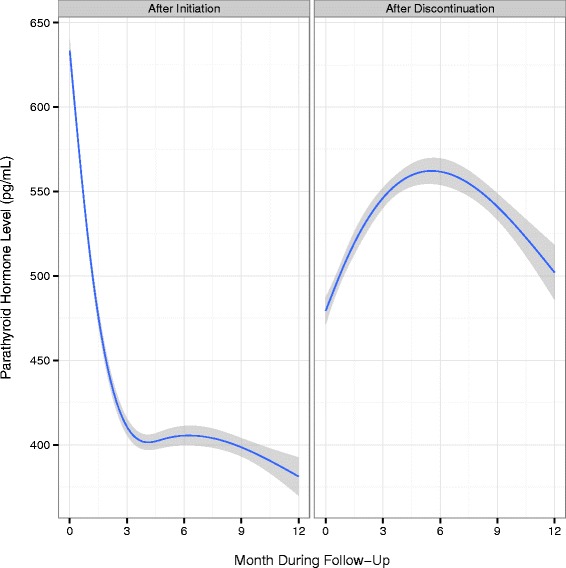
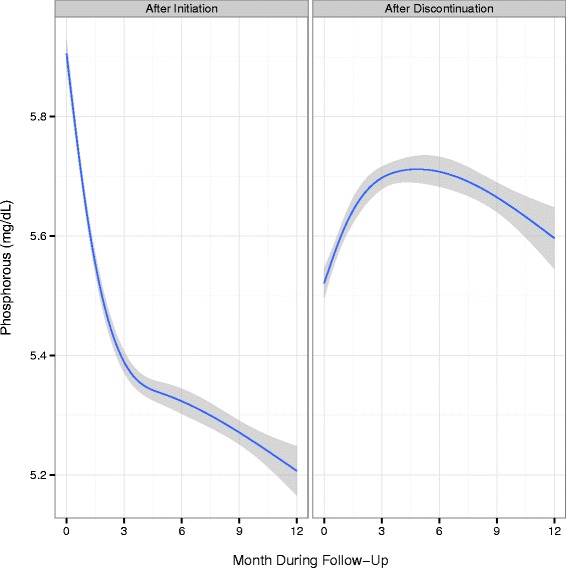
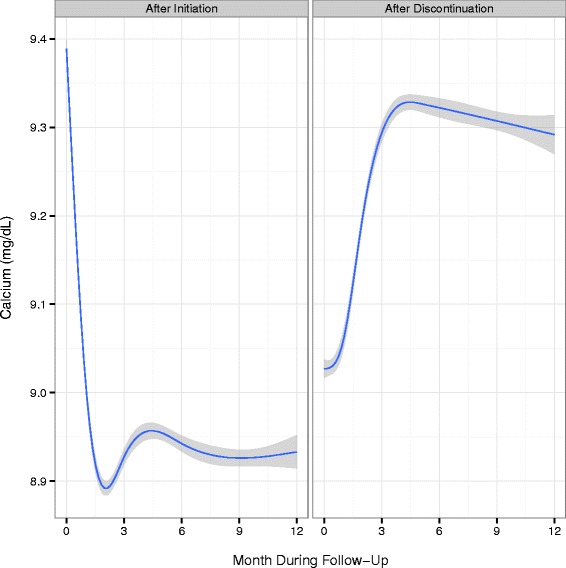
Seventeen thousand seven hundred sixty-three eligible initiators contributed 111,047 30-day follow-up intervals. Of these, 56 % discontinued cinacalcet by month 4. Of those discontinuing, 76.3 % reinitiated. Mean values of PTH, calcium, and phosphorus decreased to recommended levels within 4 months following initiation. Proximal PTH levels < 150 pg/mL were associated with discontinuation: HR = 1.23 (95 % CI: 1.12, 1.36), whereas low calcium (< 7.5 mg/dL) was suggestive of an association, HR = 1.09 (95 % CI 0.91, 1.32). Being in the Part D gap period increased discontinuation risk: HR = 1.09 (95 % CI: 1.03, 1.16). Low-income subsidy status decreased discontinuation risk: HR = 0.77 (95 % CI 0.69, 0.86). Predictors of reinitiation included low-income subsidy, HR = 1.32 (95 % CI 1.22, 1.43); higher albumin level, HR = 1.23 (95 % CI 1.10, 1.36) and higher calcium level, HR = 1.26 (95 % CI 1.19, 1.33).
Substantial and expected declines in laboratory values occurred following cinacalcet initiation. Early discontinuation and reinitiation of cinacalcet were common and may have occurred for clinical and economic reasons.
西那卡塞用于治疗血液透析患者的继发性甲状旁腺功能亢进。此前尚未有大规模流行病学研究描述西那卡塞的使用模式、对甲状旁腺激素(PTH)、钙和磷水平的影响以及停药的预测因素。
这项回顾性队列研究使用了美国一家大型透析服务提供商的临床数据库(2007 - 2010年),并与美国肾脏数据系统的管理数据相结合。在有医疗保险覆盖的西那卡塞新用户中,在开始使用西那卡塞后的30天间隔内测量PTH、钙和磷的变化趋势。
17763名符合条件的起始使用者提供了111047个30天的随访间隔。其中,56%的人在第4个月时停用了西那卡塞。在停药者中,76.3%的人重新开始使用。开始使用后4个月内,PTH、钙和磷的平均值降至推荐水平。近端PTH水平<150 pg/mL与停药相关:风险比(HR)=1.23(95%置信区间:1.12,1.36),而低钙(<7.5 mg/dL)提示存在关联,HR =1.09(95%置信区间0.91,1.32)。处于D部分缺口期会增加停药风险:HR =1.09(95%置信区间:1.03,1.16)。低收入补贴状态会降低停药风险:HR =0.77(95%置信区间0.69,0.86)。重新开始使用的预测因素包括低收入补贴,HR =1.32(95%置信区间1.22,1.43);较高的白蛋白水平,HR =1.23(95%置信区间1.10,1.36)和较高的钙水平,HR =1.26(95%置信区间1.19,1.33)。
开始使用西那卡塞后,实验室值出现了大幅且预期的下降。西那卡塞的早期停药和重新开始使用很常见,可能是出于临床和经济原因。