Cheon Chong-Kun, Ko Jung Min
Department of Pediatrics, Pusan National University Children's Hospital, Pusan National University School of Medicine, Yangsan, Korea.
Department of Pediatrics, Seoul National University College of Medicine, Seoul, Korea.
Korean J Pediatr. 2015 Sep;58(9):317-24. doi: 10.3345/kjp.2015.58.9.317. Epub 2015 Sep 21.
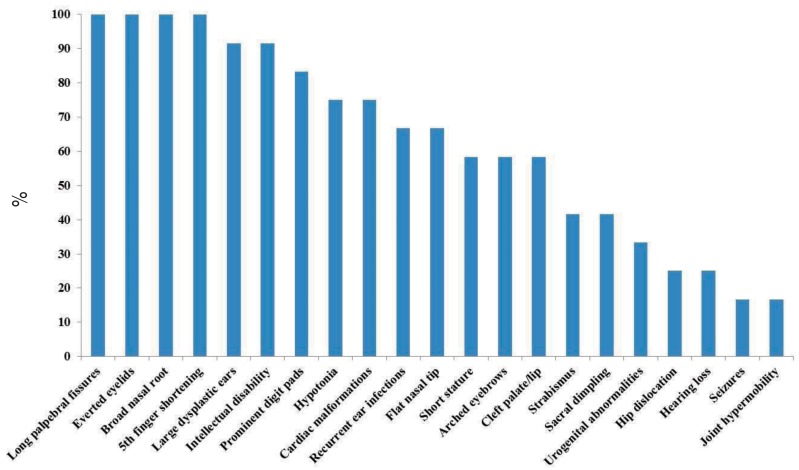
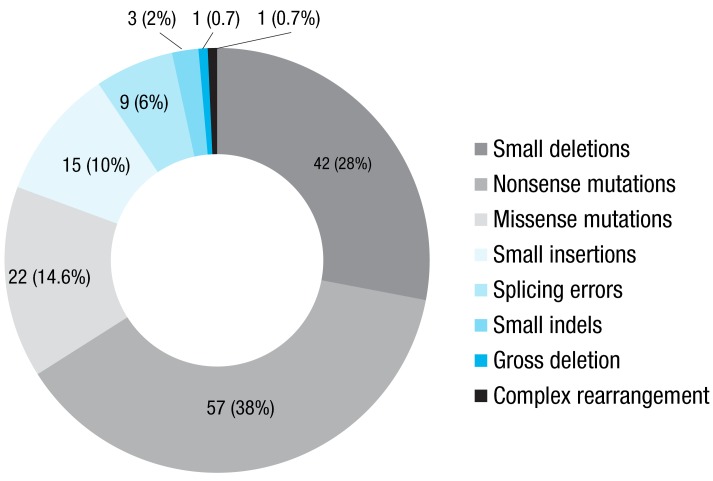
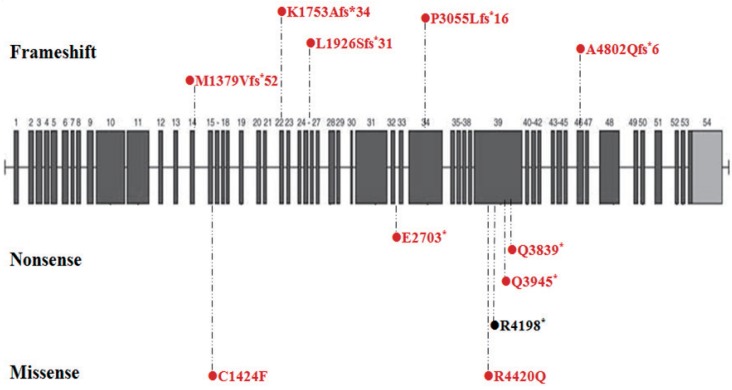
Kabuki syndrome (KS) is a rare syndrome characterized by multiple congenital anomalies and mental retardation. Other characteristics include a peculiar facial gestalt, short stature, skeletal and visceral abnormalities, cardiac anomalies, and immunological defects. Whole exome sequencing has uncovered the genetic basis of KS. Prior to 2013, there was no molecular genetic information about KS in Korean patients. More recently, direct Sanger sequencing and exome sequencing revealed KMT2D variants in 11 Korean patients and a KDM6A variant in one Korean patient. The high detection rate of KMT2D and KDM6A mutations (92.3%) is expected owing to the strict criteria used to establish a clinical diagnosis. Increased awareness and understanding of KS among clinicians is important for diagnosis and management of KS and for primary care of KS patients. Because mutation detection rates rely on the accuracy of the clinical diagnosis and the inclusion or exclusion of atypical cases, recognition of KS will facilitate the identification of novel mutations. A brief review of KS is provided, highlighting the clinical and genetic characteristics of patients with KS.
歌舞伎综合征(KS)是一种罕见的综合征,其特征为多种先天性异常和智力发育迟缓。其他特征包括独特的面部形态、身材矮小、骨骼和内脏异常、心脏异常以及免疫缺陷。全外显子测序揭示了KS的遗传基础。在2013年之前,韩国患者中没有关于KS的分子遗传学信息。最近,直接桑格测序和外显子测序在11名韩国患者中发现了KMT2D变异,在一名韩国患者中发现了KDM6A变异。由于用于建立临床诊断的严格标准,预计KMT2D和KDM6A突变的检测率较高(92.3%)。临床医生对KS的认识和理解的提高对于KS的诊断和管理以及KS患者的初级护理至关重要。由于突变检测率依赖于临床诊断的准确性以及非典型病例的纳入或排除,对KS的认识将有助于识别新的突变。本文对KS进行简要综述,重点介绍KS患者的临床和遗传特征。