Li Dong, Lu Yu, Sun Peng, Feng Li-Xing, Liu Miao, Hu Li-Hong, Wu Wan-Ying, Jiang Bao-Hong, Yang Min, Qu Xiao-Bo, Guo De-An, Liu Xuan
Shanghai Institute of Materia Medica, Chinese Academy of Sciences, Shanghai 201203, P.R. China; Changchun University of Chinese Medicine, Changchun 130117, P.R. China.
Nanjing Tianyi Bioscience Co. Ltd, Nanjing 210061, P.R. China.
PLoS One. 2015 Oct 29;10(10):e0141681. doi: 10.1371/journal.pone.0141681. eCollection 2015.
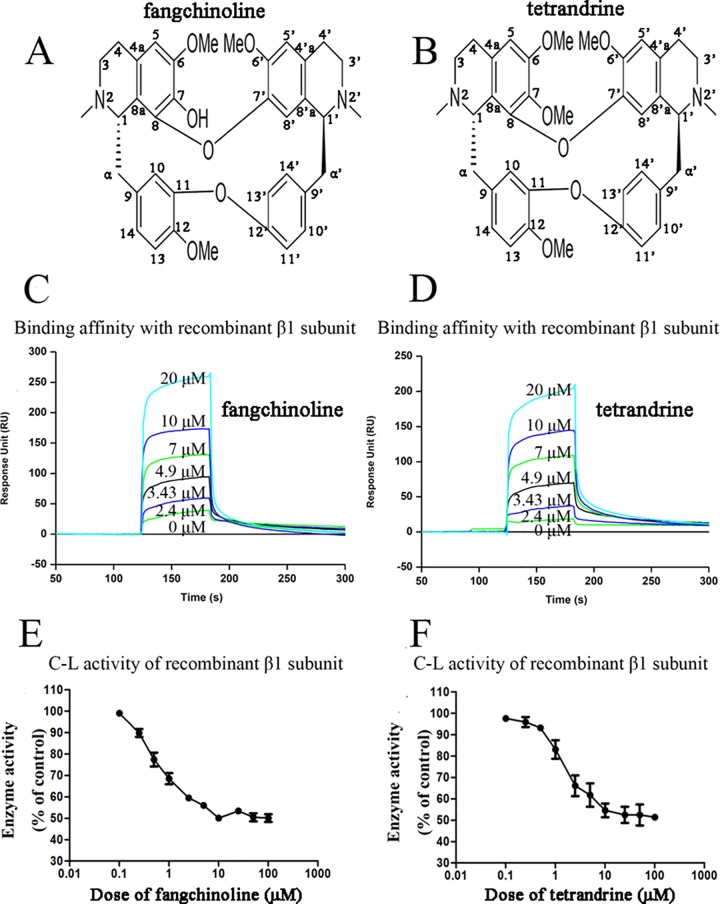
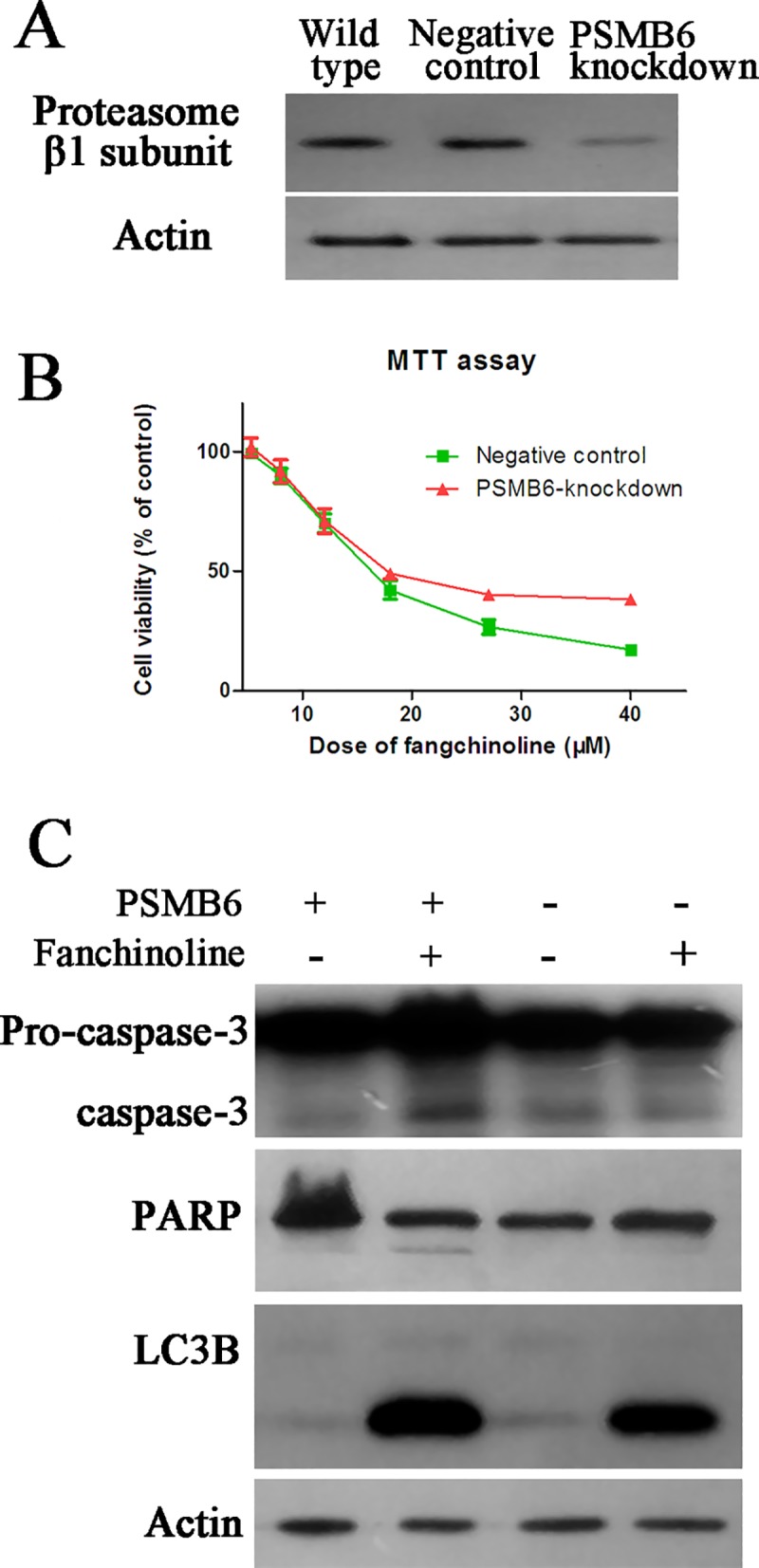
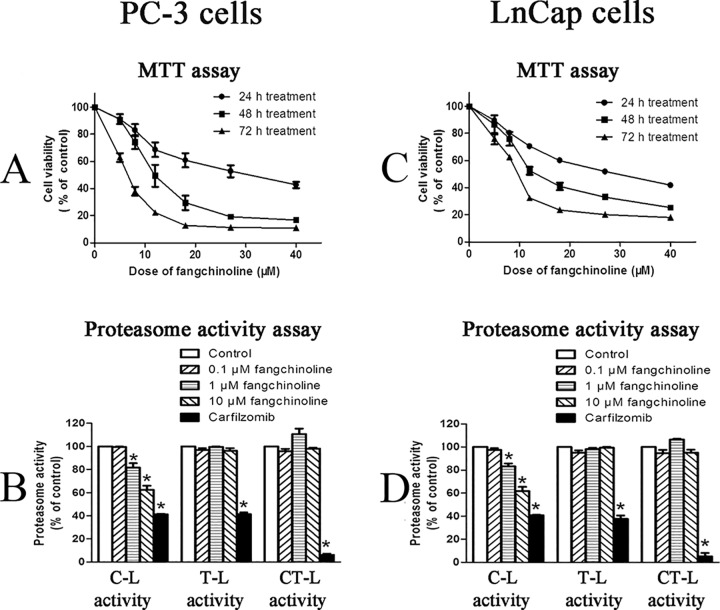
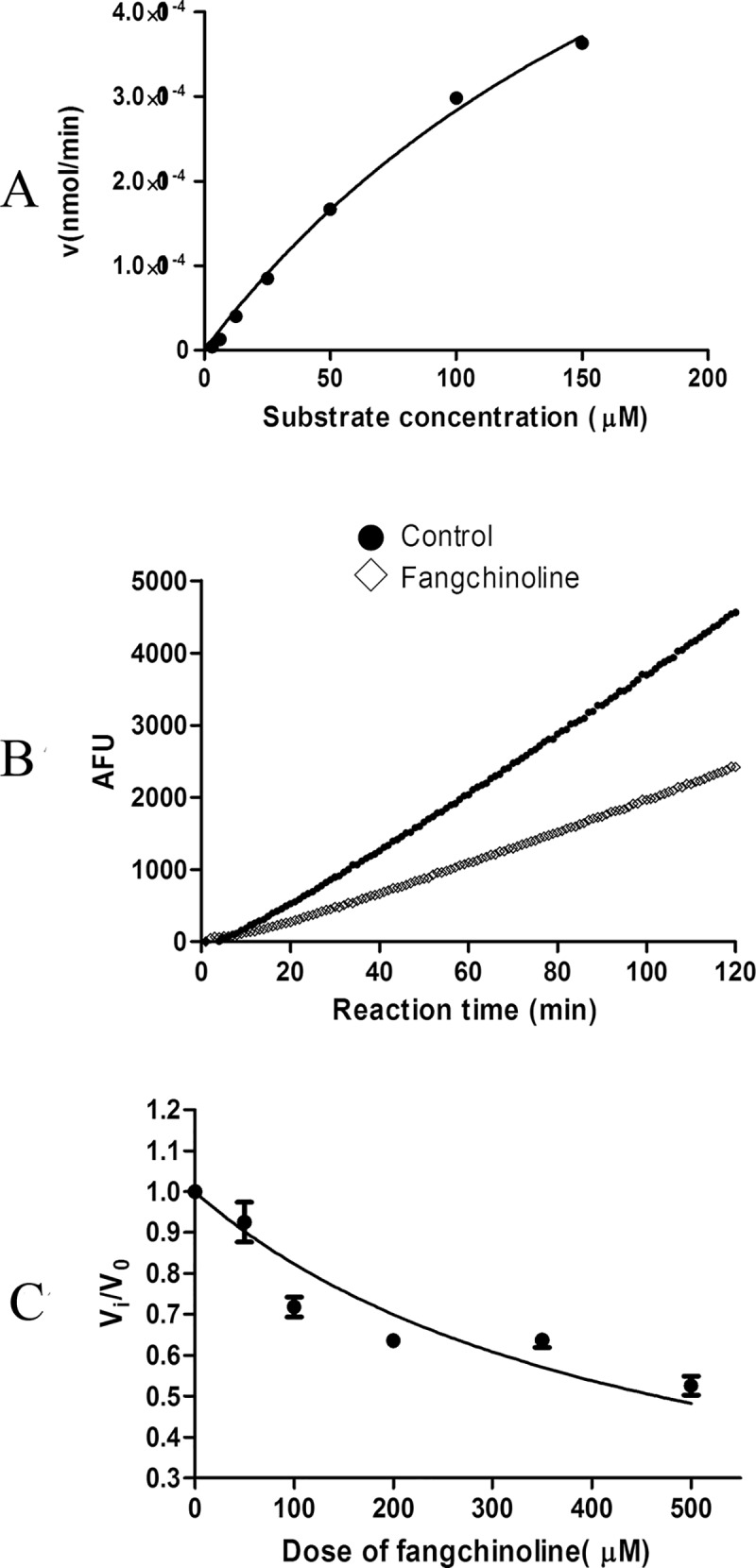
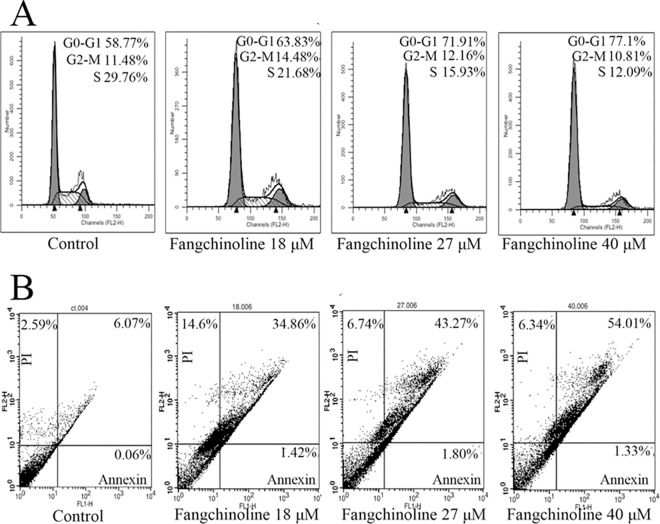
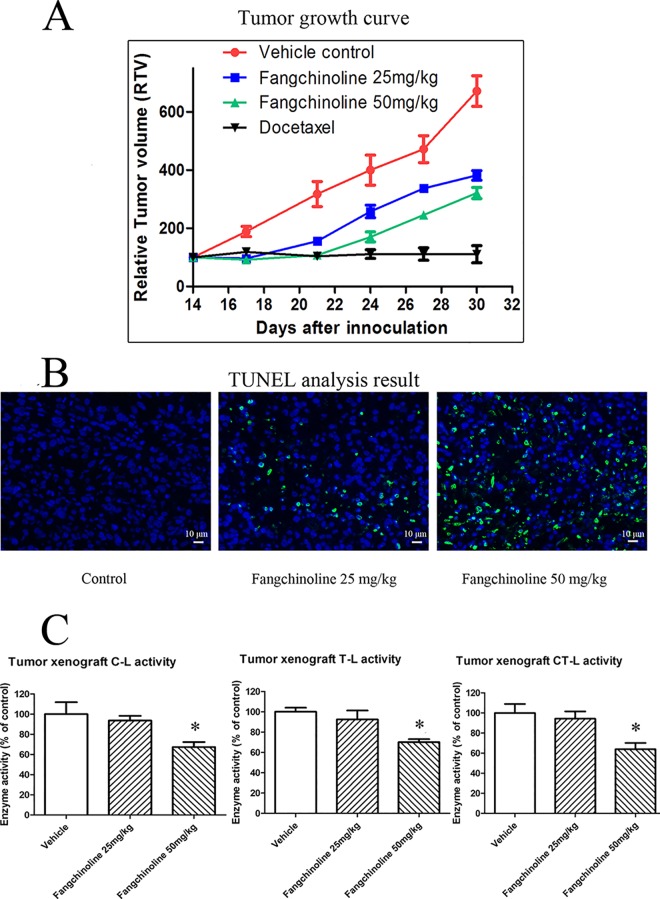
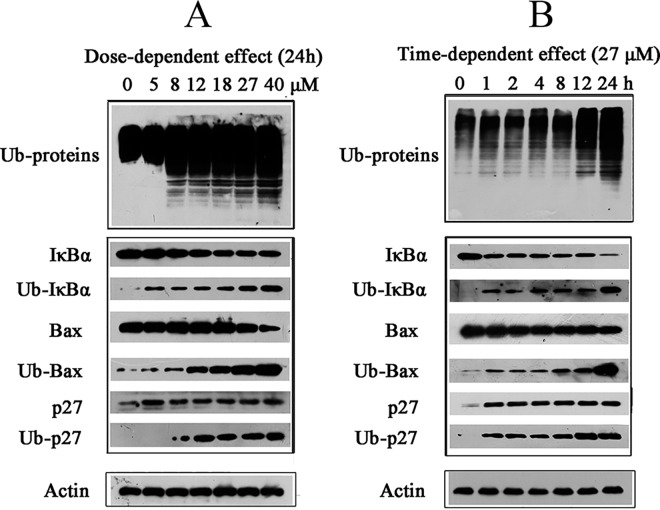
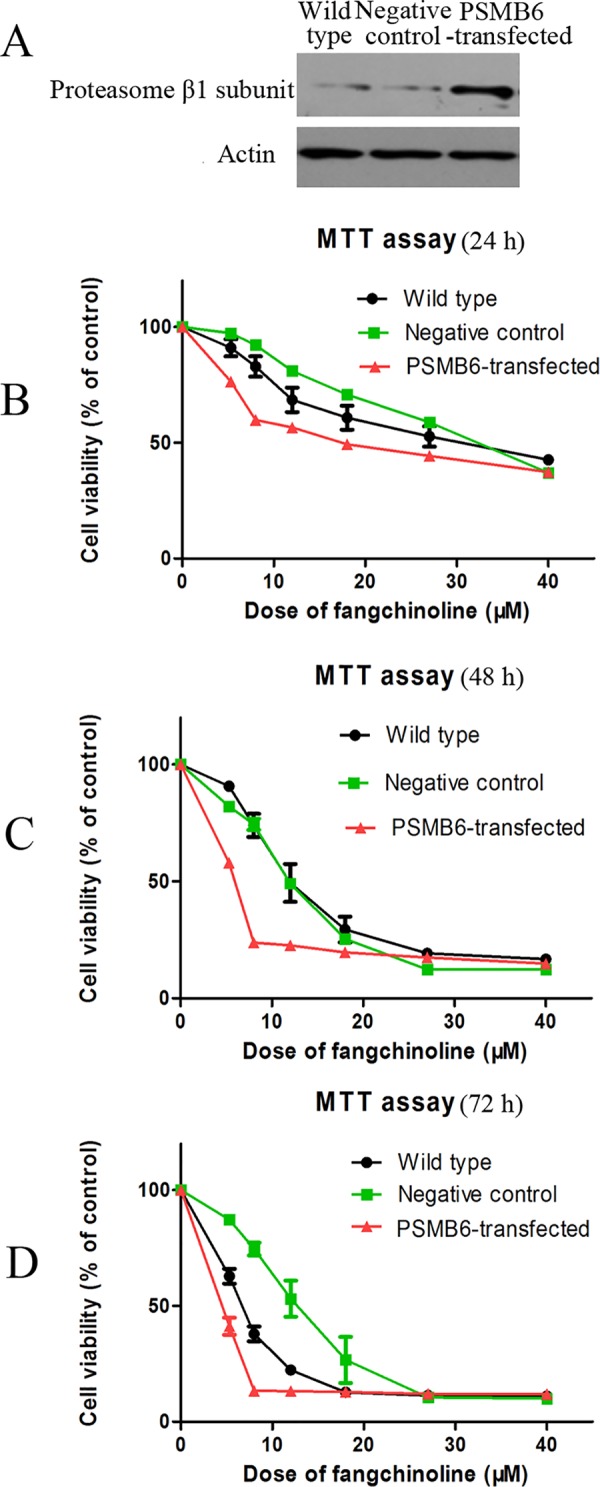
Fangchinoline is a bisbenzylisoquinoline alkaloid isolated from Radix Stephaniae tetrandrae S. Moore. Fangchinoline and its structure analogue, tetrandrine, exhibited direct binding affinity with recombinant human proteasome β1 subunit and also inhibited its activity in vitro. In cultured prostate PC-3 cells and LnCap cells, fangchinoline could dose-dependently inhibit cell proliferation and caspase-like activity of cellular proteasome which was mediated by proteasome β1 subunit. The inhibitive effect of fangchinoline on caspase-like activity of proteasome was also observed in purified human erythrocyte 20S proteasome. In PC-3 cells, fangchinoline induced cell cycle arrest at G0/G1 phase and apoptosis. Treatment of PC-3 tumor-bearing nude mice with fangchinoline inhibited tumor growth, induced apoptosis and also caused decrease in proteasome activities in tumor xenografts. Dose-dependent and time-dependent accumulation of ubiquitinated proteins and important proteasome substrates such as p27, Bax and IκB-α were observed in fangchinoline-treated cells. Over-expression of proteasome β1 subunit by plasmid transfection increased sensitivity of cells to the cytotoxicity of fangchinoline while knockdown of proteasome β1 subunit ameliorated cytotoxicity of fangchinoline in PC-3 cells. Results of the present study suggested that proteasome inhibition was involved in the anti-cancer effects of fangchinoline. Fangchinoline and its structure analogues might be new natural proteasome inhibitors targeting β1 subunit.
粉防己碱是从防己科植物粉防己中分离得到的一种双苄基异喹啉生物碱。粉防己碱及其结构类似物汉防己甲素对重组人蛋白酶体β1亚基具有直接结合亲和力,并在体外抑制其活性。在培养的前列腺PC-3细胞和LnCap细胞中,粉防己碱可剂量依赖性地抑制细胞增殖以及由蛋白酶体β1亚基介导的细胞蛋白酶体的半胱天冬酶样活性。在纯化的人红细胞20S蛋白酶体中也观察到粉防己碱对蛋白酶体半胱天冬酶样活性的抑制作用。在PC-3细胞中,粉防己碱诱导细胞周期停滞于G0/G1期并诱导凋亡。用粉防己碱处理荷PC-3肿瘤的裸鼠可抑制肿瘤生长、诱导凋亡,并导致肿瘤异种移植物中蛋白酶体活性降低。在粉防己碱处理的细胞中观察到泛素化蛋白以及重要的蛋白酶体底物如p27、Bax和IκB-α呈剂量依赖性和时间依赖性积累。通过质粒转染过表达蛋白酶体β1亚基可增加细胞对粉防己碱细胞毒性的敏感性,而敲低蛋白酶体β1亚基可改善粉防己碱在PC-3细胞中的细胞毒性。本研究结果表明,蛋白酶体抑制参与了粉防己碱的抗癌作用。粉防己碱及其结构类似物可能是靶向β1亚基的新型天然蛋白酶体抑制剂。