Chudobova Dagmar, Cihalova Kristyna, Guran Roman, Dostalova Simona, Smerkova Kristyna, Vesely Radek, Gumulec Jaromir, Masarik Michal, Heger Zbynek, Adam Vojtech, Kizek Rene
Department of Chemistry and Biochemistry, Mendel University in Brno, Zemedelska, Czech Republic; Central European Institute of Technology, Brno University of Technology, Technicka, Czech Republic.
Department of Traumatology at the Medical Faculty, Masaryk University and Trauma Hospital of Brno, Ponavka, Czech Republic.
Braz J Infect Dis. 2015 Nov-Dec;19(6):604-13. doi: 10.1016/j.bjid.2015.08.013. Epub 2015 Oct 27.
Infections, mostly those associated with colonization of wound by different pathogenic microorganisms, are one of the most serious health complications during a medical treatment. Therefore, this study is focused on the isolation, characterization, and identification of microorganisms prevalent in superficial wounds of patients (n=50) presenting with bacterial infection.
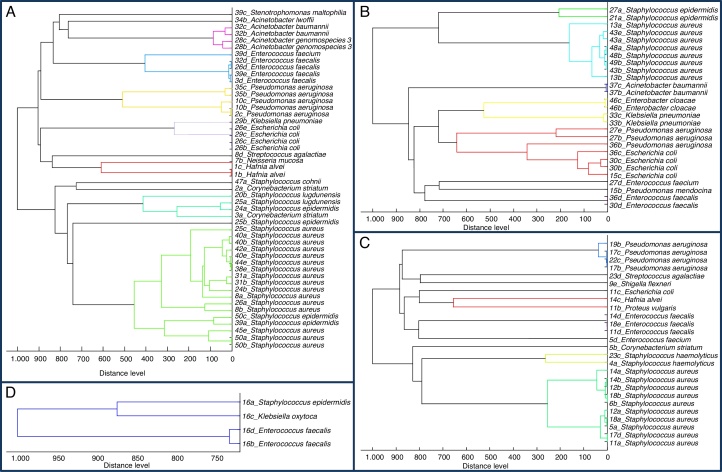
After successful cultivation, bacteria were processed and analyzed. Initially the identification of the strains was performed through matrix-assisted laser desorption/ionization time-of-flight mass spectrometry based on comparison of protein profiles (2-30kDa) with database. Subsequently, bacterial strains from infected wounds were identified by both matrix-assisted laser desorption/ionization time-of-flight mass spectrometry and sequencing of 16S rRNA gene 108.
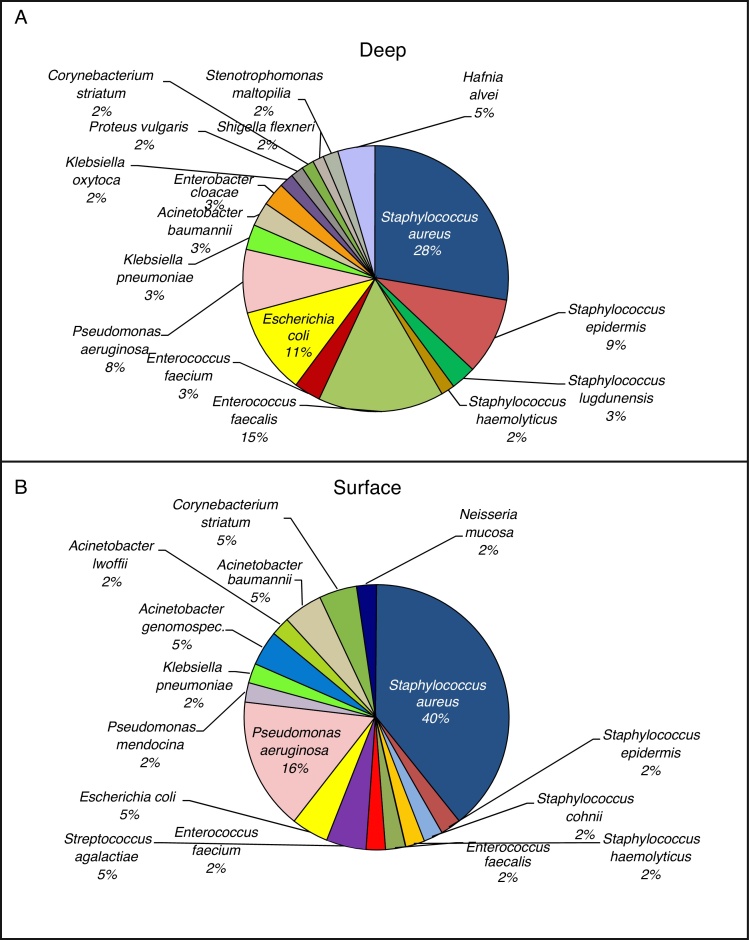
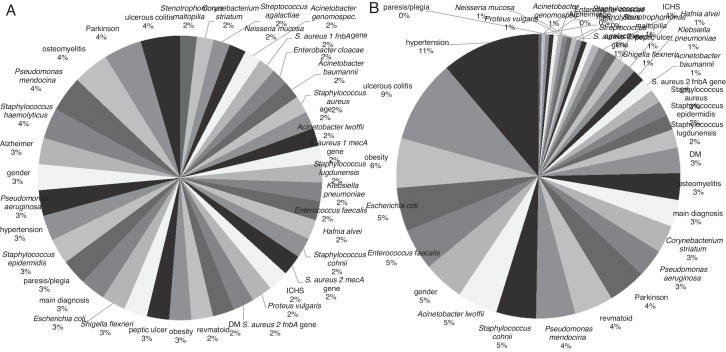
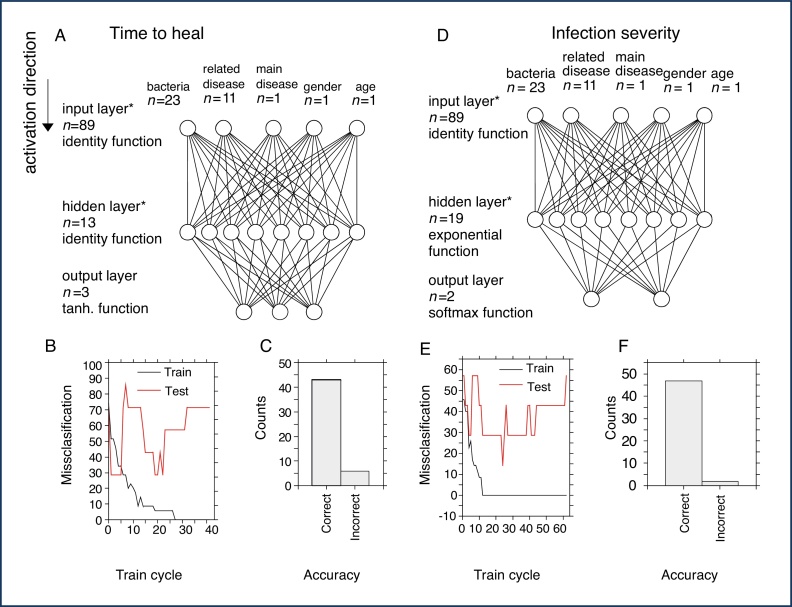
The most prevalent species was Staphylococcus aureus (70%), and out of those 11% turned out to be methicillin-resistant (mecA positive). Identified strains were compared with patients' diagnoses using the method of artificial neuronal network to assess the association between severity of infection and wound microbiome species composition. Artificial neuronal network was subsequently used to predict patients' prognosis (n=9) with 85% success.
In all of 50 patients tested bacterial infections were identified. Based on the proposed artificial neuronal network we were able to predict the severity of the infection and length of the treatment.
感染,尤其是那些与不同致病微生物在伤口定植相关的感染,是医疗过程中最严重的健康并发症之一。因此,本研究聚焦于对50例患有细菌感染的患者浅表伤口中普遍存在的微生物进行分离、特性分析和鉴定。
成功培养后,对细菌进行处理和分析。最初,基于蛋白质谱(2 - 30 kDa)与数据库的比较,通过基质辅助激光解吸/电离飞行时间质谱法对菌株进行鉴定。随后,通过基质辅助激光解吸/电离飞行时间质谱法和16S rRNA基因测序对感染伤口的细菌菌株进行鉴定。
最常见的菌种是金黄色葡萄球菌(70%),其中11%为耐甲氧西林菌株(mecA阳性)。使用人工神经网络方法将鉴定出的菌株与患者诊断结果进行比较,以评估感染严重程度与伤口微生物群落物种组成之间的关联。随后,人工神经网络被用于预测9例患者的预后,成功率为85%。
在所有检测的50例患者中均发现了细菌感染。基于所提出的人工神经网络,我们能够预测感染的严重程度和治疗时长。