Liang Ai-Ling, Qian Hai-Li, Zhang Ting-Ting, Zhou Ning, Wang Hai-Juan, Men Xi-Ting, Qi Wei, Zhang Ping-Ping, Fu Ming, Liang Xiao, Lin Chen, Liu Yong-Jun
Medical Molecular Diagnostics Key Laboratory of Guangdong, Guangdong Medical University, Dongguan, Guangdong, People's Republic of China ; Department of Biochemistry and Molecular Biology, Guangdong Medical University, Dongguan, Guangdong, People's Republic of China ; Department of Clinical Biochemistry, Guangdong Medical University, Dongguan, Guangdong, People's Republic of China.
State Key Laboratory of Molecular Oncology, Cancer Institute, Chinese Academy of Medical Sciences, Beijing, People's Republic of China.
Drug Des Devel Ther. 2015 Oct 16;9:5671-86. doi: 10.2147/DDDT.S90082. eCollection 2015.
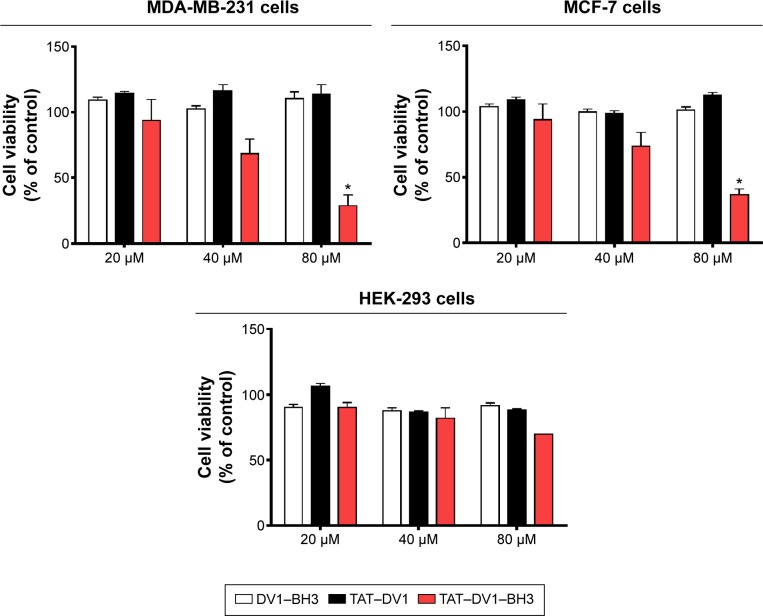
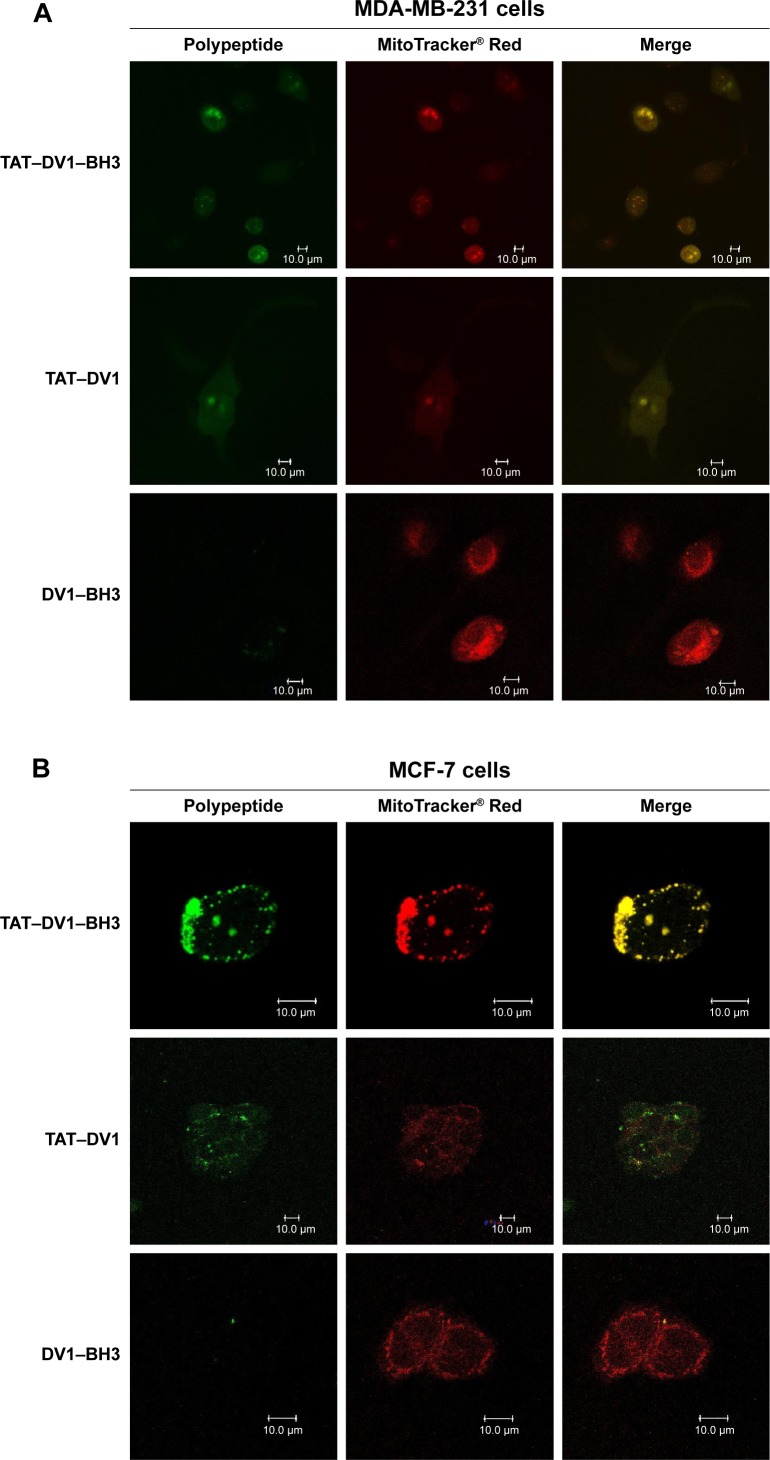
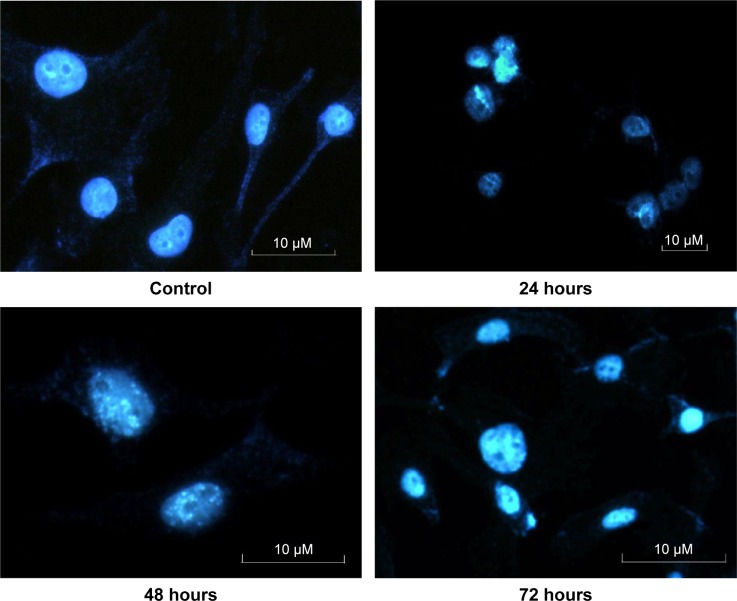
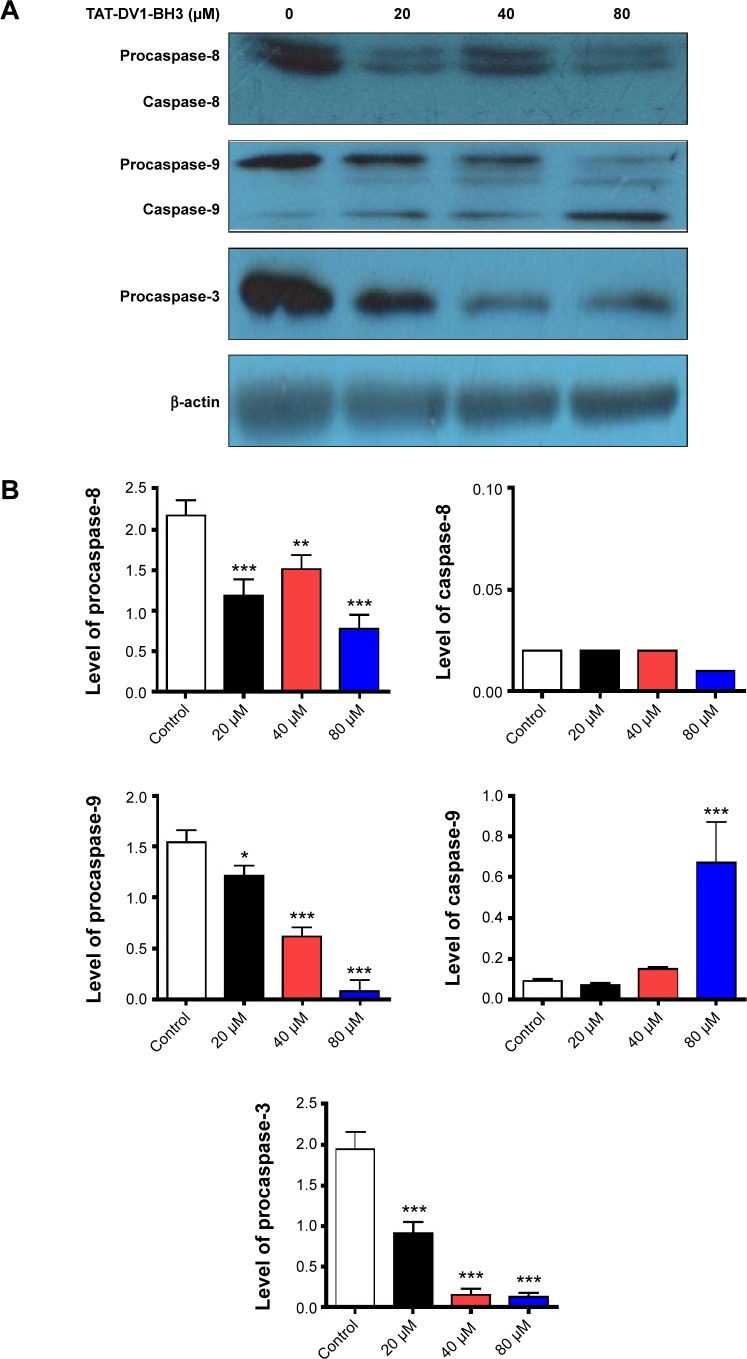
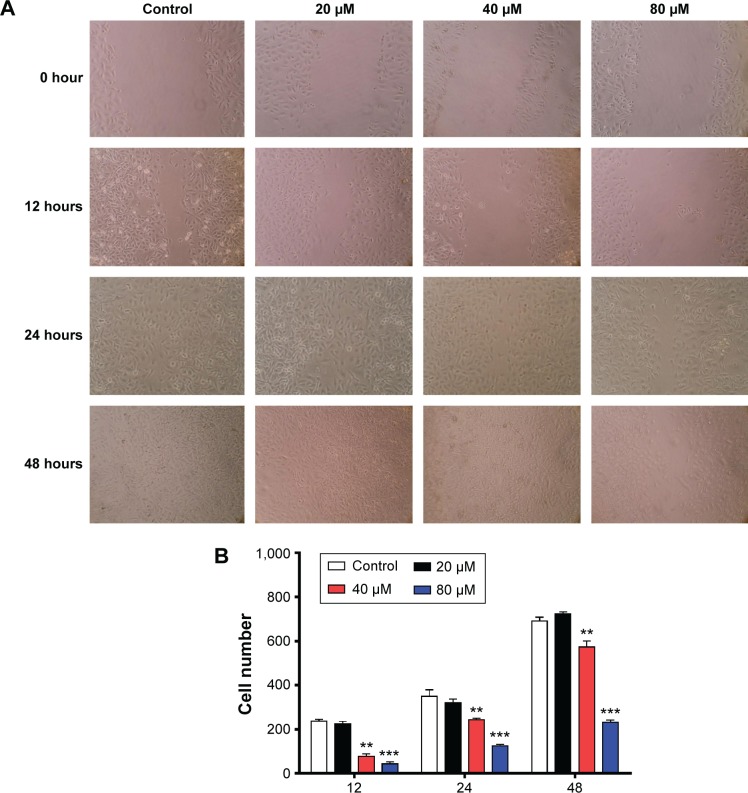
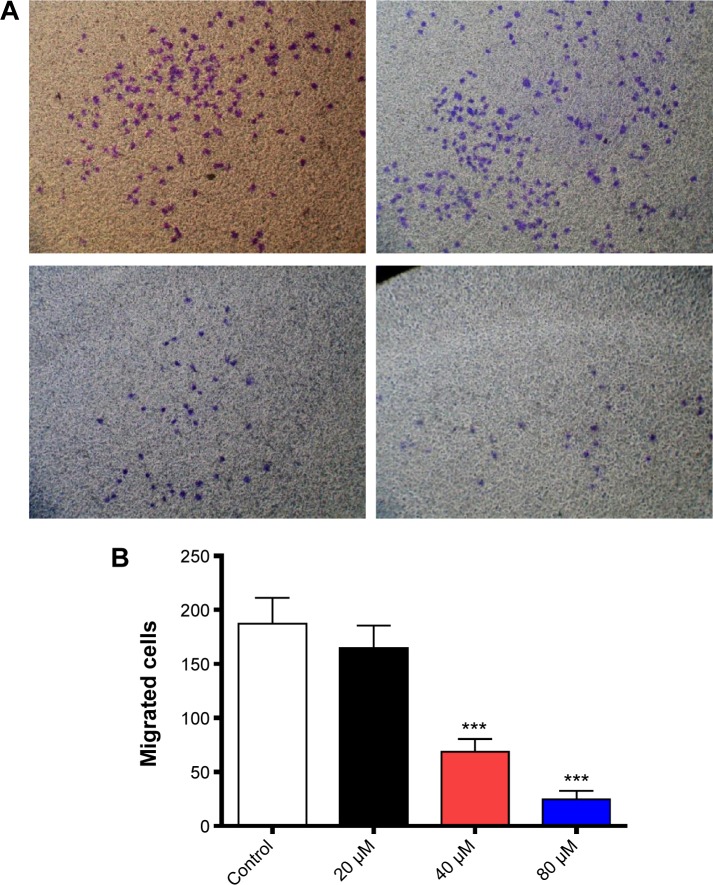
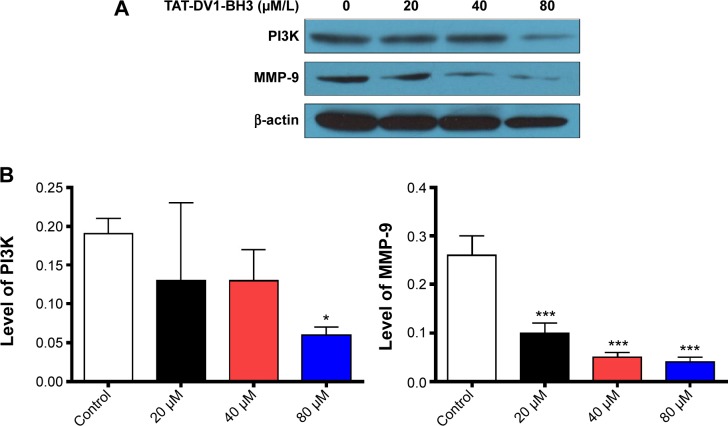
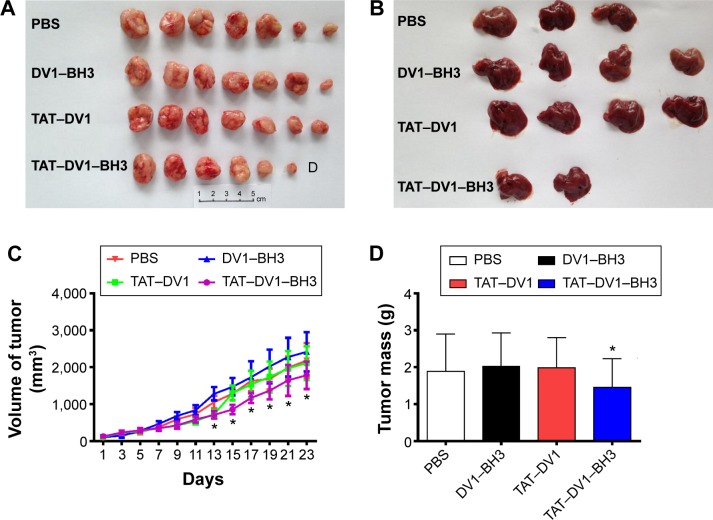
Breast cancer is the most common cancer and the leading cause of cancer-related death among women worldwide, with urgent need to develop new therapeutics. Targeted therapy is a promising strategy for breast cancer therapy. Stromal-derived factor-1/CXC chemokine receptor 4 (CXCR4) has been implicated in the metastasis of breast cancer, which renders it to be therapeutic target. This study aimed to evaluate the anticancer effect of fused TAT- DV1-BH3 polypeptide, an antagonist of CXCR4, and investigate the underlying mechanism for the cancer cell-killing effect in the treatment of breast cancer in vitro and in vivo. This results in a potent inhibitory effect of fused TAT-DV1-BH3 polypeptide on tumor growth and metastasis in nude mice bearing established MDA-MB-231 tumors. Fused TAT-DV1-BH3 polypeptide inhibited the proliferation of MDA-MB-231 and MCF-7 cells but did not affect that of HEK-293 cells. The fused TAT-DV1-BH3 polypeptide colocalized with mitochondria and exhibited a proapoptotic effect through the regulation of caspase-9 and -3. Furthermore, the fused TAT-DV1-BH3 polypeptide suppressed the migration and invasion of the highly metastatic breast cancer cell line MDA-MB-231 in a concentration-dependent manner. Notably, the DV1-mediated inhibition of the stromal-derived factor-1/CXCR4 pathway contributed to the antimetastasis effect, evident from the reduction in the level of phosphoinositide 3 kinase and matrix metalloproteinase 9 in MDA-MB-231 cells. Collectively, these results indicate that the apoptosis-inducing effect and migration- and invasion-suppressing effect explain the tumor regression and metastasis inhibition in vivo, with the involvement of caspase- and CXCR4-mediated signaling pathway. The data suggest that the fused TAT-DV1-BH3 polypeptide is a promising agent for the treatment of breast cancer, and more studies are warranted to fully elucidate the therapeutic targets and molecular mechanism.
乳腺癌是全球女性中最常见的癌症,也是癌症相关死亡的主要原因,迫切需要开发新的治疗方法。靶向治疗是一种有前景的乳腺癌治疗策略。基质衍生因子-1/CXC趋化因子受体4(CXCR4)与乳腺癌转移有关,这使其成为治疗靶点。本研究旨在评估融合型TAT-DV1-BH3多肽(一种CXCR4拮抗剂)的抗癌作用,并研究其在体外和体内治疗乳腺癌时杀伤癌细胞作用的潜在机制。这导致融合型TAT-DV1-BH3多肽对携带已建立的MDA-MB-231肿瘤的裸鼠肿瘤生长和转移产生强大的抑制作用。融合型TAT-DV1-BH3多肽抑制MDA-MB-231和MCF-7细胞的增殖,但不影响HEK-293细胞的增殖。融合型TAT-DV1-BH3多肽与线粒体共定位,并通过调节半胱天冬酶-9和-3发挥促凋亡作用。此外,融合型TAT-DV1-BH3多肽以浓度依赖的方式抑制高转移性乳腺癌细胞系MDA-MB-231的迁移和侵袭。值得注意的是,DV1介导的对基质衍生因子-1/CXCR4途径的抑制促成了抗转移作用,这从MDA-MB-231细胞中磷酸肌醇3激酶和基质金属蛋白酶9水平的降低可以明显看出。总体而言,这些结果表明,诱导凋亡作用以及抑制迁移和侵袭的作用解释了体内肿瘤消退和转移抑制,涉及半胱天冬酶和CXCR4介导的信号通路。数据表明,融合型TAT-DV1-BH3多肽是一种有前景的乳腺癌治疗药物,需要更多研究来充分阐明其治疗靶点和分子机制。