US Naval Hospital Okinawa, Okinawa, Japan.
Naval Medical Center San Diego, San Diego, California, USA.
Orthop J Sports Med. 2013 Jul 15;1(2):2325967113496213. doi: 10.1177/2325967113496213. eCollection 2013 Jul.
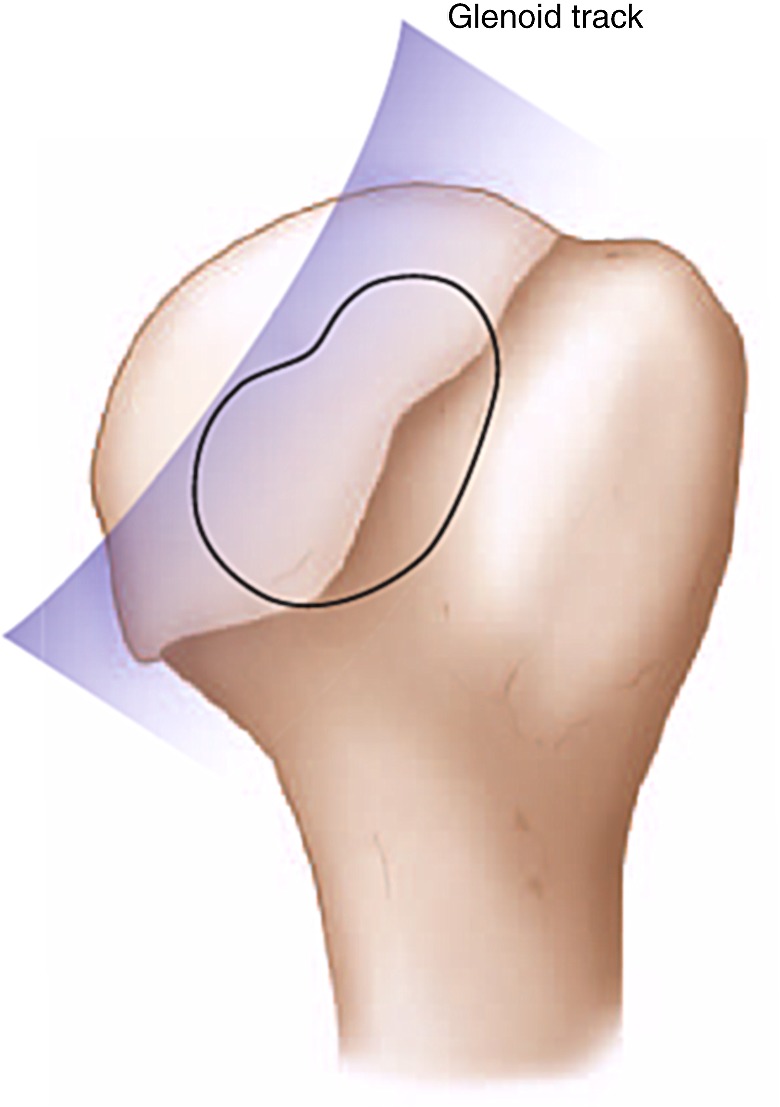
The optimal treatment of Hill-Sachs injuries is difficult to determine and is potentiated by the finding that a Hill-Sachs injury becomes more important in the setting of glenoid bone loss, making engagement of the humeral head on the glenoid inherently easier. The "glenoid track" concept was developed to biomechanically quantify the effects of a combined glenoid and humeral head bony defects on instability.
To clinically evaluate humeral head engagement on the glenoid by utilizing glenoid track measurements of both humeral head and glenoid bone loss.
Retrospective cohort.
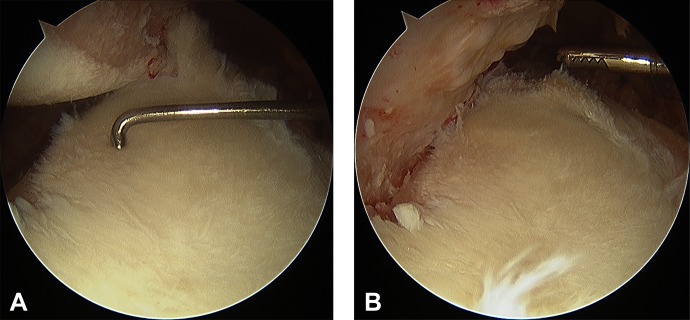
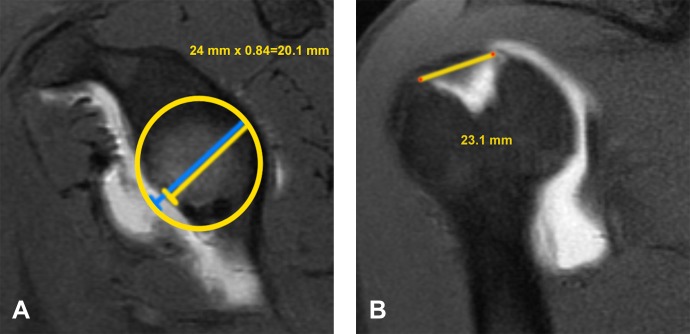
A total of 205 patients with recurrent anterior shoulder instability were evaluated, and of these, 140 patients (68%; 9 females [6%] and 131 males [94%]) with a Hill-Sachs lesion and a mean age of 27.6 years (range, 15-47 years; standard error of mean [SEM], 0.59) were included in the final magnetic resonance angiogram [MRA]) analysis. Bipolar bone loss measures of glenoid bone loss (sagittal oblique MRA) and multiple size measures of the Hill-Sachs injury (coronal, axial, and sagittal MRA) were recorded. Based on the extent of the bipolar lesion, patients were classified with glenoid track as either outside and engaging of the glenoid on the humeral head (OUT-E) or inside and nonengaging (IN-NE). The 2 groups were then compared with clinical evidence of engagement on examination under anesthesia (EUA) using video arthroscopy, number of dislocations, length of instability, and patient age.
The mean glenoid bone loss was 7.6% (range, 0%-29%; SEM, 1.20%), and 31 of 140 (22%) patients demonstrated clinical engagement on EUA. Radiographically, 19 (13.4%) patients were determined to be OUT-E, while 121 (86.6%) were IN-NE and not expected to engage. Of those 19 patients with suggested radiographic engagement (OUT-E), 16 (84.5%) had clinical evidence of engagement versus only 12.4% that clinically engaged (15/121) without radiographic evidence of engagement (IN-NE) (P < .001). Younger age and a greater number of recurrence events were jointly predictive of a patient being classified as OUT-E (11.8 vs 6.4 dislocations; P = .015).
This study demonstrates that glenohumeral engagement was well predicted based on preoperative glenoid and humeral head bone loss measurements using the glenoid track method. In addition, younger age and a greater number of recurrences were predictive of engagement. The glenoid track concept may be important to fully assess the overall risk for engagement prior to surgery and may help guide surgical decision making such as bony augmentation procedures.
Hill-Sachs 损伤的最佳治疗方法难以确定,而发现 Hill-Sachs 损伤在肩胛盂骨丢失的情况下变得更为重要,这使得肱骨头在肩胛盂上的啮合更为容易。“肩胛盂轨迹”概念的提出是为了从生物力学角度量化肩胛盂和肱骨头骨缺损对不稳定的综合影响。
通过测量肱骨头和肩胛盂骨丢失的肩胛盂轨迹,对肱骨头在肩胛盂上的啮合进行临床评估。
回顾性队列研究。
共评估了 205 例复发性肩关节前不稳定患者,其中 140 例(68%;9 名女性[6%]和 131 名男性[94%])患者存在 Hill-Sachs 病变,平均年龄为 27.6 岁(范围,15-47 岁;均数标准差[SEM],0.59),最终纳入磁共振血管造影(MRA)分析。记录了肩胛盂骨丢失的双极骨丢失测量值(矢状斜 MRA)和 Hill-Sachs 损伤的多个大小测量值(冠状、轴位和矢状 MRA)。根据双极病变的程度,将患者分为肩胛盂轨迹外啮合(OUT-E)或内啮合(IN-NE)。然后,通过关节镜下麻醉检查(EUA)下的临床啮合证据、脱位次数、不稳定时间和患者年龄,对这 2 组进行比较。
肩胛盂骨丢失的平均百分比为 7.6%(范围,0%-29%;SEM,1.20%),140 例患者中有 31 例(22%)在 EUA 下表现出临床啮合。影像学上,19 例(13.4%)患者被确定为 OUT-E,而 121 例(86.6%)为 IN-NE,预计不会啮合。在这 19 例影像学上提示啮合的患者中,16 例(84.5%)有临床啮合证据,而只有 12.4%的患者有临床啮合证据(15/121)而无影像学啮合证据(IN-NE)(P<.001)。年轻和更多的复发事件共同预测患者被归类为 OUT-E(11.8 次 vs 6.4 次脱位;P=.015)。
本研究表明,使用肩胛盂轨迹方法,术前肩胛盂和肱骨头骨丢失测量值可很好地预测肱骨头的啮合情况。此外,年龄较小和复发次数较多与啮合相关。肩胛盂轨迹概念可能对手术前全面评估整体啮合风险很重要,并可能有助于指导手术决策,如骨增强手术。