Provence Aaron, Hristov Kiril L, Parajuli Shankar P, Petkov Georgi V
Department of Drug Discovery and Biomedical Sciences, South Carolina College of Pharmacy, University of South Carolina, Columbia, South Carolina, United States of America.
PLoS One. 2015 Nov 4;10(11):e0141950. doi: 10.1371/journal.pone.0141950. eCollection 2015.
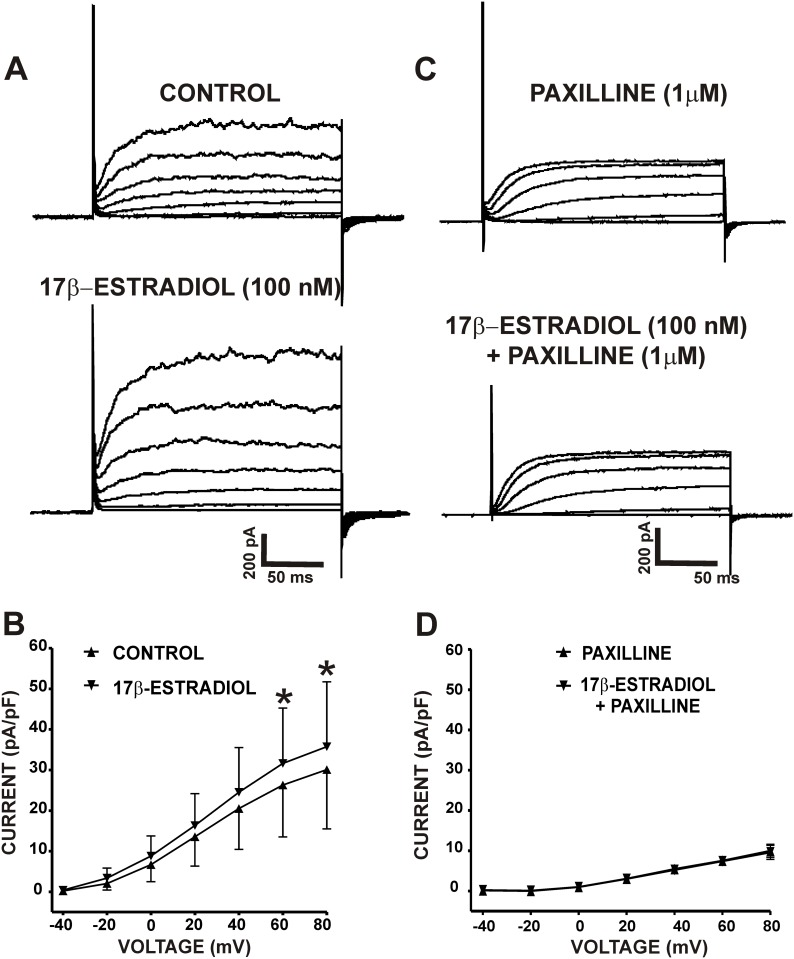
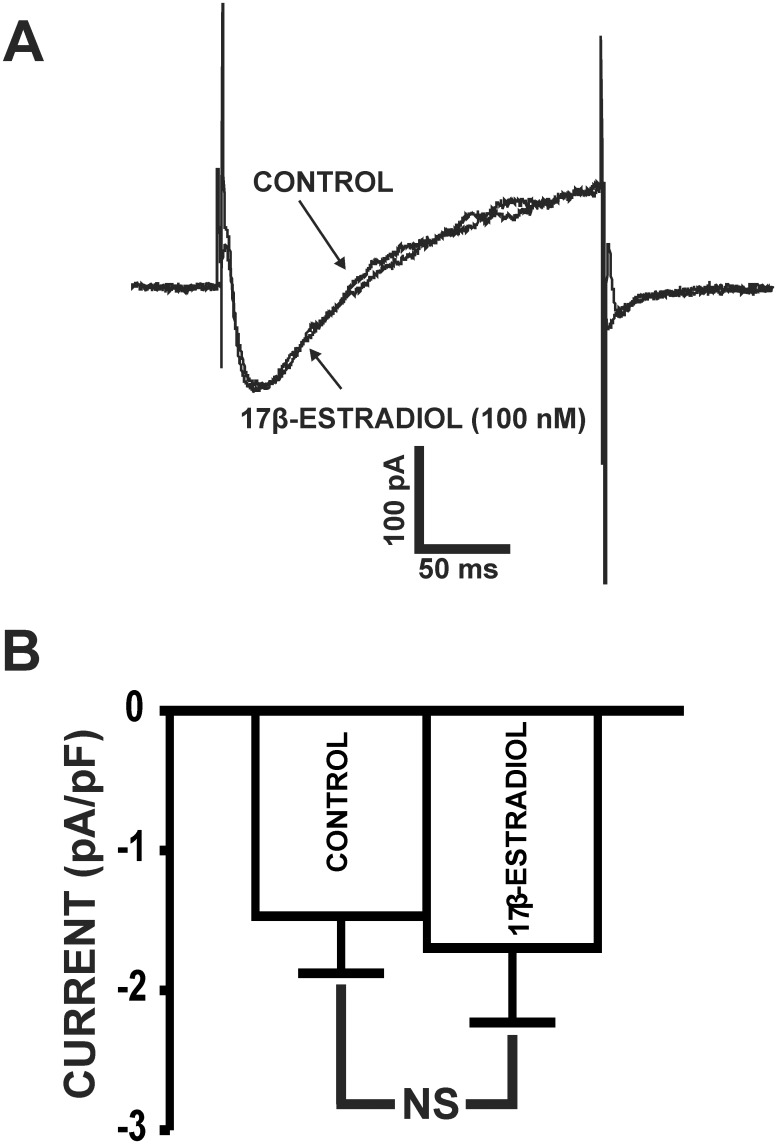
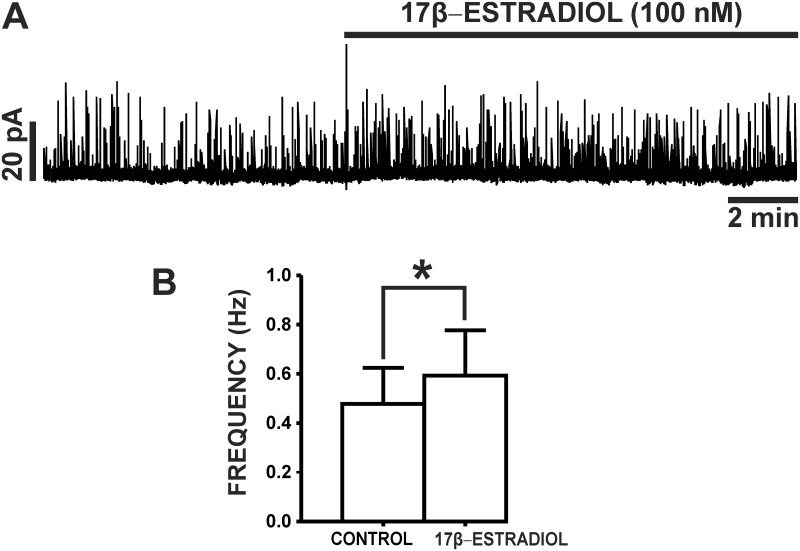
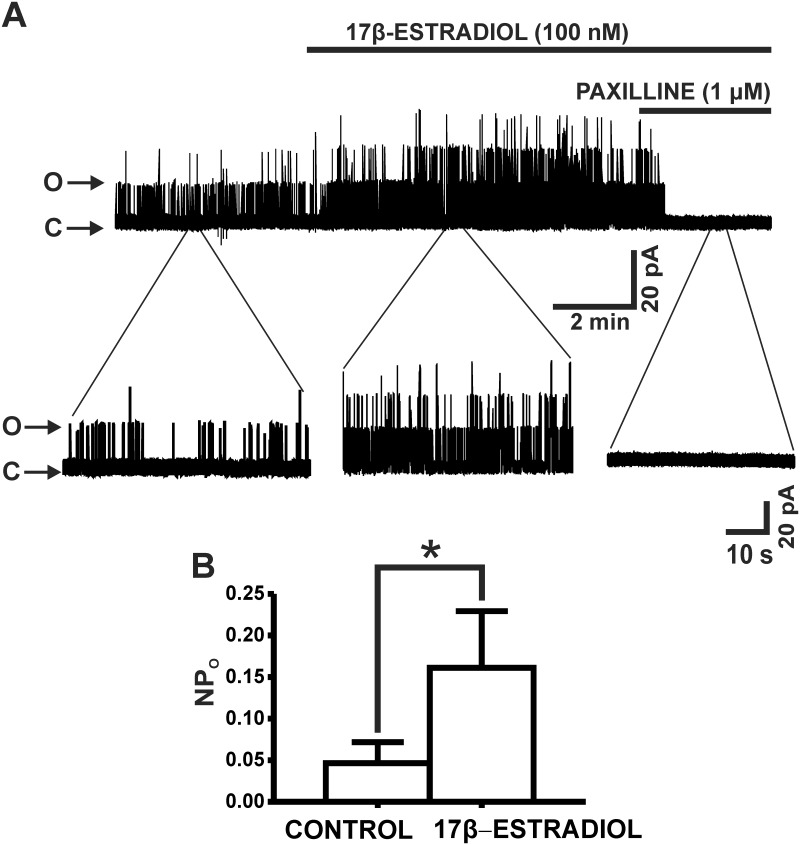
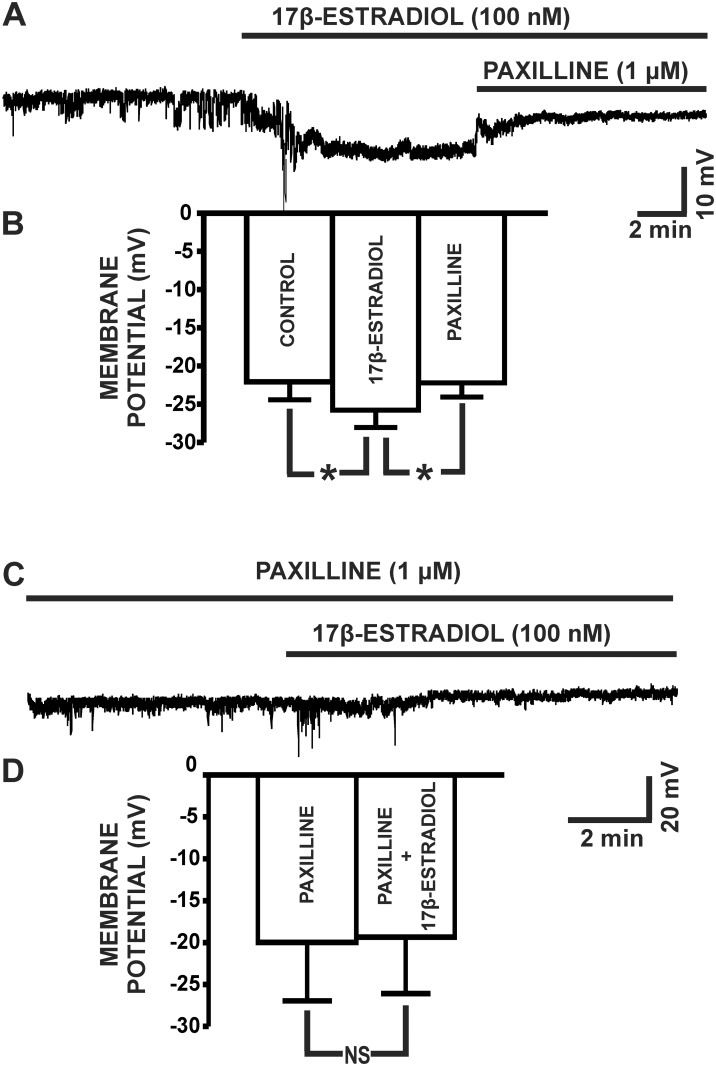
Estrogen replacement therapies have been suggested to be beneficial in alleviating symptoms of overactive bladder. However, the precise regulatory mechanisms of estrogen in urinary bladder smooth muscle (UBSM) at the cellular level remain unknown. Large conductance voltage- and Ca2+-activated K+ (BK) channels, which are key regulators of UBSM function, are suggested to be non-genomic targets of estrogens. This study provides an electrophysiological investigation into the role of UBSM BK channels as direct targets for 17β-estradiol, the principle estrogen in human circulation. Single BK channel recordings on inside-out excised membrane patches and perforated whole cell patch-clamp were applied in combination with the BK channel selective inhibitor paxilline to elucidate the mechanism of regulation of BK channel activity by 17β-estradiol in freshly-isolated guinea pig UBSM cells. 17β-Estradiol (100 nM) significantly increased the amplitude of depolarization-induced whole cell steady-state BK currents and the frequency of spontaneous transient BK currents in freshly-isolated UBSM cells. The increase in whole cell BK currents by 17β-estradiol was eliminated upon blocking BK channels with paxilline. 17β-Estradiol (100 nM) significantly increased (~3-fold) the single BK channel open probability, indicating direct 17β-estradiol-BK channel interactions. 17β-Estradiol (100 nM) caused a significant hyperpolarization of the membrane potential of UBSM cells, and this hyperpolarization was reversed by blocking the BK channels with paxilline. 17β-Estradiol (100 nM) had no effects on L-type voltage-gated Ca2+ channel currents recorded under perforated patch-clamp conditions. This study reveals a new regulatory mechanism in the urinary bladder whereby BK channels are directly activated by 17β-estradiol to reduce UBSM cell excitability.
雌激素替代疗法已被认为有助于缓解膀胱过度活动症的症状。然而,雌激素在膀胱平滑肌(UBSM)细胞水平上的确切调节机制仍不清楚。大电导电压和Ca2+激活的K+(BK)通道是UBSM功能的关键调节因子,被认为是雌激素的非基因组靶点。本研究对UBSM BK通道作为人类循环中主要雌激素17β-雌二醇的直接靶点的作用进行了电生理研究。将内向外膜片钳和穿孔全细胞膜片钳记录单个BK通道的方法与BK通道选择性抑制剂紫杉醇相结合,以阐明17β-雌二醇对新鲜分离的豚鼠UBSM细胞中BK通道活性的调节机制。17β-雌二醇(100 nM)显著增加了新鲜分离的UBSM细胞中去极化诱导的全细胞稳态BK电流的幅度和自发瞬态BK电流的频率。用紫杉醇阻断BK通道后,17β-雌二醇引起全细胞BK电流的增加被消除。17β-雌二醇(100 nM)显著增加了单个BK通道的开放概率(约3倍),表明17β-雌二醇与BK通道之间存在直接相互作用。17β-雌二醇(100 nM)使UBSM细胞的膜电位显著超极化,用紫杉醇阻断BK通道可逆转这种超极化。17β-雌二醇(100 nM)对穿孔膜片钳条件下记录的L型电压门控Ca2+通道电流没有影响。本研究揭示了膀胱中的一种新调节机制,即BK通道被17β-雌二醇直接激活,从而降低UBSM细胞的兴奋性。