Tateno Chise, Kawase Yosuke, Tobita Yoshimi, Hamamura Satoko, Ohshita Hiroki, Yokomichi Hiroshi, Sanada Harumi, Kakuni Masakazu, Shiota Akira, Kojima Yuha, Ishida Yuji, Shitara Hiroshi, Wada Naoko A, Tateishi Hiromi, Sudoh Masayuki, Nagatsuka Shin-Ichiro, Jishage Kou-Ichi, Kohara Michinori
PhoenixBio Co., Ltd., Higashihiroshima, Hiroshima, Japan.
Liver Research Project Center, Hiroshima University, Hiroshima, Japan.
PLoS One. 2015 Nov 4;10(11):e0142145. doi: 10.1371/journal.pone.0142145. eCollection 2015.
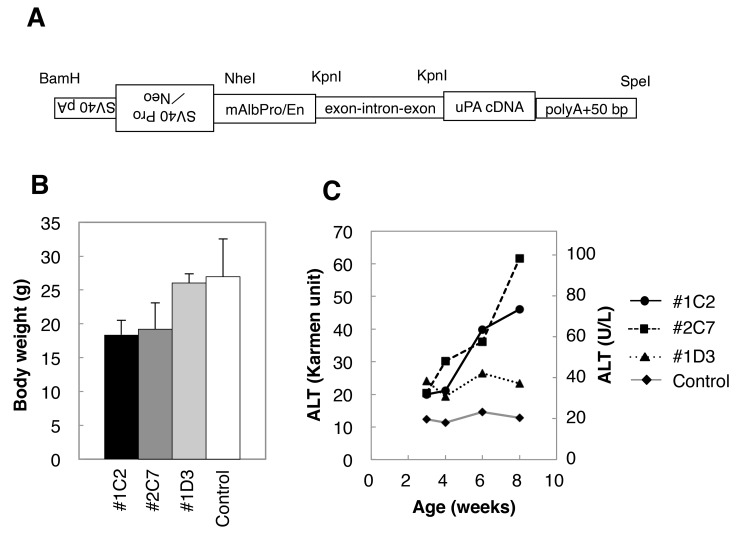
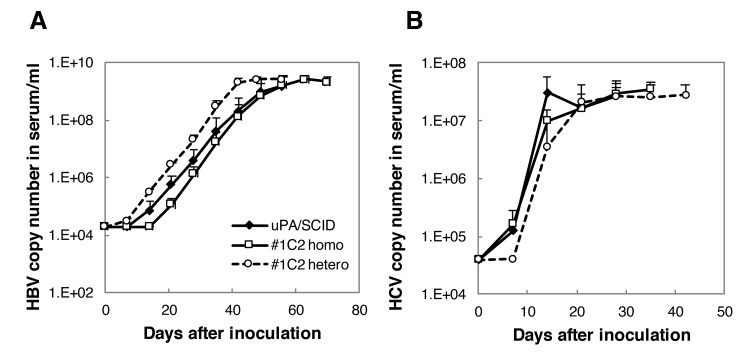
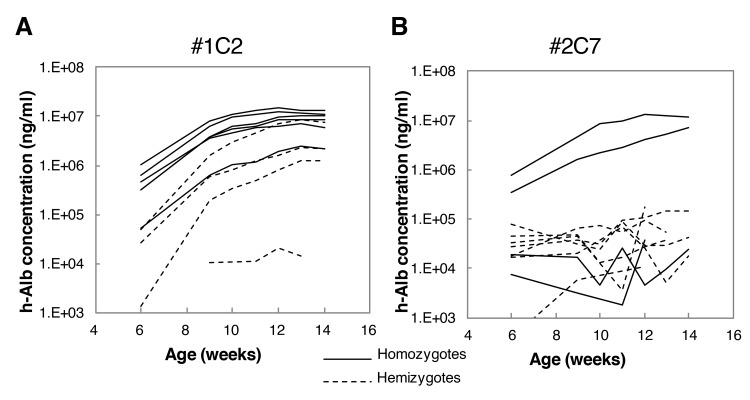
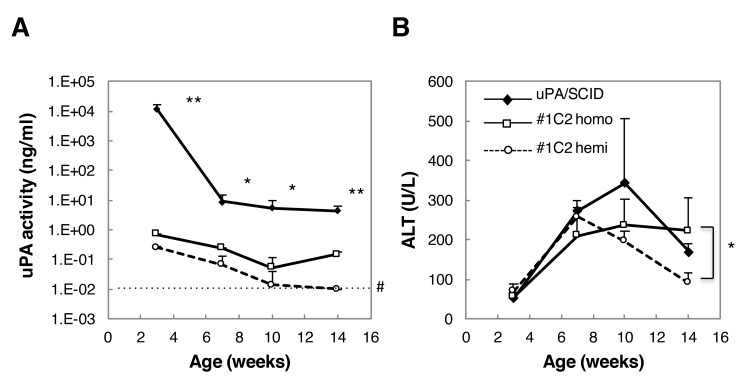
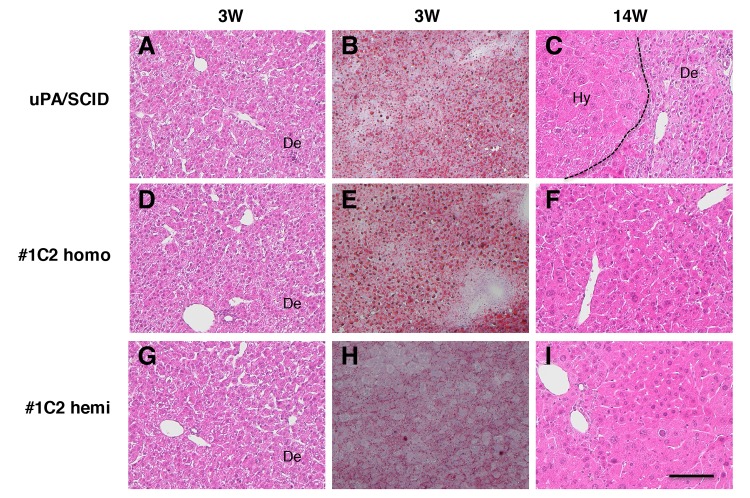
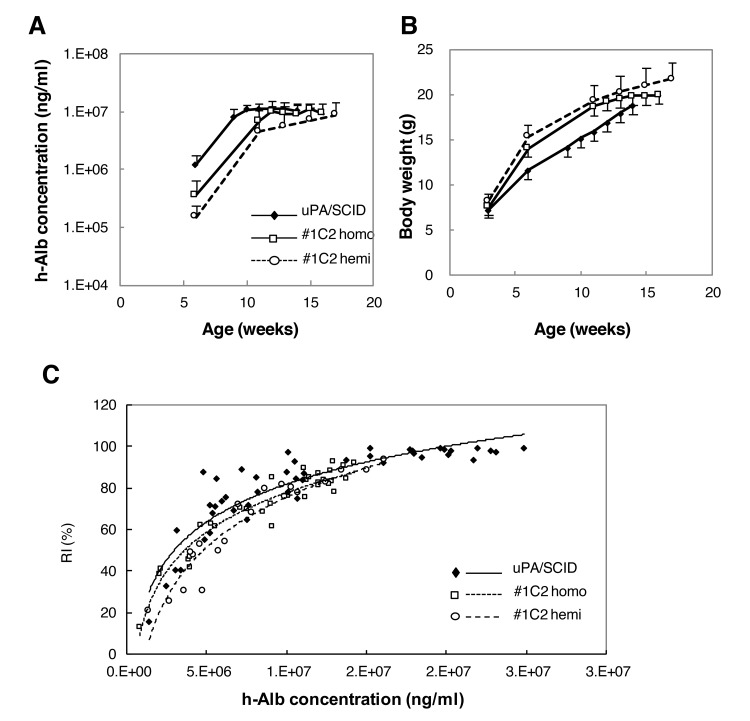
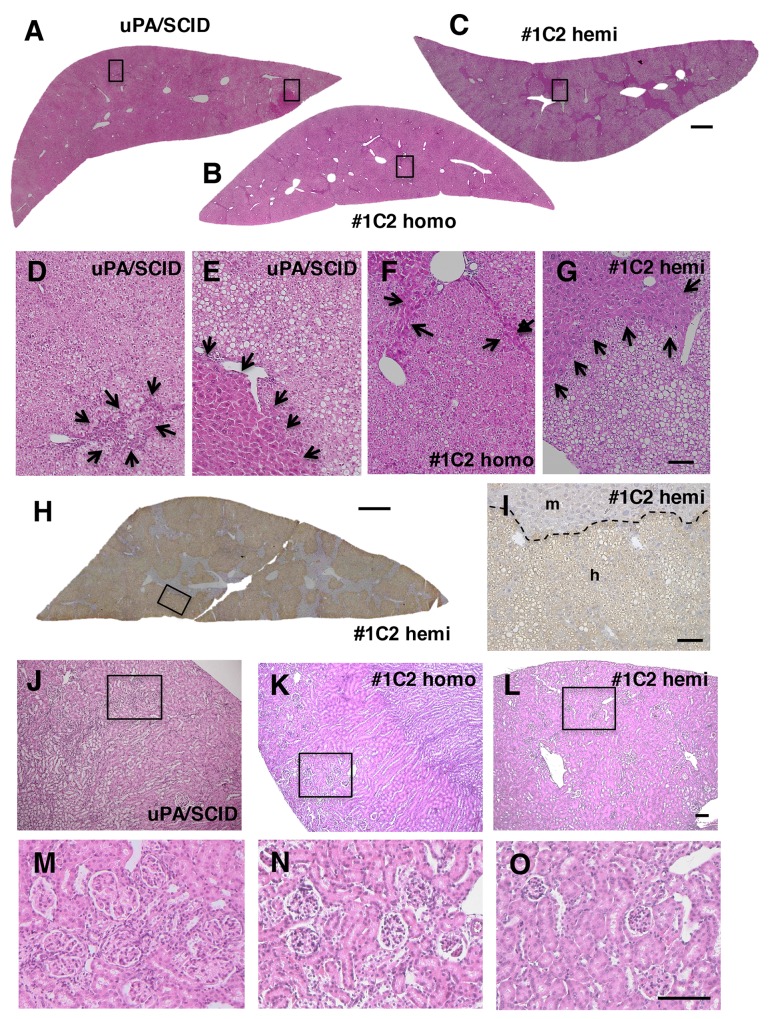
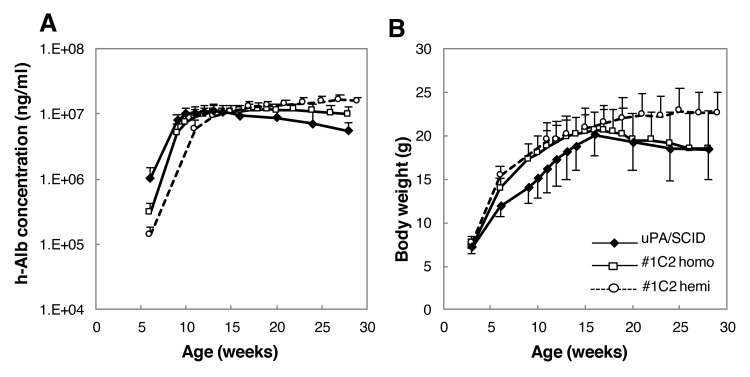
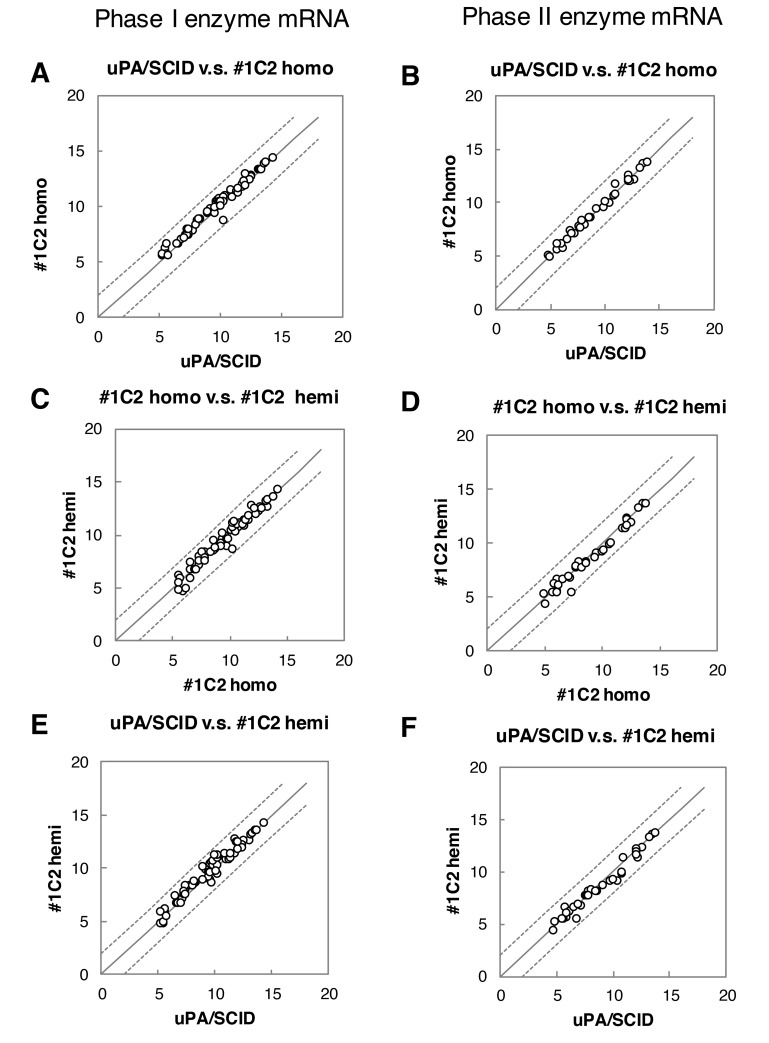
We have used homozygous albumin enhancer/promoter-driven urokinase-type plasminogen activator/severe combined immunodeficient (uPA/SCID) mice as hosts for chimeric mice with humanized livers. However, uPA/SCID mice show four disadvantages: the human hepatocytes (h-heps) replacement index in mouse liver is decreased due to deletion of uPA transgene by homologous recombination, kidney disorders are likely to develop, body size is small, and hemizygotes cannot be used as hosts as more frequent homologous recombination than homozygotes. To solve these disadvantages, we have established a novel host strain that has a transgene containing albumin promoter/enhancer and urokinase-type plasminogen activator cDNA and has a SCID background (cDNA-uPA/SCID). We applied the embryonic stem cell technique to simultaneously generate a number of transgenic lines, and found the line with the most appropriate levels of uPA expression-not detrimental but with a sufficiently damaged liver. We transplanted h-heps into homozygous and hemizygous cDNA-uPA/SCID mice via the spleen, and monitored their human albumin (h-alb) levels and body weight. Blood h-alb levels and body weight gradually increased in the hemizygous cDNA-uPA/SCID mice and were maintained until they were approximately 30 weeks old. By contrast, blood h-alb levels and body weight in uPA/SCID chimeric mice decreased from 16 weeks of age onwards. A similar decrease in body weight was observed in the homozygous cDNA-uPA/SCID genotype, but h-alb levels were maintained until they were approximately 30 weeks old. Microarray analyses revealed identical h-heps gene expression profiles in homozygous and hemizygous cDNA-uPA/SCID mice were identical to that observed in the uPA/SCID mice. Furthermore, like uPA/SCID chimeric mice, homozygous and hemizygous cDNA-uPA/SCID chimeric mice were successfully infected with hepatitis B virus and C virus. These results indicate that hemizygous cDNA-uPA/SCID mice may be novel and useful hosts for producing chimeric mice for use in future long-term studies, including hepatitis virus infection analysis or drug toxicity studies.
我们已将纯合白蛋白增强子/启动子驱动的尿激酶型纤溶酶原激活剂/重症联合免疫缺陷(uPA/SCID)小鼠用作具有人源化肝脏的嵌合小鼠的宿主。然而,uPA/SCID小鼠存在四个缺点:由于同源重组导致uPA转基因缺失,小鼠肝脏中人肝细胞(h-heps)替代指数降低;可能会出现肾脏疾病;体型较小;半合子不能用作宿主,因为其同源重组比纯合子更频繁。为了解决这些缺点,我们建立了一种新型宿主品系,其具有包含白蛋白启动子/增强子和尿激酶型纤溶酶原激活剂cDNA的转基因,并具有SCID背景(cDNA-uPA/SCID)。我们应用胚胎干细胞技术同时生成多个转基因品系,并找到了uPA表达水平最合适的品系——既无害又有足够损伤的肝脏。我们通过脾脏将h-heps移植到纯合和半合子cDNA-uPA/SCID小鼠中,并监测它们的人白蛋白(h-alb)水平和体重。半合子cDNA-uPA/SCID小鼠的血液h-alb水平和体重逐渐增加,并维持到约30周龄。相比之下,uPA/SCID嵌合小鼠的血液h-alb水平和体重从16周龄起开始下降。在纯合子cDNA-uPA/SCID基因型中观察到类似的体重下降,但h-alb水平维持到约30周龄。微阵列分析显示,纯合和半合子cDNA-uPA/SCID小鼠中h-heps基因表达谱与uPA/SCID小鼠中观察到的相同。此外,与uPA/SCID嵌合小鼠一样,纯合和半合子cDNA-uPA/SCID嵌合小鼠成功感染了乙型肝炎病毒和丙型肝炎病毒。这些结果表明,半合子cDNA-uPA/SCID小鼠可能是用于生产嵌合小鼠的新型有用宿主,可用于未来的长期研究,包括肝炎病毒感染分析或药物毒性研究。