Eppley Timothy M, Donati Giuseppe, Ramanamanjato Jean-Baptiste, Randriatafika Faly, Andriamandimbiarisoa Laza N, Rabehevitra David, Ravelomanantsoa Robertin, Ganzhorn Jörg U
Biozentrum Grindel, Department of Animal Ecology and Conservation, University of Hamburg, Hamburg, Germany.
Nocturnal Primate Research Group, Department of Social Sciences, Oxford Brookes University, Oxford, United Kingdom.
PLoS One. 2015 Nov 4;10(11):e0140981. doi: 10.1371/journal.pone.0140981. eCollection 2015.
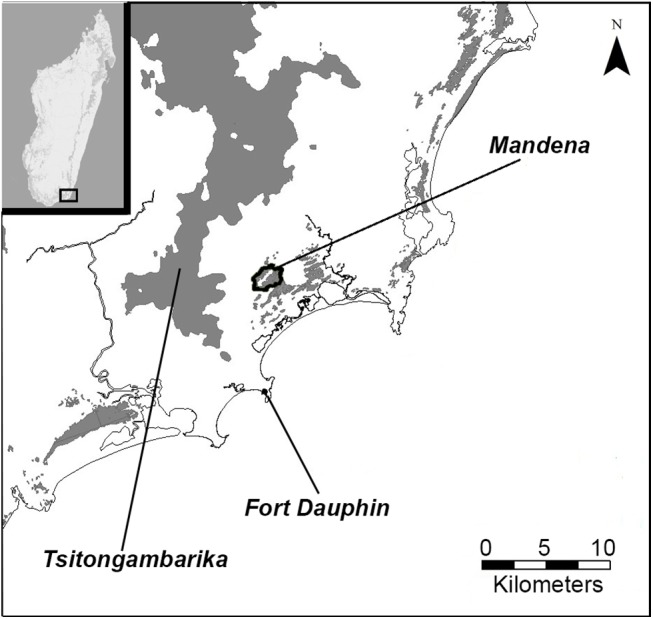
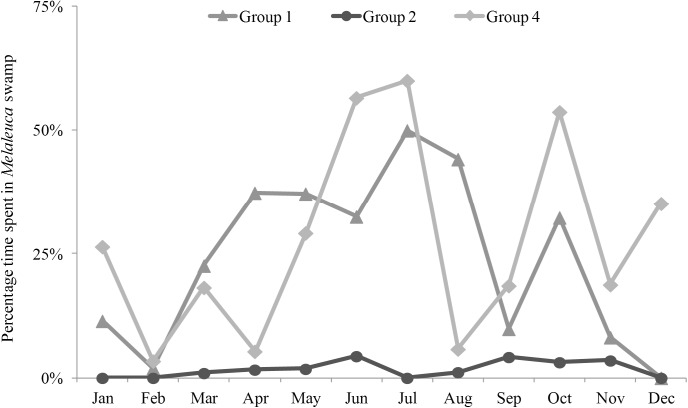
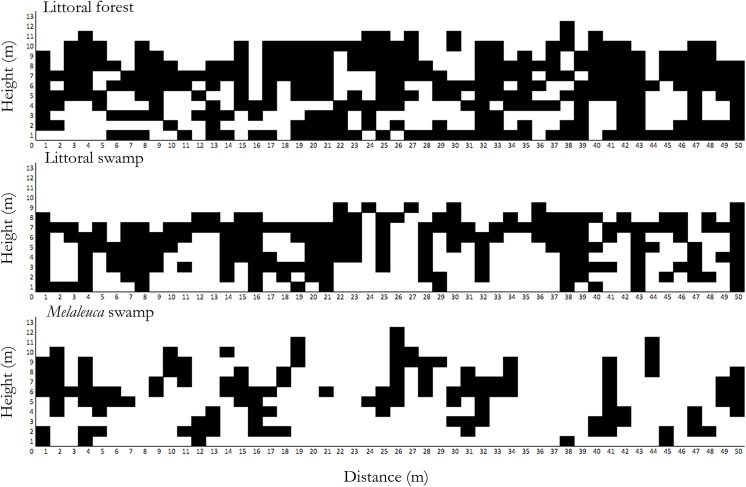
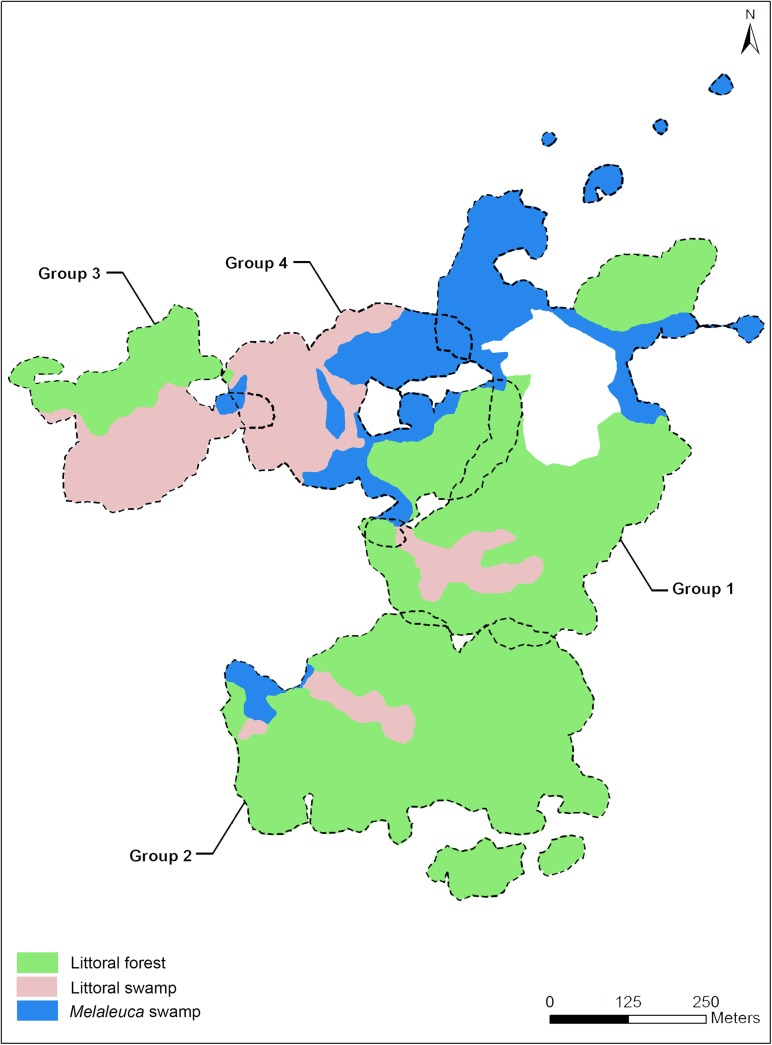
The lemurs of Madagascar are among the most threatened mammalian taxa in the world, with habitat loss due to shifting cultivation and timber harvest heavily contributing to their precarious state. Deforestation often leads to fragmentation, resulting in mixed-habitat matrices throughout a landscape where disturbed areas are prone to invasion by exotic plants. Our study site, the Mandena littoral forest (southeast Madagascar), is a matrix of littoral forest, littoral swamp, and Melaleuca swamp habitats. Here, Melaleuca quinquenervia has invaded the wetland ecosystem, creating a mono-dominant habitat that currently provides the only potential habitat corridor between forest fragments. We sought to understand the role of this invasive Melaleuca swamp on the behavioral ecology of a threatened, small-bodied folivore, the southern bamboo lemur (Hapalemur meridionalis). We collected botanical and behavioral data on four groups of H. meridionalis between January and December 2013. Our results confirm Melaleuca swamp as an important part of their home range: while lemurs seasonally limited activities to certain habitats, all groups were capable of utilizing this invasive habitat for feeding and resting. Furthermore, the fact that Hapalemur use an invasive plant species as a dispersal corridor increases our knowledge of their ecological flexibility, and may be useful in the conservation management of remaining threatened populations.
马达加斯加的狐猴是世界上受威胁最严重的哺乳动物类群之一,轮垦和木材采伐导致的栖息地丧失严重加剧了它们岌岌可危的状态。森林砍伐常常导致栖息地碎片化,从而在整个景观中形成混合栖息地矩阵,受干扰地区容易被外来植物入侵。我们的研究地点——曼德纳滨海森林(马达加斯加东南部),是一个由滨海森林、滨海沼泽和千层沼泽栖息地组成的矩阵。在这里,五脉千层树已经入侵了湿地生态系统,形成了单一优势栖息地,目前该栖息地是森林片段之间唯一潜在的栖息地走廊。我们试图了解这种入侵性千层沼泽对濒危小型食叶动物——南部竹狐猴(Hapalemur meridionalis)行为生态学的作用。我们在2013年1月至12月期间收集了四组南部竹狐猴的植物学和行为数据。我们的研究结果证实千层沼泽是它们活动范围的重要组成部分:虽然狐猴会季节性地将活动限制在某些栖息地,但所有组都能够利用这种入侵栖息地觅食和休息。此外,竹狐猴利用入侵植物物种作为扩散走廊这一事实增加了我们对它们生态灵活性的了解,这可能有助于对剩余濒危种群的保护管理。