Alazami Anas M, Awad Salma M, Coskun Serdar, Al-Hassan Saad, Hijazi Hadia, Abdulwahab Firdous M, Poizat Coralie, Alkuraya Fowzan S
Department of Genetics, King Faisal Specialist Hospital and Research Center, Riyadh, Saudi Arabia.
Cardiovascular Research Program, King Faisal Specialist Hospital and Research Center, Riyadh, Saudi Arabia.
Genome Biol. 2015 Nov 5;16:240. doi: 10.1186/s13059-015-0792-0.
Embryonic lethality is a recognized phenotypic expression of individual gene mutations in model organisms. However, identifying embryonic lethal genes in humans is challenging, especially when the phenotype is manifested at the preimplantation stage.
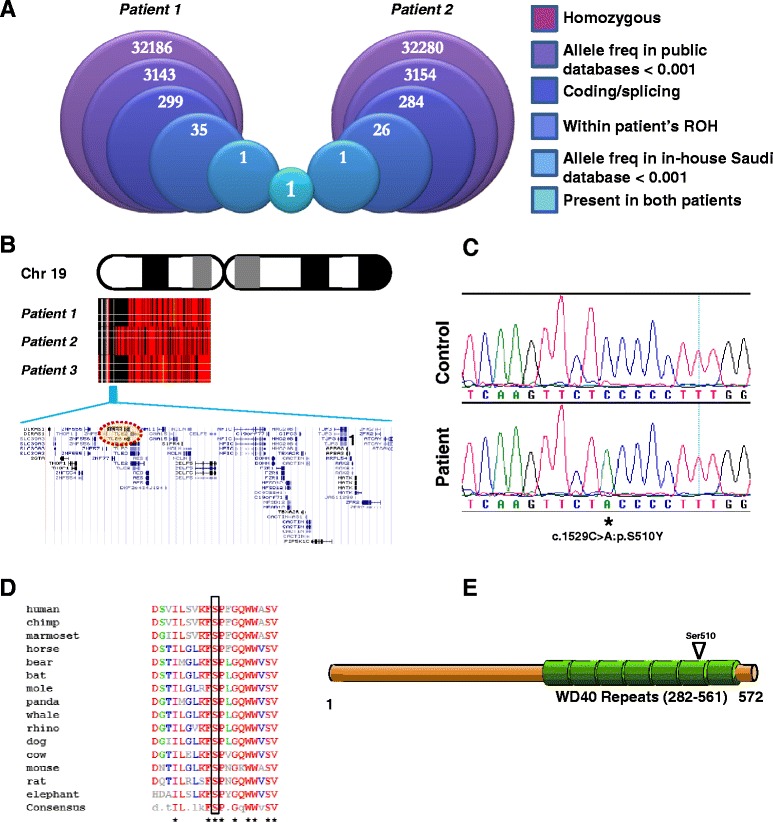
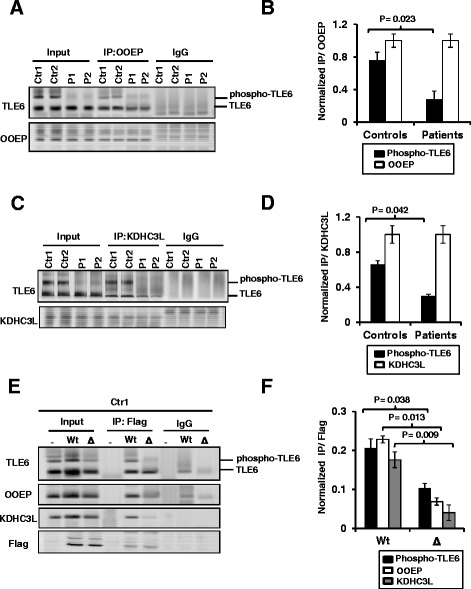
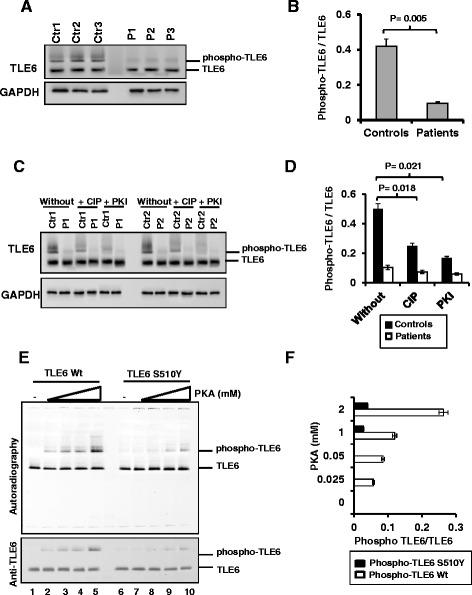
In an ongoing effort to exploit the highly consanguineous nature of the Saudi population to catalog recessively acting embryonic lethal genes in humans, we have identified two families with a female-limited infertility phenotype. Using autozygosity mapping and whole exome sequencing, we map this phenotype to a single mutation in TLE6, a maternal effect gene that encodes a member of the subcortical maternal complex in mammalian oocytes. Consistent with the published phenotype of mouse Tle6 mutants, embryos from female patients who are homozygous for the TLE6 mutation fail to undergo early cleavage, with resulting sterility. The human mutation abrogates TLE6 phosphorylation, a step that is reported to be critical for the PKA-mediated progression of oocyte meiosis II. Furthermore, the TLE6 mutation impairs its binding to components of the subcortical maternal complex.
In this first report of a human defect in a member of the subcortical maternal subcritical maternal complex, we show that the TLE6 mutation is gender-specific and leads to the earliest known human embryonic lethality phenotype.
胚胎致死是模式生物中单个基因突变公认的表型表达。然而,鉴定人类胚胎致死基因具有挑战性,尤其是当表型在植入前阶段出现时。
在利用沙特人群高度近亲通婚的特性来编目人类隐性作用的胚胎致死基因的持续努力中,我们鉴定出两个具有女性特异性不孕表型的家系。通过纯合性定位和全外显子组测序,我们将该表型定位到TLE6基因的一个单一突变上,TLE6是一个母体效应基因,编码哺乳动物卵母细胞皮质下母体复合物的一个成员。与已发表的小鼠Tle6突变体表型一致,TLE6突变纯合的女性患者的胚胎无法进行早期卵裂,导致不育。该人类突变消除了TLE6的磷酸化,据报道这一步骤对PKA介导的卵母细胞减数分裂II进程至关重要。此外,TLE6突变损害了它与皮质下母体复合物成分的结合。
在关于皮质下母体亚临界母体复合物成员人类缺陷的首次报告中,我们表明TLE6突变具有性别特异性,并导致了已知最早的人类胚胎致死表型。